In Eastern India, families navigating autism diagnoses often face systemic instability, long waitlists and fragmented services. Desun Hospitals has responded by launching Mindspace Academy, one of the region’s first hospital-based Autism and Neurodevelopment Support Centers, aiming to redefine what safety means for neurodivergent children, in clinical environments and in everyday caregiving journeys.
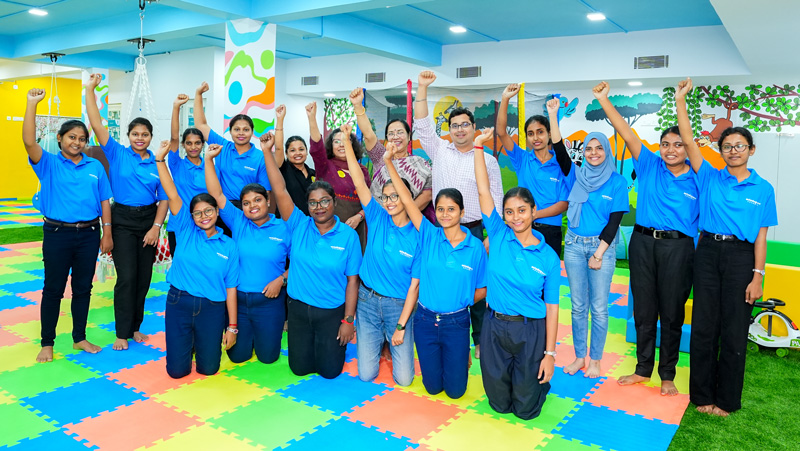
Desun’s ABA technician trainees pictured with their supervisor and BCBA mentor as part of an ongoing trauma-informed training program.
This article outlines how we are building a trauma-informed, culturally sensitive service model within a tertiary care hospital and how that model fosters emotional and systemic stability in a region where this integration is rare.
Creating Safe Spaces in Unstable Systems
In India, delays in diagnosis, lack of regulated service providers and social stigma often mean that families are left to navigate care alone. The concept of safety, as described in trauma-informed care, extends beyond physical protection to encompass emotional security, predictability and the recognition of how social and sensory environments themselves can be sources of trauma for autistic individuals (Kerns et al., 2022).
At Desun, we have embedded these principles into the center’s design. We view safety as a relational commitment to every child and family. Our intake process emphasizes predictable routines, caregiver voice and non-pathologizing language, a foundation that sets the tone for everything that follows.
A Neuro-Affirming, Culturally Anchored Model
Our model is grounded in neuro-affirmation: the recognition that autism is not a problem to be fixed but a difference to be understood and supported (Chapman & Botha, 2023). In practice, this means replacing compliance-driven goals with those that prioritize autonomy, regulation and communication.
We also recognized early on that Western service models often lack contextual fit in India. In response, we collaborated with U.S.-trained Board-Certified Behavior Analysts (BCBAs) and Indian developmental pediatricians to co-develop a model that blends Applied Behavior Analysis (ABA) with trauma-informed care and local family structures. The result is a system that honors evidence-based practices and cultural norms.
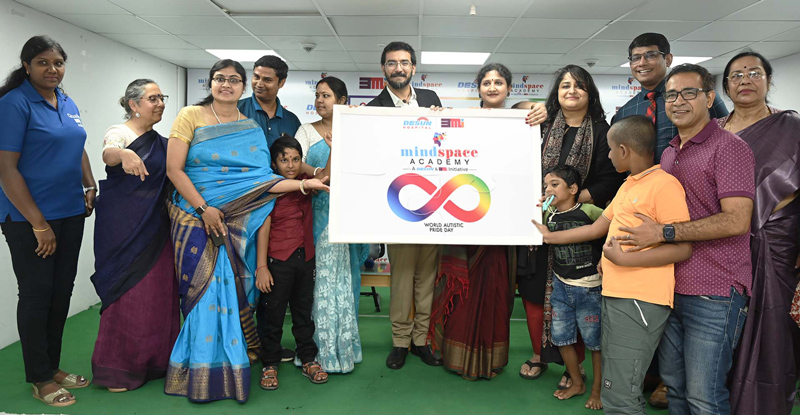
Celebrating Autism Pride Day 2025 with pediatricians, ABA experts, parent advocates, and children, highlighting Desun’s inclusive, multidisciplinary ecosystem.
Spotlight: A Family’s Journey Toward Stability
When four-year-old Aarav first arrived at our Mindspace Academy, he had just been expelled from preschool due to aggressive behaviors and was non-speaking. His mother, who had recently quit her job to care for him full-time, was struggling to understand how to support him without judgment or fear.
Over six months, Aarav’s care team, which included a BCBA-D, speech-language pathologist and developmental pediatrician, developed a plan that emphasized functional communication, sensory regulation and safe transitions. Parent coaching sessions helped Aarav’s mother see challenging behaviors as expressions of unmet needs. Today, Aarav attends a small inclusive preschool with support, and his mother has rejoined part-time work.
This case is not extraordinary. Rather, it reflects what becomes possible when systems are designed to respond to crisis, instead of reacting to it.
Multidisciplinary and Trauma-Informed by Design
The center houses professionals across ABA, speech-language pathology, occupational therapy, developmental pediatrics and psychology. But the real innovation lies in how these professionals work together.
We have built cross-disciplinary bridges that go beyond co-location. For example, behavior technicians receive foundational training in trauma-informed care, while medical professionals are introduced to functional behavior assessment methods. Establishing a shared vocabulary across disciplines enhances collaboration and helps reduce fragmentation: one of the most persistent barriers in autism care systems (Brookman-Frazee et al., 2012).
We also emphasize context-sensitive behavior supports, which means behavior plans are designed in relation to school routines, family stressors and community norms. We draw heavily on caregiver interviews and naturalistic observation to inform individualized plans.
Training the Next Generation of Providers
The scarcity of certified professionals in India is not just a workforce issue, it is a safety issue. Without structured training pipelines, families are often forced to rely on informal or unqualified providers.
To address this, we have partnered with Behavior Momentum India to train early-career professionals through structured supervision and field-based practicum. Our center is among the few hospital-based sites in India offering technician training integrated with medical and educational systems. Many trainees are first-generation college graduates entering healthcare for the first time, offering both livelihood and meaning.
This approach aligns with global health guidance emphasizing the need to strengthen service delivery through community-based care, caregiver support, and training of non-specialist providers, particularly in low-resource settings (World Health Organization, 2023).
Building Community Trust and Public Dialogue
In May 2025, our initiative was featured in The Telegraph, a leading English-language daily in India. The coverage highlighted our community-centered design, caregiver engagement and efforts to destigmatize autism in public discourse.
We recognize that stability is not only built in clinics, but also cultivated in communities. We have held hospital-based workshops for schoolteachers, grandparents and pediatricians, aimed at bridging the medical-social divide. These interactions have begun to shift how people in our ecosystem understand and respond to neurodivergence.
Looking Ahead: Systemic Safety as a Right
Fostering safety during difficult situations, be it a medical crisis, a school suspension, or a family disruption, requires more than skill. It requires systems that are predictable, inclusive and emotionally attuned.
At Desun, we continue to build such systems. Our hope is that this model can offer a blueprint for other hospitals, NGOs and policy stakeholders across South Asia and the Global South. Stability should not be a luxury; it should be a right embedded in how we care.
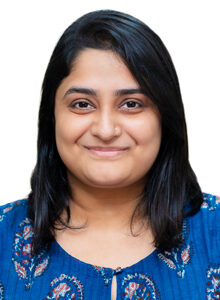
Shaoli Dutta is the Director at Desun Hospitals in Eastern India, where she leads Mindspace Academy, an Autism and Neurodevelopment Support Center in Kolkata. She holds a Master’s in Management from the University of Michigan, Ann Arbor and works at the intersection of hospital systems, behavior science and inclusion policy.
References
Brookman-Frazee, L., Drahota, A., Stadnick, N., & Palinkas, L. A. (2012). Therapist perspectives on community mental health services for children with autism spectrum disorders. Administration and Policy in Mental Health and Mental Health Services Research, 39(5), 365-373.
Chapman, R., & Botha, M. (2023). Neurodivergence‐informed therapy. Developmental Medicine & Child Neurology, 65(3), 310-317.
Kerns, C. M., Lankenau, S., Shattuck, P. T., Robins, D. L., Newschaffer, C. J., & Berkowitz, S. J. (2022). Exploring potential sources of childhood trauma: A qualitative study with autistic adults and caregivers. Autism, 26(8), 1987-1998.
World Health Organization. (2023, November 15). Autism spectrum disorders: Fact sheet. https://www.who.int/news-room/fact-sheets/detail/autism-spectrum-disorders