Making the transition into old age and becoming a senior citizen is challenging for almost everyone in our society. This was most colorfully expressed by the great Hollywood actress Bette Davis, who lived to be 81 years old and famously said that “old age ain’t no place for sissies”. Those of us on the autism spectrum, however, face challenges well beyond the better-known ones that most people encounter. The usual difficulties of getting older are compounded by the challenges of living with autism and are further complicated by our well-known deficits in daily living and adaptation to change. I will be discussing a number of these issues, along with other considerations of importance to autistics who are already seniors or soon to become such.
A Fundamental Problem
Very little is known about aging and autism, despite recent interest in and research being done in this area (there was a workshop on this at the UN), for the simple reason that not many autistic seniors have been identified, let alone diagnosed. This is because, as was the case with me, diagnoses for all but the most severe forms of autism did not even exist until 1994 with the publication of DSM-IV, and public awareness did not come about until the early 2000’s. Any autistic who was past childhood at that time was unlikely to have been recognized as such. I was 44 in late 2000 when first diagnosed, and few middle-aged adults on the spectrum were known at the time. Autistic seniors were extremely rare (we had an over-60 Aspie support group which was rarely attended until it changed to over-50), and nowadays consist mainly of those who, like me, were middle-aged when diagnosed.
As a result of this, very few seniors on the spectrum are available to be studied (not to mention helped) to more accurately understand the challenges faced by autistics when they reach old age. The number of undiagnosed adults in this age group, assuming that the prevalence of autism in the population is consistent over time, is in the hundreds of thousands in the U.S., and may even exceed one million. As such, only a miniscule percentage of autistic seniors are even recognized as such. This hardly constitutes an adequate sample size from which meaningful data can be obtained.
Consequently, there is a great need for information about the lives and challenges of senior citizens on the autism spectrum. This in turn requires that as many such individuals be identified, even if not all formally diagnosed, as possible. The resulting data will enable us to learn as much as we can about their needs so that appropriate services, programs, and policies can be implemented throughout society.
Some More Serious Problems
It has become commonplace for people to reach retirement without being adequately prepared. Countless individuals have attained this milestone only to discover that their retirement assets (savings, pensions, etc.) are barely if at all adequate to even survive, let alone have any semblance of their lifestyle prior to retirement. This parallels the numbers of working people who live “paycheck to paycheck” with no resources available in case of an emergency or unanticipated event. All of this is daunting for anyone; for autistics, it can be nothing less than disastrous.
A very high percentage of autistics are unemployed, in addition to the many who are severely underemployed. In my opinion, these figures are probably higher than the actual numbers for older adults because a significant percentage of undiagnosed autistics who managed to find successful employment and perhaps live independently were never identified; incentives to diagnose such individuals, both on their part and on that of healthcare and social services, are significantly reduced because they are not regarded as having a need for assistance. This is yet another issue that must be investigated to obtain accurate information.
For autistics fortunate enough to have been employed, the transition to retirement and life as a senior citizen presents the same issues faced by neurotypicals. Additionally, difficulties in adapting to change (very common in autistics) make this transition even more difficult. Not to mention that deficits in daily living skills (also very common) can become more significant than they previously were; this is especially true for “solo agers” on the spectrum not living with anyone who can provide assistance.
For those who were unemployed or underemployed all or much of their lives, the situation is even more difficult. If they lived with parents or older family members, these would likely pass away when they get older. If they relied on benefits and services based on disability, these may no longer be appropriate or even adequate when they enter old age.
Just as autistic children grow up to become autistic adults, autistic adults eventually become senior citizens. As in the former case, which was first recognized around the time of my diagnosis, the latter needs to be regarded as inevitable and addressed as much in advance as possible. Those who work with the autistic community as well as those who serve the senior population need to be made aware of these issues.
How Can This Be Mitigated?
An autistic person approaching seniority should prepare as much as possible and as far in advance of such as is at all feasible. As essential as this is for anybody nearing retirement, it is even more important for autistics in any of a variety of situations.
For those who have been employed and are heading towards retirement, careful financial planning is indispensable. The earlier one starts saving for retirement, the better the subsequent outcome. The assistance of a financial planner or counselor, if available (and can be afforded), should be sought. Some Certified Financial Planners even serve clients with disabilities (a few have given presentations at autism conferences). This can be of tremendous help, and is worth the expense, given that very little information about retirement planning is readily available and that autistics (who often have deficits in executive functioning) are likely to have considerable difficulties with such matters.
For those who have lived on benefits and services provided on the basis of autism or other disabilities, these need to continue, but advancing age and changing life circumstances must now be taken into consideration and appropriate modifications made as required. Once again, counselors, social workers, and others will have to assist with this.
For those who have lived with older family members, very thorough advance planning needs to be made in anticipation of their eventual passing. Trusts and other estate plans must be arranged – this requires an appropriate attorney, preferably one who specializes in or has experience with developmental or other disabilities.
Another issue that must be considered is the need for long-term care in the future. If possible, long-term care insurance should be purchased. For it to be affordable, this needs to be done at the youngest possible age and maintained for the remainder of one’s life. Given the dire consequences of becoming incapacitated in our society, this is nothing less than an essential expense if it can at all be afforded.
In any case, the needs of an aging autistic must be anticipated and planned for as early as possible in whatever manner is appropriate to their circumstances.
Housing, Transportation, and Recreation
Preparing for retirement and advancing age involves various considerations, especially living accommodations, transportation, and healthcare. Issues concerning these are well known and apply to nearly all senior citizens. For autistics, however, there are additional matters that must be considered.
Housing for seniors is widely available in many communities (although often either inadequate or unaffordable). It is, in principle, intended to accommodate the needs, conveniences, and preferences of older adults. Such facilities are designed to support those with limited mobility or other faculties that decline with age. They may provide transportation to essential needs and services, and perhaps some social and recreational activities for residents.
For autistics, however, such accommodations may be less than optimal, and even present serious problems. Many deficits common among autistics (e.g., daily living skills, socialization) are not as common in the general population and, as such, not addressed at these facilities. Also, specialized interests and hobbies, an essential part of the lives of many autistics, are often not catered to. Living quarters that would be adequate and even pleasant for a typical senior, but do not allow them to pursue a preferred activity (for instance, being too small to maintain a lifelong collection or other hobby) would have a very adverse effect on the life of an older autistic – this would certainly be the case with me!
As to transportation, many seniors who have driven their entire lives face the day of reckoning when, because of poor vision, lessened coordination, or mental decline, they can no longer drive. They become dependent on others to provide transportation for shopping, medical or other appointments, and recreational activities. This puts them at the mercy of whatever is available either from their facility (if they live in one), senior services, public transit, or the kindness of family, friends, or neighbors. Not only are their self-esteem and sense of independence degraded, but they are subjected to severe restrictions on where they can go and when. In a society such as ours that is based on car ownership and provides little in the way of public transportation, this can greatly impair one’s quality of life.
Many autistics, because of poor coordination and deficient executive functioning, never learn how to drive, or else are uncomfortable doing so even when they do learn (this happened with me for many years). As such, they are accustomed to the above situation; nevertheless, transportation must still be provided as they get older. Accessibility of essential and other needs is a major consideration and must be carefully planned for. In my own case, as the resident of a major city (New York), I made it a point to live in locales where all my needs (groceries, dining, shopping, pharmacies, and – of course – hardware stores!) were within walking distance of my apartment, and public transportation (subways, buses, car services) was readily available. Barring major mobility issues, I do not need to worry about getting where I need to go.
Retirement residences, local senior centers, and other facilities that cater to the senior population usually offer activities and services considered appropriate for older adults. These typically include social gatherings, games (e.g., bingo), arts and crafts, occasional day trips, and other things of a similar nature. Some have even become stereotypical cliches (e.g., shuffleboard). While these might be adequate for typical seniors (I would even question that), they may be of little value to autistics who have little or no interest in them and, more significantly, may lack the knowledge to participate. For example, book discussion groups will not be good for autistics whose reading tastes are very specialized (mine currently consist of books about quantum physics and the effects of artificial intelligence on society – hardly common interests!) Deficits in social skills can further complicate this situation. It becomes necessary to find activities and venues that autistics can participate in and perhaps contribute to the community.
Health and medical care
As we get older, all of us are plagued by a variety of health and medical issues that are not as common in younger individuals. Given the shortage of healthcare providers and facilities in the U.S., there has been a proliferation of so-called “urgent care” clinics and other similar venues. Although these may be adequate for common and less serious problems, they are certainly not equipped to handle the more unusual conditions that may appear in an older person. They are completely inadequate for any of the serious conditions that, once again, seniors are more susceptible to. Autistics are also more likely to have unusual medical conditions. As such, older autistics have a much greater chance of needing more specialized care.
It is essential for older autistics to obtain the best health insurance that is accessible and affordable for them, and that all providers, services, and medications that they require are covered. Also, they will need assistance in navigating the healthcare system, which makes everything as difficult and confusing as it can, to find and access the most appropriate providers and services. Social services will be needed to help them with these issues.
I am certain that there are many other issues of importance to the community of autistic seniors that have not been considered in this article. As before, much more information and data will be needed for all of them to be identified and addressed.
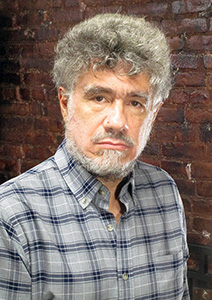
Karl Wittig, PE, is Advisory Board Chair for Aspies for Social Success (AFSS). Karl may be contacted at kwittig@earthlink.net.