It is not surprising that burnout is one of the toughest things that autistics face in their lives. Granted, each autistic suffers from burnout differently, but it is a difficult situation nonetheless.

Burnout can affect the ability to cope with sensory sensitivities, manage executive functioning, enjoy their interests, maintain physical health, as well as regulate their emotions and mental health. The latter, a person’s mental health, can greatly affect an autistic person’s ability to be safe, in which a person might have increased thoughts of suicide (Kemp & Mitchelson, 2024).
As you can see, burnout can have dire effects. There have even been times in my life when not managing burnout would lead me to endure difficulty with managing my emotions. Fortunately, I have been able to find ways that can help me and all autistics with managing burnout, which in turn can keep them safe. One of the first and most important steps is to identify where this burnout came from.
Think back to when you experienced it. Where were you at, what were you doing, who were you with, and what did you feel? This information is the base for knowing what can cause burnout and from there we can learn how to manage it.
Kemp and Mitchelson, in their book The Neurodivergence Skills Workbook for Autism and ADHD, have stated that one of the best ways to manage burnout is to give oneself kindness. To do this means to recognize that you have things that make you stressed out and to acknowledge them (Kemp & Mitchelson, 2024). This is not an easy task. There are things we say to ourselves that we are taught to be helpful, but can be self-destructive. One such thing is severe self-criticism. We can, though, overcome such beliefs by challenging them and giving ourselves kindness. This can be done by looking back at the thoughts we had and seeing how they have not been helpful (Kemp & Mitchelson, 2024). Being kind to ourselves helps us to foster safety when feeling burned out. This might take some time, but we are worth it.
Next, when it comes to preventing burnout, it is said that using coping skills when the signs of burnout are present is helpful. Many autistics have ways of regulating themselves when they feel overwhelmed. One way is called stimming. Stimming describes behavior that helps with maintaining attention, controlling urges, and managing emotions through the senses (Kapp et al. 2019; Wise 2022). Stimming can consist of many things. It could be arm-flapping, humming to yourself, clapping, bouncing, and/or pacing back and forth. The types of stimming you can utilize are endless.
Not only do they keep us regulated, but they also keep us safe. They help with keeping composure during conflict situations, as well as help us cope with stressful situations (Charlton et al. 2021). In the past, there have been behavioral therapies that greatly discouraged autistics from stimming, feeling them to be “inappropriate” for a person to use them out in the community. This has been the narrative for many years, but these actions are not inappropriate; they are quite the opposite. They are a lifeline to keep us safe when we are on the verge of burnout.
It is then imperative for us autistics to use them when needed. Not only is stimming a normal behavior, but it is also a positive form of self-compassion for an autistic person.
In addition, when the topic of being safe from burnout comes to mind, I must address the importance of absorbing oneself into their focused interests, also known as spins. Spins can be anything that we find a great interest in and that we autistics spend a great deal of time on. They can vary from person to person. It could be music, history, fantasy, writing, sports, crafts, meditation, and science. The list goes on and on. For us in the autistic community, spins are not just a hobby. Connecting with our spins has been shown to be a healthy self-regulation strategy for both preventing and recovering from burnout (Parenteau et al. 2023).
I would like to use myself as an example. A few of my spins include music, writing, painting, history, reading, and working out. There have been times when my burnout has led me to break down. However, using these spins helped me recover from it. For instance, when burnt out, I would do a painting of a place I traveled to, or I would read a book about a specific period of history. I may even go for a long run with music blaring in my headphones. Using these spins helped me to regulate myself when life gets too overwhelming. Overall, Spins can be essential for daily life.
Burnout can be dangerous for us in the autistic community. When not treated, it can impede upon our wellbeing. However, as stated before, utilizing methods such as self-kindness, stimming, and absorbing our spins can greatly help with this. Not only does preventing and managing burnout help with keeping us regulated, it fosters safety in our life.
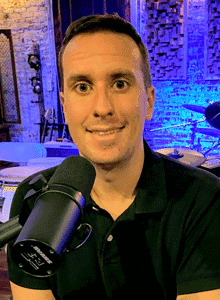
Robert Schmus, MSW, LCSW is a Mental Health Therapist and Autistic Self-Advocate.
References
Charlton, R. A., T. Entecott, E. Belova, and G. Nwaordu. 2021. “‘It Feels Like Holding Back Something You Need to Say’: Autistic and Non-Autistic Adults Accounts of Sensory Experiences and Stimming.” Research in Autism Disorders 89: 1-11.
Kapp, S. K., Steward, R., Crane, L., Elliott, D., Elphick, C., Pellicano, E., & Russell, G. (2019). “People should be allowed to do what they like”: Autistic adults’ views and experiences of stimming. Autism, 23(7), 1782–1792. https://doi.org/10.1177/1362361319829628
Kemp, J., & Mitchelson, M. (2024). The Neurodivergence Skills Workbook for Autism and ADHD. Social Justice Handbook.
Parenteau, C. I., Lampinen, L. L., Ghods, S. S., Taylor, J. L., Adams, R. E., Bishop, S. L., & Zheng, S. (2023). Self-reported Everyday Sources of Happiness and Unhappiness in Autistic Adults. Journal of Autism and Developmental Disorders. https://doi.org/10.1007/s10803-023-05892-0
Wise, S. J. 2022. The Neurodivergent Friendly Workbook of DBT Skills. Sydney, AU: Lived Experience Educator.