I went to my first ABA conference recently as a newcomer twice over: as a psychologist who had spent a career adjacent to the field of Applied Behavior Analysis (ABA) without ever truly stepping inside it, and as the parent of an autistic son.
As a psychologist, I built a multi-disciplinary behavioral health organization that served the autism community. As a parent, my husband and I built an autism care team for our son that included neuropsychologists, school psychologists, developmental pediatricians, special education teachers, speech-language pathologists, occupational therapists, and physical therapists. We constructed quite a team – it just never included a behavior analyst.
I don’t say that as a criticism of ABA. What I saw at ABAI in San Francisco impressed me: a discipline that takes data seriously, insists on connecting clinical practice back to outcomes research, and watches for immediate response to intervention rather than waiting months to find out if something worked. Those are values every part of the autism field should aspire to.
But I also noticed what wasn’t in the room: much discussion of the other disciplines that my own family had relied on. And that absence mirrored the same problem I see playing out in the national conversation about autism care.
Say the words “autism care” to a policy maker, a reporter, or an insurance executive today and there’s a good chance the image that comes to mind is ABA. It’s an understandable mistake. ABA is well-organized, well-represented, and currently at the center of intense public debate over access, cost, and effective outcomes. But ABA is one discipline among many that serve autistic people and their families. It is not a synonym for autism care. It is one variable in a much larger equation for what works to impact meaningful life outcomes for autistic individuals and their families.
The professionals my family worked with are just as essential to that equation, and so are the professions we never crossed paths with at all: researchers, employment specialists, housing navigators, policy analysts, autism advocates. Each holds a piece of what autistic people actually need across a lifetime. None of them holds the whole picture alone.
For decades, that has been the autism field’s quiet flaw. Researchers talk to researchers. Behavior analysts talk to behavior analysts. Educators talk to educators. Each group does serious, valuable work.
We lack a strong, loud, and, most importantly, unified voice.
The problem isn’t a lack of expertise – the autism field has an abundance of expertise. The problem is that too much of it remains disconnected. We’re not a voice – we’re a collection of disparate whispers. We speak to our own corner of the field while the people making the biggest decisions about autism policy hear from only the loudest. Because we function in silos, our whispers go unheard, and the biggest decisions are being made for our field by policymakers, payers, and others who have never experienced what it’s like to support individuals with autism and their families firsthand.
Autistic individuals and their families don’t experience life in silos. Their lives move through healthcare, education, employment, housing, and community – often within the same week. The challenges they face rarely sort themselves neatly by discipline. The response to those challenges shouldn’t either.
That’s why I believe the next chapter of progress in autism won’t come from any one profession. It will come from professions working together.
We need stronger connections between research and practice, education and healthcare, innovation and implementation, and between the professionals doing the work and the systems that shape how that work happens, amplifying our collective wisdom.
Autism care needs to be organized the way autistic people’s lives actually work – across disciplines, not within one discipline.
This conviction is what led to the creation of the National Society of Autism Professionals (NSAP). NSAP exists to do something no organization in this field has done before: bring every discipline that touches the lives of autistic individuals and their families under one professional roof, with no allegiance to any single model of care or service delivery. Not instead of organizations like the ones gathered at ABAI, but alongside them and in conversation with them.
We’re not interested in erasing the differences between disciplines, and we won’t manufacture consensus where real, healthy debate should happen. What we’re building is a place where behavior analysts, psychologists, educators, physicians, workplace architects, researchers, innovators, and autistic professionals themselves can learn from one another, challenge one another, and build shared standards together. A place where the next reporter asking about “autism care” hears an answer big enough to match what that phrase actually means.
The autism field has never lacked talent or commitment. What it has lacked is a forum where all of that expertise adds up to something greater than any one discipline could achieve alone. The future of autism care won’t be built by behavior analysts alone, psychologists alone, educators alone, or advocates alone. It has to be built by all of us, together, in the same room.
For more information on NSAP, visit nsap.org.
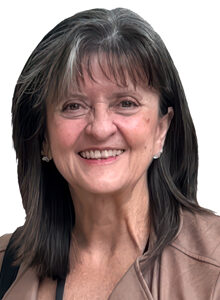
Robin McLeod, PhD, LP, is the founding CEO of the National Society of Autism Professionals (NSAP), a cross-disciplinary professional association for the autism field. She is a licensed psychologist who built a solo practice into a multidisciplinary behavioral health organization serving the Twin Cities, and most recently served in executive leadership at the American Psychological Association, where she led the development of professional practice guidelines across nearly a dozen clinical domains. She is also an autism parent.