My introduction to assisted communication (AC) for nonspeaking and minimally speaking individuals was in reference to facilitated communication (FC). During July of 1991 at the Autism Society of America’s annual conference, I was asked to participate on a panel that was hastily organized to have an “open and thoughtful” discussion about FC. Doug Biklen, who brought FC to the US from Australia, had presented a preconference workshop on FC and the conference attendees were buzzing from what they had seen and heard.
The panel was organized and moderated by the late Dr. Anne Donnellan of the University of Wisconsin-Madison, a valued colleague who was well-known for her contributions to the literature in autism. The room was packed with at least one-half of the participants being parents. Anne opened the session by urging the attendees to participate in a constructive manner, as we all anticipated the sharing of strong emotions. The session quickly turned into a series of testimonials. We sat as we heard from excited educators, clinicians and paraprofessionals who gave impassioned accounts of “breakthroughs” through FC. According to the testimonials, individuals who were previously thought to have significant social or cognitive limitations, produced messages through FC which clearly proved that the great majority, if not all nonspeaking autistic persons were not challenged cognitively or socially, but were shackled by motor limitations. For some not yet understood reason (a “global apraxia”, a “Parkinsonian-like” disability?), these individuals were not able to communicate their thoughts and feelings. Most testimonials were characterized by global statements such as “FC works for everybody in our workshop”, “With FC, all the people in our community residence can now communicate their most intimate thoughts and feelings”. Some audience members spoke of the need to discard almost fifty years of accumulated knowledge about autism, for FC had proven that most of this information was wrong.
Nevertheless, as panelists, we raised a number of questions such as “What does it works mean?“, “What is the full range of experiences with FC, including extreme successes, emerging abilities and failures?”, “How do we define success“?, “Could reported successes, if proven valid, provide direction for identifying a ‘subtype’ of autism”? “If the true nature of autism is an expressive motor-based disability for all individuals (as some claimed), rather than a social-cognitive and communicative disability, how does that account for the communicative and social challenges experienced by autistic persons who can communicate fluently through speech?” Following the session, two parents approached me and stated, with true concern, “if you question the validity of FC publicly that would ruin your professional reputation.”
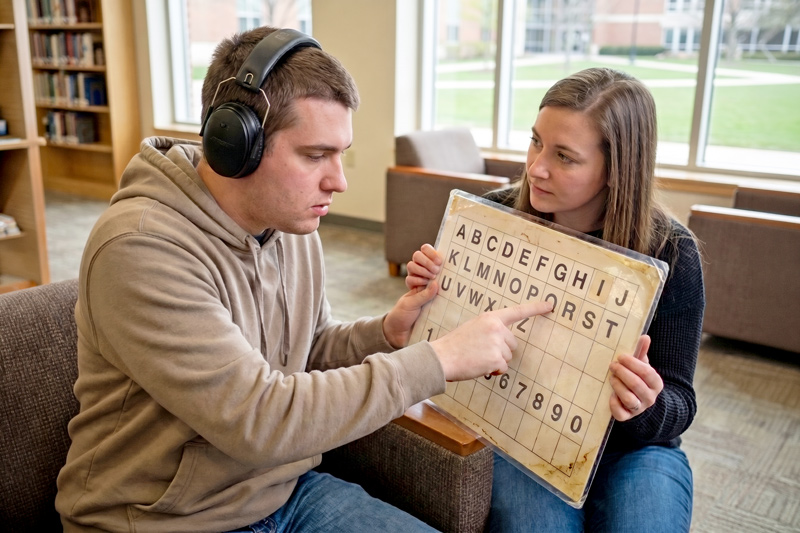
As word spread about FC, there was rapid pushback with the counter narrative being that the facilitator was always directing the messaging, either directly with physical guidance, or even unconsciously through an “ideomotor effect”, similar to a ‘Ouija board’. The argument was the messages being spelled or typed did not reflect the authentic thoughts and intentions of the person being supported. Since the summer of 1990, efforts to dismiss FC wholesale, including newer generations of assisted communication (AC) approaches in more recent years, have precipitated one of the most emotional and polarized debates concerning the competence of non- or minimally speaking persons with disabilities.
Skeptical but Open Minded
From the outset, I expressed the need to be cautious about global and miraculous claims, but at the same time, to remain open-minded about FC as further information was accumulated through both research and lived experience. There were already many documented cases of autistic individuals who demonstrated precocious facility with written language, hyperlexic abilities and interest in letters and numbers. In my years of experience there had been many situations when I had marveled at how often people with neurodevelopmental conditions had overcome seemingly insurmountable challenges and revealed surprising and unanticipated abilities that far exceeded expectations. For all people, human development is life-span.
A small group of skeptics developed an assessment of questionable validity, referred to as a message passing test (Kaufer, 2025), to challenge the legitimacy of FC. This test was later extended to any form of AC (ASHA, 2018). Any claims of success were referred to as “pseudoscience”, with persistent attempts to prove there was no credibility to AC approaches, and authorship was that of the communication partners. “Around this time, I was invited by Dr. Shane, developer of the message passing test, to contribute a chapter to his edited book entitled ‘Facilitated Communication: The Clinical and Social Phenomenon’ (1994).” As I learned that all contributions were designed to challenge the legitimacy of FC, I told Howard that I would contribute but would clearly state in my chapter that there was a need to keep an open mind, do more research, and adjust our understandings based upon lived experience as well as research. I was motivated to contribute as some FC proponents were attempting to redefine autism by dismissing any of the other documented challenges experienced by autistic individuals, which ultimately could result in taking away needed supports for social communication and emotional regulation. He agreed to my condition, and my final chapter communicated a balance between the need to move forward with constructive skepticism, and open mind.
As Years Passed..
In 2005, following advocacy by Shane and colleagues, the American Speech-Language-Hearing Association appointed a committee that published a position statement stating that all forms of AC were ineffective and harmful. In practice, the position statement soon became used to prohibit the use of AC approaches, primarily in schools. However, prior to its publication, I continued to encounter nonspeaking individuals who demonstrated progress with AC, thereby challenging the claims put forth by Shane and colleagues. Many individuals benefitting from AC exhibited significant neuromotor challenges—difficulty initiating speech production or producing marginally intelligible speech, as well as demonstrating more generalized motor planning difficulties – profiles consistent with neuromotor disabilities in addition to autism.
For years, I observed moments that were difficult to reconcile with a deficit-based model that dismissed the nonspeakers’ competence in understanding. I observed individuals who could not answer a direct question through speech but demonstrated understanding through behavior, affect, or delayed response. In everyday clinical interactions and with families, I observed how using schedules and other visual supports, often with print, were understood and used by nonspeakers. Multimodal communication including AC was now the avenue by which a deeper level of competence could be demonstrated.
At the same time, I was listening more closely to nonspeaking individuals themselves—particularly those who through AC, described experiences of being misunderstood, underestimated, or unable to express what they knew. Accounts of losing speech in development or under stress, of having intact understanding but limited motor access to communication, began to resonate with my clinical observations.
Nonspeakers and the Neurodiversity Paradigm
The subsequent emergence of the neurodiversity paradigm further shifted the lens. It challenged the long-held assumption that lack of speech equates to lack of intelligence. Stated simply, we began to understand that due to differences in brain wiring, it was possible to have high levels of competence co-occurring with significant disability. It urged us to consider that communication differences might reflect differences in access rather than deficits in understanding. Documented cases in other non- or minimally speaking individuals with neuromotor conditions such as stroke, cerebral palsy and motor speech disorders provided further evidence that lack of speech does not equate to limited intelligence.
Initially, my question had been on validation: does AC support authentic communication? Gradually, that question expanded: What barriers might prevent an individual from demonstrating what they know? This shift did not eliminate the need for evidence. But it introduced a new dimension—one that required considering motor planning, sensory and emotional regulation, attention, and the role of the communication partner as part of a dynamic system.
Approaches such as Rapid Prompting Method (RPM), Spelling to Communicate (S2C) and other spelling-based systems gained visibility. A 2004 segment on the respected CBS news show 60 Minutes highlighted successes through RPM. Proponents of AC began to explain that that these methods differ meaningfully in concept and practice from the early days of FC, emphasizing reduced or no physical support to a letterboard or keyboard with more of a focus on motor planning, and the importance of a trusted partner to support communication. Critics continued to claim that newer AC approaches such as S2C and RPM were no different than FC, raising familiar concerns about authorship and influence.
On Independence
At the heart of this debate is a fundamental position posed by skeptics: authorship requires demonstration of independence, and without it, conclusions about competence cannot be reliably drawn. However, there are two problems with this position – how is “independence” defined, and isn’t all communication interdependent, at least to some degree? In my opinion, the critic’s definition of independence belied the very nature of human communication. Even as I was exposed to individuals benefitting from AC when no direct physical guidance to keyboards or letterboards were observable (i.e. communication was independent), critics claimed that spellers or typers were being influenced by subtle cues (e.g., a glance at a letterboard by the support person, a reassuring touch on the back or leg), all implausible explanations.
Critics continued to insist that there needed to be some objective measure of authenticity – the message passing test. From the perspective of many practitioners and advocates, however, this method used to test authorship itself interferes with performance and has been successfully challenged as not a credible assessment due to lack of testing for reliability and validity (Kaufer, 2025). Stress, unfamiliar contexts, and the removal of supports also may disrupt the very capacities being evaluated.
Furthermore, a seminal study using eye-tracking technology examined movement patterns during typing, attempting to determine whether the individual first looks at letters before pointing, and found that was indeed the case (Jaswal, 2000). Others have documented cases in which individuals transitioned from supported to independent typing over time. These developments were noteworthy but continued to be dismissed as inauthentic by critics. Movement to independent typing suggested that, for at least some individuals, independent authentic communication through AC was possible, and that neuromotor factors played a significant role in limiting expression, a position supported by research.
The Final Turning Point
Over the years, I knew of many approaches to helping nonspeaking individuals to communicate, for example, using photos, pictures or icons on a display, or on a preprogrammed device such as an iPad. In February, 2018 I first experienced a community of nonspeakers who fully opened my eyes to the potential of nonspeakers to communicate thoughts and feelings creatively through spelling and typing, often at levels no one thought possible. That was when I spent two days at the University of Virginia in Charlottesville with The Tribe, nine young adults, all autistic, all identifying as nonspeaking, and all of whom had learned to communicate with assistance by pointing to letters on letterboards or keyboard to spell their messages. Each was supported by a Communication Regulation Partner (CRP). I was informed that the level and types of assistance decreased over time, often dramatically so, and that assistance supported a person’s attention and motor coordination to point to letters, a keyboard or a display on a device such as an iPad, but also support a well-regulated emotional and physiological state.
After years of therapy, each of these young adults still lacked the ability to communicate reliably through spoken language, but all learned to communicate through Spelling to Communicate, or S2C, an approach developed by Elizabeth Vosseller, a speech and language pathologist. I watched and listened as the Tribe members expressed themselves by pointing to letters in sequence to spell words that were then read aloud by the CRPs. In some cases, individuals with some ability to approximate speech on their own, albeit infrequently, would produce some words while spelling. Elizabeth emphasized that such progress was no miracle, but based on hard work over extended periods of time.
In addition to meeting with the Tribe, I also had the opportunity to attend a psychology class, “The Science and Lived Experience of Autism” at the university that members of the Tribe also attended with their CRPs. I watched as they actively participated in discussions with undergraduate students on a range of topics. One of the neurotypical psychology students told me, “My experience with the Tribe has been really incredible…when you actually get to know them and how brilliant they are and have conversations with them on a personal level you can truly understand how valuable they are to our community”.
What I experienced in my two days with The Tribe and people who knew them well opened increased my awareness of the potential of AC, and to the disabling challenges nonspeakers cope with daily. In my observations, their CRPs provided no direct physical assistance guiding them to type or point to letters, as was common with FC, merely standing or sitting next to them or at their sides, holding up the letterboards and, as the individuals pointed to letters, reading the letters, words and phrases aloud. Mostly, the partners provided a supportive presence, providing encouragement and helping the individuals to stay regulated and focused — and making sure their words and thoughts were heard by the group. As a published researcher of methods to analyze communicative intent in disabled individuals, what I observed was clearly intentional expression of thoughts and observations by the Tribe members, not a “rich interpretation” of what I was observing.
Communication and Regulation
Another remarkable observation was the regulating impact of communication for all the Tribe members. When engaged in typing or spelling, they were able to direct their attention and concentrate on the process of communicating, whereas at other times when not communicating, they disengaged and their attention strayed as some paced around the room, stimmed or became physically active in other ways. Family members and professionals who knew them well, and who shared their journey of progress in communicating, corroborated what I observed directly – what was being communicated was their authentic “voices”, reflecting the thoughts and feelings of each individual, and how learning to communicate has also supported their regulation, overall happiness and well-being, and changed family life.
My shift from skepticism was cumulative over time through observations supported by my clinical expertise and listening to those in close relationship with nonspeakers. My visit with the Tribe most certainly was a seminal event that provided evidence that AC was a credible approach for supporting communication for a yet to be determined number of nonspeakers. Not a miracle, but the result of years of learning and hard work.
Final Thoughts
Communication does not occur in isolation. It emerges from the interaction of multiple factors: the individual’s motor system, their regulatory state, a trustworthy communication partner, and the environment. Within this system, independence is not binary. It exists and develops along a continuum—from fully supported to independent, with many intermediate stages. Ethical considerations must also be taken into account. On the one hand, any influence by partners must be an issue of concern, but on the other hand, categorical dismissal risks silencing individuals who may have thoughts to communicate but lack reliable means of expression. Blanket denial reinforces low expectations, limits opportunities for growth and is terribly discouraging to those who share their lives with the nonspeaking person.
I no longer approach this issue with the skepticism I once had. But neither do I approach it without standards. I believe in the necessity of research, but also believe that evidence comes from multiple sources, not just controlled experimental research. I believe in the importance of demonstrating increased independence wherever possible. I also believe that current methods are still evolving and may not fully capture the complexities of motor-based communication challenges. Most importantly, I believe that individuals who do not speak deserve access to AC—and that we have an obligation to explore, carefully and responsibly, the methods that might make that access possible.
The path forward requires collaboration rather than polarization. Researchers, clinicians, and nonspeaking individuals themselves must be fully included as part of the conversation. We need studies that are responsive to the lived realities of participants. We need frameworks that integrate motor, cognitive, and social dimensions of communication. And we need humility—an acknowledgment that we may not yet fully understand the phenomena we are observing. At issue is not only the validity of a method, but the expression of personhood.
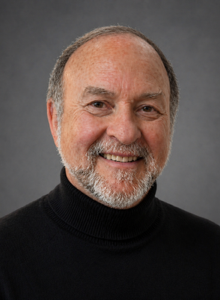
Barry M. Prizant, PhD, CCC-SLP, is an Adjunct Professor in the Department of Communicative Disorders, College of Health Sciences, at the University of Rhode Island. He can be reached by phone at 401-626-0681 or by email at [email protected].
References
American Speech-Language-Hearing Association. (2018). Facilitated communication [Position Statement].
Jaswal, V. K., A. Wayne, and H. Golino. (2020). Eye-Tracking Reveals Agency in Assisted Autistic Communication. Scientific Reports 10, no.1: 7882.
Kaufer, D. (2025). Why message passing is invalid: The test designed to fail autistic people. Kaufer Insights, Substack,substack.com
Shane HC. Ed. Facilitated communication: the clinical and social phenomenon. San Diego: Singular Publishing Group, 1994.