Autism, at least for the less severely impaired, has been called an “invisible disability.” This is because the challenges faced by autistics are not as readily evident as those of other disabilities. A visually impaired person, or one using a wheelchair, is immediately seen as someone facing considerable challenges in their life. As such, allowances and accommodations can be made to address these. With autism, however, the individual does not seem as severely challenged, at least upon first impression; peculiar traits resulting from their condition are often regarded as deliberately inappropriate behaviors and, as such, may not be tolerated. This happens with autistics in various parts of the spectrum, over a range of ages, and in many different environments: school, workplace, community, and even within the family. The result is that autistics can readily be stigmatized, and very often are, for behaviors whose inappropriateness they might be completely unaware of (possibly even of the very fact that they are engaging in such) and over which they may not have any control.

A Brief History of Autistic Stigmatization
Humans have long stigmatized others who are perceived as “different” in a variety of ways. This has certainly been true of modern American society and probably throughout human history as well. In most cases, however, the stigmatized individual either had a physical or other identifying characteristic that was immediately evident or else belonged to an otherwise readily identified group.
For most racial and many ethnic groups, as well as those with physical disabilities, members of the group had obvious physical characteristics which led to stigmatization. Members of a disfavored national, religious, or ideological group might not be as easily recognized but, unless they chose to conceal it, were nevertheless identified as belonging to that group. Differences in sexual and/or gender identity have led to especially horrific stigmatization, and most physical and other disabilities were easily seen and often resulted in marginalizing, ridicule, and other forms of stigmatization. What all of these have in common is that the individual belongs to a readily identified group and is recognized as such by others. Stigmatized though they might be, however, they usually have a community of similar individuals to which they belong and where they can find refuge.
Unfortunately, this is usually not the case with autism. The very idea of autism did not even exist until the 20th century, and widespread public awareness did not come about until the 21st century – in fact, it was nonexistent until the release of the classic film Rain Man in 1988, which has been referred to as the “big bang” of autism awareness. As such, the history of autistic stigmatization has been short indeed! Consequently, an autistic person could not have been diagnosed and would never have been identified as a member of any recognizable group. Instead, they would be stigmatized for their personal and behavioral peculiarities. Even in more recent times, after it became less acceptable to discriminate for reasons of race, ethnicity, nationality, religion, disability, (more recently) sexual or gender identity, or various other demographics, it was still commonplace to marginalize and even victimize individuals whose individual traits and behaviors did not conform to accepted norms. The result of this was the well-known stigmatizing so many of us on the autism spectrum have encountered throughout our lives.
Such were the experiences of every autistic person from early human history (probably) until the 21st century; this was certainly the case with me. It remains true to this day for all autistic adults who grew up before that time and even for younger autistics who (for whatever reason) were never correctly diagnosed despite recent improvements in diagnosing younger children.
Autistic Stigmatization in the School
School is a place that involves both academic learning and socialization into a larger group. Anyone who is challenged by either of these will encounter substantial difficulties – this is especially true for autistics.
Autistics often live with comorbid learning disabilities, which make success in school difficult in some and perhaps all subjects. Even among autistics of average to superior academic ability, differences in learning style are quite common – they may have the ability to succeed and even excel in certain areas, but if they do not respond to the teaching methods being used in their classroom, they will likely not learn the material and, as such, seen as either lacking ability or not making an effort. They may be labeled as “stupid” or “lazy” when, in fact, neither is the case; this results in stigmatization. It is necessary to recognize, identify, and accommodate the atypical and idiosyncratic learning styles of an autistic student to avoid situations which can result in emotional damage, not to mention deprive them of an adequate education.
As for the social component, school is usually the first and often the primary environment in which children are gathered in large groups of individuals the same age. Consequently, most will be at a comparable level of social development. Socialization takes place through the external influences of teachers and other school officials, along with the desire of students to “fit in” which in turn requires them to recognize and emulate the behaviors of their peers. This results in considerable conformity among students. An autistic who is unable to do these things because of limited social awareness and cognition will conspicuously stand out from the others and face stigmatization as a result. In particular, a lack of awareness of current fashions in such things as clothing, entertainment, and popular culture, not unusual among autistics, can result in considerable stigmatization; this has gotten significantly worse over more recent years.
One trait for which I was repeatedly stigmatized in school involved my speech. Although I now recognize that I had a classic autistic speech pattern – I know this from having heard many autistics who speak in the same manner since my subsequent diagnosis and realizing that it sounds just like those who made fun of my speech all those years ago – at the time this was seen as a personal peculiarity and not as something connected with a then-unknown condition that would not even be recognized for another three decades.
To this day, I remember the story told by a classmate who had immigrated to the U.S. and originally spoke with a distinctive West Indian accent. Upon arriving in New York, he quickly realized that “the accent had to go” for him to fit in and was successful in doing so (a shame, in my opinion, as I find this accent rather pleasant). I was impressed that not only did he see that he spoke differently from those in his new surroundings and that his style of speech interfered with social assimilation, but also that he was able to successfully alter it in such a brief time. As an autistic (still many years away from knowing such), I realized even then that I would not have been able to do any of these things, let alone all three. As a result, I had to endure years of being stigmatized for my peculiar speech. I see this as a good example of the challenges faced by autistics in trying to adapt to their social environment and the stigmatization that results from the failure to do so.
Despite improved awareness about the autism spectrum, along with efforts such as anti-bullying initiatives, stigmatization of autistics is still all too common in the school environment. Over the last decade, online technologies and, in particular, social media have greatly exacerbated this situation.
Autistic Stigmatization in the Workplace
If school is where people spend most of their childhood and early adulthood, the workplace is where they spend much of their adult lives. For those on the autism spectrum who are fortunate enough to be employed, the workplace presents yet another set of challenges with potential for stigmatization. As in school, success (perhaps even survival) in the workplace requires two things: one must be competent in performing one’s job and able to interact with others during such (e.g., co-workers, supervisors/bosses, clients/customers, etc.).
The first of these is often (perhaps usually) not a problem for many autistics. In fact, autistics who are placed in various jobs are generally able to perform the requisite tasks (or else they would not be hired) and often do work of exceptional quality – this is especially the case when the job entails an area of unusual ability or special interest. If anything, an autistic is probably more likely to be praised for their job performance than stigmatized, although sadly, in some cases, they encounter stigma because others resent their ability and determination.
The second, however, presents a variety of sometimes formidable challenges for autistics with limited social awareness and cognition. The social requirements of the workplace involve considerations like those of the school environment but demand an even higher level of social functioning. Such things as “workplace culture” are rarely, if ever, explicitly stated and constitute a hidden curriculum more subtle and complicated than those found in schools (which are difficult enough for autistics). Not to mention that the consequences of violating such can be more severe (including termination). Even something as simple as atypical behaviors or habits or strong reactions to offensive sensory stimuli can result in marginalization and ridicule. For me, my peculiar eating habits were often commented on and even derided, which could be stigmatizing, even if only mildly so. I decided not to have lunch with co-workers and either eat by myself (also considered unusual) or else engage in other activities during lunch hour.
Interactions with co-workers and superiors in many work environments involve “workplace politics,” which, for many autistics, are virtually impossible to navigate. Dealings with customers or clients can also be fraught with hazards. Difficulties or mistakes in any of these can result in reprimands and other humiliations for the employee and even in the loss of a job. All of these carry great stigma, especially in a society where so much of human identity is defined by one’s occupation and employment.
Workplace bullying, which one would think is confined to school-age individuals and does not occur among presumably mature adults, nevertheless does happen, and autistics are particularly susceptible to such. During the years of my involvement with the ASD community, I heard many stories of workplace incidents involving marginalization, ostracism, ridicule, and (most disturbingly) playing “tricks” on autistic employees, who were unaware of what others planned for them and about which the management did nothing. Unfortunately, autistic stigmatization is alive and well in the workplace environment as well.
Autistic Stigmatization in the Community
Autistics can experience stigmatization in their communities for a wide variety of reasons. Autistic traits and challenges sometimes run counter to the cultures and social conventions of some ethnic, religious, and other communities and can result in considerable stigma. Ironically, I have heard autistics from other countries report that they encountered less intolerance of their autistic traits in U.S. society, with its diverse pluralism than in the more homogeneous societies of their native countries. It was especially eye-opening, as well as disturbing that some of them came from societies that are considered among the most progressive and tolerant in the world.
The impact of stigmatization on the lives of autistics needs to be addressed in our society. One of its consequences is the emotional harm that it causes. Another is loneliness, which the office of the U.S. Surgeon General, in a recent report, has described as an epidemic that adversely affects health to a considerable degree. This has become a problem in virtually all sectors of society and among practically all age groups. As such, it also needs to be addressed in any way possible. Support and social groups for individuals on the spectrum can probably be of help in this area, as can the continuing effort to raise awareness of the autism spectrum and its challenges throughout all affected communities and society as a whole.
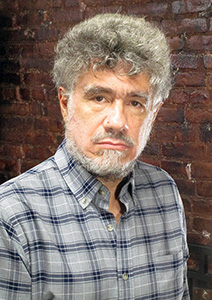
Karl may be contacted at kwittig@earthlink.net.