
Though the autism spectrum is as widely diversified as any group of people could possibly be, I view us as a single community. Any one segment of the population, however it may be defined, embodies both commonalities and differences, and ours is no exception.

Every way in which diversity exists within the human population is represented in our community: race, ethnicity, nationality, age, gender identity, occupation, socioeconomic class, the nature of our challenges and support needs, to name only a few. And yet, each one of us on the spectrum is autistic, no more and no less autistic than any other autistic individual. Rather, autism manifests differently across us.
Difference is often exploited as a justification for separation, and with separation comes a greater possibility of inequity, of injustice. The ravages of Jim Crow-era racial segregation come to mind as one case in point. Some want to break up the autism spectrum into subgroups which are aligned with the extent of one’s support needs, arguing that a separate diagnosis for those requiring 24-hour supervision and assistance, that of “profound autism”, could lead to more funding and improved services and research efforts for these individuals. If profound autism were to become its own diagnosis/identity, I would fear that the us vs. them dynamic I see within the autism community between those who are able to live independently and those who are unable to would only intensify.
Many of us mask our authentic autistic selves on an ongoing basis in an effort to fit in better with our non-autistic peers. We do so not by choice but out of necessity, often at great cost, and often in response to trauma. A consequence of chronic masking is that the true extent of our challenges remains hidden. When unmasked, the reality of the hardships we face is not as far removed from that of profound autism as many believe. Furthermore, one’s ability to mask, support needs and levels of independence evolve over time. Segmenting the autism spectrum becomes problematic considering these realities. In my view, it makes more sense to keep it intact and allow autistic individuals to move along it as warranted rather than jump from one diagnosis/identity to another.
The question of separation is fraught with several unknowns which are unsettling to ponder:
- Would a shift to a separate profound autism identification lead to the kinds of support, services and research outcomes advocates for separation believe would come to pass? There is never any guarantee that newly written rules and laws which, in this case, would govern how supports and services are to be provided, would be properly enacted and subjected to proper oversight.
- What impact would breaking up the spectrum into profound and non-profound subgroups have on the service and support needs of those who are not identified as profoundly autistic? “Independent” is a relative term. Individuals across the spectrum depend on assistance to varying extents. There are plenty of accommodations on which I depend to be at my best and without which I would be in deep trouble.
- How might those with unjust motives in positions of power and influence exploit the new autism paradigm to our detriment? Profound/non-profound separation could render one or both subgroups even more vulnerable to nefarious agendas than we already are.
- What if breaking up the autism spectrum were to result in “autism” pertaining only to those identified as profoundly autistic? Where would that leave me and all who view their autism as being core to self-identity? Upon finding out at age 40 that I am autistic, I worked particularly hard at accepting and eventually embracing my newfound identity, understanding that if I didn’t, I would never be able to attain true happiness in life. Years of effort in this regard would likely end up being for naught.
I have no idea how I would end up self-identifying, how I would present myself to others and what the resultant impact on my self-esteem would look like. “I used to be autistic but not anymore”? “I am non-profoundly autistic”? “I’m not sure who I am”? I reject all these descriptors because I am proudly and openly autistic. Autism is at the heart of who I am, and there are many who share this sentiment.
The desire for more research, supports and services for those autistic individuals who face hardships daunting enough to warrant around-the-clock supervision and assistance is abundantly understandable to me. I simply do not feel as though breaking up the spectrum is the answer. In my view, an unwavering commitment on the part of society to sufficiently invest in the care economy is the key. Regrettably, a monumental challenge, simply because we have chosen not to prioritize taking care of each other.
What will it take to change course? The cost in human terms has been immeasurable in that the care needs of so many have gone unmet for so long. Not merely with respect to autistic persons but to all disabled individuals and to everybody. All of us require care in one form or another. It’s a matter of societal priorities.
I believe that the conflict within the autism community with respect to services and support would be resolved if sufficient resources for all autistics were to be made available and if care needs assessments were individualized. Our community is too diversified when it comes to the nature of the help that is warranted for a “one size fits all” approach to work out. Utopian wishful thinking, no doubt, and that’s the problem. Throughout history, resource constraints and resource allocation malpractice have had a way of pitting humans against each other.
With regard to keeping the autism spectrum unified, doing so would be easier if we were to not allow the differences that exist among us to divide us and to acknowledge that which all autistics share: the reality that how we function with respect to behavior, communication, socialization, thinking and learning is inconsistent with normative societal expectations, none of which were established with us in mind. We contend with many of the same struggles, yes, to varying extents, but they’re still very real to all of us: pronounced sensory sensitivity, challenges around processing non-verbal cues, social anxiety, mental health vulnerabilities and ableism, to name a few. We all bring value to the table in our own unique ways. We are all human beings, deserving of dignity and respect.
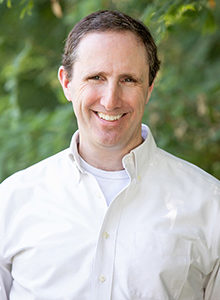
Sam Farmer is a neurodiversity advocate, writer, author, and public speaker. Identified later in life as autistic, he shares stories of lived experiences as well as ideas and insights as to how one can achieve greater happiness and success in the face of challenge and adversity. A Long Walk Down a Winding Road – Small Steps, Challenges, & Triumphs Through an Autistic Lens is his first book. Visit samfarmerauthor.com to learn more.


This article is a perfect example of why we need to go back to having separate categories such as Asperger’s syndrome and Profound autism. The simple fact that there are those who can ‘mask’ and those who can’t is reason enough to clearly and loudly separate the groups. Anyone who can make it to 40 without being diagnosed has no business trying to speak for those who were diagnosed with regressive autism as toddlers.
Hi, Lisa. Thank you for commenting.
Though I do understand where you’re coming from here, I respectfully disagree. I know autistic individuals with more modest support needs who either struggle to mask their authentic selves or can’t do so at all. Furthermore, I acknowledge as you do that there are sharp distinctions within our community with respect to support needs, just that I don’t think this reality justifies breaking up the autism spectrum. But that’s just me, speaking from lived experience and in accordance with who I am.
Thanks again for reaching out and all the best to you and yours.
Autistic 40 year olds were once toddlers who were pathologized, and toddlers who are pathologized now eventually turn 40.
Seems reasonable they share similar experiences.
Diagnoses are nothing more than clinical judgments; they don’t change reality.
Thanks for commenting, Burnett. All valid points, irrefutable in my judgement. A diagnosis should never be allowed to define who one is, how one identifies. Only each of us gets to decide these for ourselves.