Most autistic individuals develop special interests—deeply focused passions that go beyond typical hobbies. These interests are often characterized by intensity, prolonged engagement, and difficulty shifting attention away from the topic. The Diagnostic and Statistical Manual of Mental Disorders (DSM-5-TR) describes them as “restricted” and “abnormal in intensity or focus” (American Psychiatric Association, 2022).
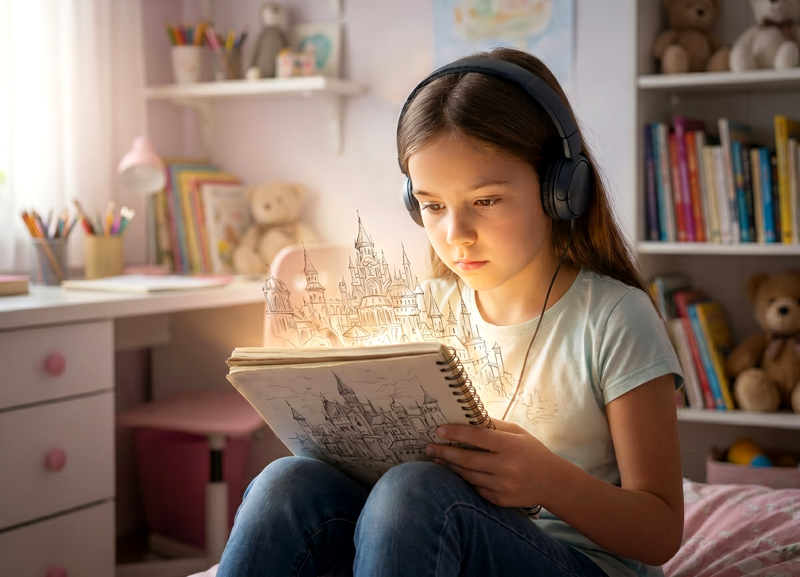
However, emerging research and autistic perspectives suggest that special interests are not merely repetitive behaviors. They can serve meaningful emotional, cognitive, and identity-related functions.
Importantly, the way special interests appear can differ between boys and girls. Research shows that the content of interests often follows traditional gender patterns. Autistic girls are more likely to report interests in dolls, animals, celebrities, arts and crafts, or fictional characters (Nowell et al., 2019), while autistic boys more frequently show object-centered interests such as trains or construction (Bourson & Prevost, 2022).
Because many of these interests appear socially typical, they are often viewed as less unusual. As a result, the intensity and depth of engagement may go unnoticed. Studies suggest that this difference contributes to underdiagnosis of autism in girls (Beggiato et al., 2017; Stephenson et al., 2023) and may also affect performance on diagnostic tools such as the Autism Diagnostic Interview–Revised (Rutter et al., 2003).
In addition, autistic girls are more likely to engage in masking or camouflaging behaviors—consciously or unconsciously adapting their behavior to fit social expectations (Allely, 2018; Libsack et al., 2021). When intense interests align with socially acceptable topics, their autistic characteristics may be even harder to recognize.
Understanding the hidden intensity behind seemingly typical interests is essential. When we focus only on what a girl is interested in, rather than how deeply she engages with it, we risk overlooking an important part of her neurodevelopmental profile.
Why Autistic Girls’ Interests Are Often Overlooked
Autism has always been perceived as a disorder that primarily affects boys, with male-to-female sex ratios commonly reported as 4:1 (Lai et al., 2015). Later research, however, indicates that the sex ratio disparity might be less than initially believed (Barnard-Brak et al., 2019), and in certain groups, it might even be equal. Indeed, ratios as low as 3:1 have been shown in children (Loomes et al., 2017), and they might be much lower in adults (Posserud et al., 2021). These results have prompted requests to better characterize females on the autistic spectrum and to include more of them in studies (Barnard-Brak et al., 2019). Autism is not the only condition where girls are underrepresented in research.
Males are frequently disproportionately overrepresented in clinical trials as well as fundamental research projects.
When comparing epidemiological studies that use active ascertainment to those that rely on clinical or educational records, the lower male preponderance indicates that we may be underdiagnosing autism among females. Several explanations have been proposed. Among these is the fact that certain studies on autism have only used male subjects, which has probably resulted in a skewed perception of the entire range of autism and its symptoms.
Additionally, it has been proposed that autistic girls are more inclined to form friendships and are better able to exhibit reciprocal discourse than autistic males (Lai et al., 2015). Although the “special interests” that autistic girls pursue might seem less unique, centered on subjects like those of their neurotypical peers, like a fascination with celebrities or horses, the depth and intensity of these interests are nevertheless unusual (Gould and Ashton-Smith, 2011). Furthermore, autistic women and girls may frequently intentionally mimic neurotypical females and use “camouflaging,” which could lead to underdiagnosis (Gould and Ashton-Smith, 2011). According to Pellicano et al. (2014), all of these factors may contribute to the exaggeration of the male preponderance in autism. As a result, autistic females may not receive the necessary diagnosis and support, which could have detrimental repercussions on their mental health and general well-being.
The disparities in the appearance and experiences of autistic girls have garnered more attention in recent publications (Leow et al., 2024; Mandy & Lai, 2017). Research has shown that autistic girls exhibit different traits from boys, despite the fact that many traits, including cognitive function and sensory demands, are the same for both sexes (Duvekot et al., 2017). Teachers and parents may overlook autistic girls’ special interests that fit more traditional gender stereotypes, like animals or celebrities (Sutherland et al., 2017), and their decreased repetitive behaviors, like flapping their hands (Gould & Ashton-Smith, 2011).
Since research shows that autistic girls participate in similar social activities and have comparable levels of close friendships to non-autistic girls, less obvious social differences may also have an impact on timely identification (Dean et al., 2017). It has been proposed that autistic females internalize their challenges, which may manifest as mental health issues (Bargiela et al., 2016), rather than externalizing their behavior (Hiller et al., 2014).
Emotional and Self-Regulatory Role of Interests
Special interests are not simply hobbies or preferences. For many autistic girls, they function as emotional anchors, helping them manage stress, anxiety, and sensory overload. Engaging deeply in an interest can provide predictability, comfort, and a sense of control in environments that often feel overwhelming.
Autistic self-advocacy perspectives consistently highlight the calming and restorative role of focused interests. Spending time with a preferred topic can reduce emotional fatigue and support recovery from social or sensory exhaustion. Rather than being a distraction from development, these interests often help autistic girls maintain emotional balance and resilience.
Research has also shown that special interests carry emotional significance beyond a purely functional or academic value. They are embedded in meaning-making processes and autistic identity formation. When these interests are dismissed as “obsessions,” an important coping strategy may be unintentionally removed.
Identity Formation and Sense of Self
Special interests can play a central role in identity development for autistic girls. Through their interests, many discover areas of competence, confidence, and self-expression. Qualitative research shows that autistic individuals frequently describe feeling valued and recognized for their expertise in their areas of interest (Goldfarb et al., 2021; Winter-Messiers, 2007).
For some, early interests later shape academic or professional pathways and influence long-term career development. Research further indicates that special interests help autistic individuals make sense of life events and social contexts, providing direction and meaning (Goldfarb et al., 2021; Winter-Messiers, 2007).
Person-centered interests—such as fascination with fictional characters, psychology, or celebrities—may also serve as tools for understanding relationships and social dynamics (McFayden et al., 2020). These interests are not superficial; they often reflect deep cognitive and emotional engagement.
Because many autistic girls develop interests that appear socially typical, the depth and intensity of these interests may be overlooked. Research suggests that autistic girls are more likely to have age- and gender-normative interests compared to autistic boys, contributing to underrecognition (Nowell et al., 2019; Grove et al., 2018). When adults focus only on whether an interest looks “normal,” they may miss its emotional importance and developmental value.
Social Camouflaging Through “Acceptable” Interests
In addition, girls with autism are more likely to engage in camouflaging strategies—consciously or unconsciously masking autistic traits in social contexts (Hull, Petrides, & Mandy, 2020; Cook et al., 2021). Having interests that align with socially accepted gender norms may further obscure recognition of intensity. As a result, clinicians and educators may underestimate the presence of restricted or fixated interests if they focus solely on the topic rather than depth (Nowell et al., 2019).
Risks When These Interests Are Misunderstood
When special interests are dismissed as phases or excessive behaviors, autistic girls may lose a key source of emotional regulation and identity support. Misinterpretation of autistic behaviors in girls is well documented and contributes to underdiagnosis and unmet needs (Hiller et al., 2014; Mandy et al., 2012).
Because camouflaging is more common among autistic females (Hull et al., 2020; Cook et al., 2021), discouraging visible expressions of interest may intensify masking behaviors. Over time, this can contribute to emotional exhaustion and internalized distress (Bargiela et al., 2016).
Supporting, rather than suppressing, special interests may reduce anxiety and promote well-being.
What Parents and Educators Should Notice
If you are a parent of an autistic girl — or suspect your daughter may be autistic — her interests deserve careful attention. Interests that appear typical on the surface may still carry unusual intensity and emotional importance.
Look beyond the topic: An interest in animals, fictional characters, celebrities, crafts, or books may seem age-appropriate. Consider the depth of engagement:
- How much time does she spend thinking or talking about it?
- Does she struggle to disengage?
- Does the interest help her feel calm, safe, or confident?
Intensity and emotional reliance often matter more than the subject itself.
Notice the emotional role: Many autistic girls turn to their interests for comfort after school, during stress, or when overwhelmed. These interests may function as important tools for emotional regulation. Removing or restricting them without understanding their purpose can increase anxiety.
Avoid shaming language: Describing an interest as an “obsession” or “too much” may create shame around something that provides stability and confidence. Respectful curiosity is more helpful than correction.
Use interests as bridges: Special interests can support:
- learning and academic engagement
- communication and conversation
- social connection with peers who share similar passions
When incorporated thoughtfully, they can become pathways for growth rather than barriers.
Support balance without suppression: Healthy routines and flexibility are important, but they can be developed collaboratively. The goal is not to eliminate intense interests but to help autistic girls build balance while preserving what brings them meaning and joy.
Most importantly, a special interest is rarely just a pastime. It may be a source of identity, comfort, and strength.
Conclusion
When autistic girls’ interests appear socially typical, their depth and significance can be easily overlooked. An interest in animals, books, celebrities, psychology, or art may not immediately signal autism. Yet what distinguishes autistic special interests is not the topic itself, but the intensity, emotional reliance, and cognitive immersion involved.
Focusing only on whether an interest looks “normal” risks missing its regulatory, developmental, and identity-shaping functions. For many autistic girls, special interests provide stability in overwhelming environments, structure in social uncertainty, and confidence in areas of strength.
Misunderstanding these interests can contribute to delayed identification, increased masking, and emotional distress. In contrast, recognizing and respecting them can support wellbeing, self-esteem, and authentic development.
When parents, educators, and clinicians shift from asking “Is this interest typical?” to asking “What role does this interest play in her life?” they move closer to understanding autistic girls more accurately and supporting them more effectively.

To contact the author, please email [email protected].
References
Aggarwal, S., & Angus, B. (2015). Misdiagnosis versus missed diagnosis: Diagnosing autism spectrum disorder in adolescents. Australasian Psychiatry, 23(2), 120–123.
Allely, C. S. (2018). Understanding and recognising the female phenotype of autism spectrum disorder and the “camouflage” hypothesis: A systematic PRISMA review. Advances in Autism, 5(1), 14–37. https://doi.org/10.1108/AIA-09-2018-0036
American Psychiatric Association. (2022). Diagnostic and statistical manual of mental disorders (5th ed., text rev.; DSM-5-TR). https://doi.org/10.1176/appi.books.9780890425787
Bargiela, S., Steward, R., & Mandy, W. (2016). The experiences of late-diagnosed women with autism spectrum conditions: An investigation of the female autism phenotype. Journal of Autism and Developmental Disorders, 46(10), 3281–3294. https://doi.org/10.1007/s10803-016-2872-8
Barnard-Brak, L., Richman, D., & Almekdash, M. H. (2019). How many girls are we missing in ASD? An examination from a clinic- and community-based sample. Advances in Autism, 5(3), 214–224. https://doi.org/10.1108/AIA-11-2018-0048
Beggiato, A., Peyre, H., Maruani, A., et al. (2017). Gender differences in autism spectrum disorders: Divergence among specific core symptoms. Autism Research, 10(4), 680–689. https://doi.org/10.1002/aur.1715
Bourson, L., & Prevost, C. (2022). Characteristics of restricted interests in girls with ASD compared to boys: A systematic review. European Child & Adolescent Psychiatry, 33, 987–1004. https://doi.org/10.1007/s00787-022-01998-5
Cook, J., Hull, L., Crane, L., & Mandy, W. (2021). Camouflaging in autism: A systematic review. Clinical Psychology Review, 89, 102080.
Dean, M., Harwood, R., & Kasari, C. (2017). The art of camouflage: Gender differences in the social behaviors of girls and boys with autism spectrum disorder. Autism, 21(6), 678–689. https://doi.org/10.1177/1362361316671845
Duvekot, J., van der Ende, J., Verhulst, F. C., & Greaves-Lord, K. (2017). Examining sex differences in autism spectrum disorder. Autism, 21(6), 703–715.
Goldfarb, Y., Zafrani, O., & Gal, E. (2021). “It’s in my nature”: Subjective meanings of repetitive and restricted behaviors and interests voiced by adults with autism spectrum disorders. In E. Gal & N. Yirmiya (Eds.), Repetitive and restricted behaviors and interests in autism spectrum disorders (pp. 13–29). Springer.
Gould, J., & Ashton-Smith, J. (2011). Missed diagnosis or misdiagnosis? Girls and women on the autism spectrum. Good Autism Practice, 12(1), 34–41.
Grove, R., Hoekstra, R. A., Wierda, M., & Begeer, S. (2018). Special interests and subjective wellbeing in autistic adults. Autism Research, 11, 766–775.
Hiller, R. M., Young, R. L., & Weber, N. (2014). Sex differences in autism spectrum disorder based on DSM-5 criteria. Journal of Abnormal Child Psychology, 42(8), 1381–1393.
Hull, L., Mandy, W., Lai, M.-C., et al. (2019). Development and validation of the camouflaging autistic traits questionnaire (CAT-Q). Journal of Autism and Developmental Disorders, 49(3), 819–833.
Hull, L., Petrides, K. V., & Mandy, W. (2020). The female autism phenotype and camouflaging: A narrative review. Review Journal of Autism and Developmental Disorders, 7, 306–317.
Lai, M.-C., Lombardo, M. V., Auyeung, B., Chakrabarti, B., & Baron-Cohen, S. (2015). Sex/gender differences and autism: Setting the scene for future research. Journal of the American Academy of Child & Adolescent Psychiatry, 54(1), 11–24.
Leow, K. Q., Tonta, M. A., Lu, J., Coleman, H. A., & Parkington, H. C. (2024). Towards understanding sex differences in autism spectrum disorders. Brain Research, 148877.
Libsack, E. J., Keenan, E. G., Freden, C. E., et al. (2021). A systematic review of passing as non-autistic in autism spectrum disorder. Clinical Child and Family Psychology Review, 24(4), 783–812.
Loomes, R., Hull, L., & Mandy, W. P. L. (2017). What is the male-to-female ratio in autism spectrum disorder? A systematic review and meta-analysis. Journal of the American Academy of Child & Adolescent Psychiatry, 56(6), 466–474.
Mandy, W., & Lai, M.-C. (2017). Towards sex- and gender-informed autism research. Autism, 21(6), 643–645.
Mandy, W., Chilvers, R., Chowdhury, U., et al. (2012). Sex differences in autism spectrum disorder. Journal of Autism and Developmental Disorders, 42, 1304–1313.
McFayden, T. C., Antezana, L., Albright, J., et al. (2020). Sex differences in autism spectrum disorder diagnosis. Review Journal of Autism and Developmental Disorders, 7(2), 119–126.
Nowell, S. W., Jones, D. R., & Harrop, C. (2019). Circumscribed interests in autism: Are there sex differences? Advances in Autism, 5(3), 187–198.
Pellicano, E., Dinsmore, A., & Charman, T. (2014). What should autism research focus upon? Autism, 18(7), 756–770.
Posserud, M., Solberg, B. S., Engeland, A., Haavik, J., & Klungsøyr, K. (2021). Male to female ratios in autism spectrum disorders. Acta Psychiatrica Scandinavica, 144, 635–646.
Rutter, M., Le Couteur, A., & Lord, C. (2003). Autism diagnostic interview–revised. Western Psychological Services.
Stephenson, K. G., Norris, M., & Butter, E. M. (2023). Sex-based differences in autism symptoms. Journal of Autism and Developmental Disorders, 53(2), 624–632.
Sutherland, R., Hodge, A., Bruck, S., Costley, D., & Klieve, H. (2017). Parent-reported differences between school-aged girls and boys on the autism spectrum. Autism, 21(6), 785–794.
Winter-Messiers, M. A. (2007). From tarantulas to toilet brushes. Remedial and Special Education, 28(3), 140–152.