Imagine your child has thoughts, feelings, and ideas but struggles to say them out loud. For many parents of children on the autism spectrum, this is a daily experience. This is where Augmentative and Alternative Communication (AAC) can help.
What is AAC?
Augmentative and Alternative Communication (AAC) refers to a broad range of methods, tools, and strategies used to support or replace spoken and written language for individuals with complex communication needs. These can include anything from gestures and picture boards to high-tech speech-generating devices. Yet, despite its proven benefits, AAC use is often surrounded by stigma and misconceptions. This negative perception can lead to resistance among users and their families, ultimately hindering full adoption and consistent use. This article will explain what Augmentative and Alternative Communication is, challenge the stigmas and common misunderstandings surrounding its use, and provide practical strategies to encourage language development and more confident integration of AAC into everyday life.
AAC can be categorized into two distinct groups: aided or unaided. Unaided AAC refers to communication methods that do not require external tools or devices. Instead, these methods rely solely on the user’s body to convey messages. Examples of unaided AAC include manual signs, gestures, facial expressions, and body language. Aided AAC refers to communication methods that require external tools, devices, or materials beyond the user’s own body to support or replace speech and writing. For the purpose of this article, the term AAC will refer to aided AAC systems.
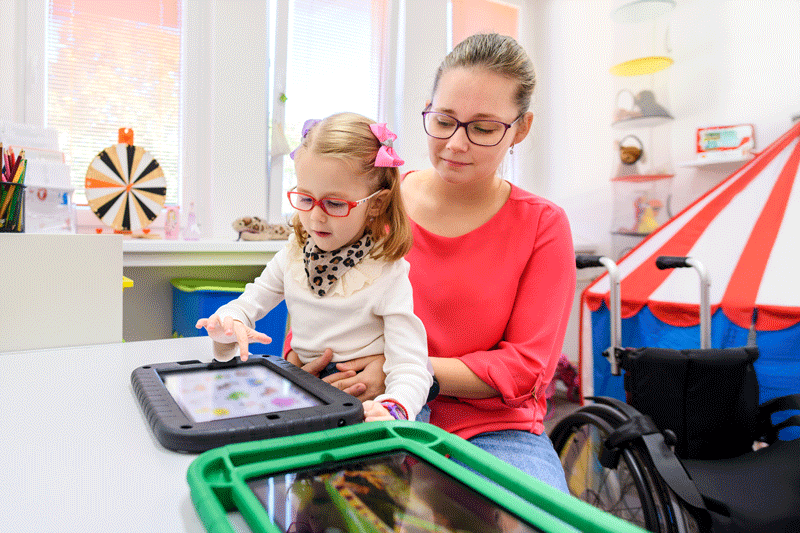
Aided AAC is typically classified into three categories based on technological complexity: low-tech, mid-tech, and high-tech. Low-tech AAC includes tools that do not require electricity or batteries. Examples are communication boards, Picture Exchange Communication System (PECS), or symbol/picture cards. Mid-tech devices often include simple battery-powered devices with limited speech output or messaging options. Examples include single-message voice output devices and simple recorded-message devices. High-tech AAC utilizes more advanced tools such as speech-generating devices (SGDs), tablets with communication applications, or specialized computers that allow dynamic screen communication through symbols or typing. There is no one best type of AAC system. Many individuals benefit from a combination of tools, depending on where they are and what they are doing. Different situations may call for different tools. For example, bringing a high-tech device to the beach might not be practical due to glare from sunlight or the risk of damage from sand and water. In such cases, a low-tech printed communication board may be more appropriate to meet the user’s needs.
Common Misconceptions
Misconception #1 – Although AAC is becoming more common, especially for autistic children, many families still worry that using AAC might prevent their child from learning to speak. Fortunately, research shows the opposite. Numerous studies on this topic have been conducted, and the findings suggest that AAC does not hinder speech but, in fact, promotes it. In a systematic review, Millar et al. found that “none of the 27 cases demonstrated decreases in speech production as a result of AAC intervention, 11% showed no change, and the majority (89%) demonstrated gains in speech” (2006, p. 248). These findings offer reassuring evidence for parents that supporting AAC use can actually enhance, rather than replace, their child’s spoken communication.
Misconception #2 – AAC is not only for children who are completely non-speaking; many children with limited or unclear speech also benefit from using it. AAC can work alongside spoken language to enhance clarity and ensure the intended message is understood. AAC is often used by individuals with reduced oral language abilities or speech production difficulties. By supporting and supplementing speech, Augmentative and Alternative Communication empowers children to express themselves more effectively and engage more fully in everyday communication and social interactions.
Misconception #3 – Some people mistakenly believe that individuals who do not speak are less intelligent. In reality, limited speech does not mean limited cognitive abilities. Many individuals who rely on AAC have average or above-average intelligence, but they face physical or neurological challenges that affect their ability to speak. Assuming a lack of intelligence based on limited speech can lead to missed opportunities for meaningful communication, learning, and inclusion. It’s important for families, educators, and the community to know that AAC helps people express themselves, and it is not a reflection of how smart they are. Everyone deserves the chance to be heard, understood, and supported with the right tools to share their ideas.
Empowering Families: Practical AAC Strategies for Everyday Use
Parents’ attitudes toward AAC can either support or limit its success. When families embrace AAC and use it daily, children are more likely to thrive. If families struggle to accept and integrate AAC into daily life, they can greatly limit a child’s voice or their ability to express themselves.
Parents play a central role in making AAC successful. The more they model and support AAC at home, the more children learn to use it confidently. When parents or caregivers model language on the AAC system, children learn how to use it more naturally. The term “modeling” or “aided language stimulation” refers to an evidence-based strategy used in AAC where communication partners use the AAC system themselves while speaking to demonstrate how to use the system. It involves pairing spoken language with the selection of symbols on an Augmentative and Alternative Communication device to provide consistent, multimodal input that supports language development. For example, during breakfast, a parent might tap the icon “like” on the AAC device and say, “I like apples,” while holding up an apple. This shows the child how to use the AAC device naturally during real-life moments. The adult is modeling the word “like” both by saying it out loud and selecting it on the AAC device, which helps the child learn how to use it to express their own preferences. It is important to note that in typical language development, young children hear a word thousands of times before they are able to say it. Similarly, AAC users need repeated exposure to both hearing and seeing language modeled on their device before they can begin to use it themselves.
Research supports the use of modeling as an effective teaching strategy. “Sennott et al. (2016, p. 110), in their review of AAC modeling-based interventions, reported consistently positive and substantial effects on the pragmatic, semantic, syntactic, and morphological development of young beginning communicators.” Other effective teaching strategies include wait time, scaffolding, and creating opportunities. Wait time involves pausing to allow the individual extra time to respond; scaffolding refers to providing support to build on existing skills, and creating opportunities means structuring the environment to encourage communication attempts. Using a mix of strategies gives children the best opportunity to develop strong communication skills. Families should understand that when starting out, it does not need to be perfect, and there is no “right” or “wrong” way. Every small step using AAC helps children learn.
Lastly, ongoing communication between the family and the speech-language pathologist (SLP) is essential for achieving success both at home and in the community. Families should openly share their priorities, strengths, and challenges so that the SLP can help shape an intervention plan that is meaningful and practical. In turn, the SLP should consider the family’s background, values, and goals for their child to ensure the plan aligns with the vision and needs of the family.
Conclusion
In summary, AAC is any tool or method that helps someone communicate when speaking is difficult. This can include pictures, signs, communication devices, or apps. While some people may believe that using Augmentative and Alternative Communication will stop a child from learning to talk, research shows that AAC actually supports language development. To use AAC successfully at home, it’s important to choose a system that fits the child’s needs, practice using it in daily routines, and keep communication fun and meaningful. Families should also stay in regular contact with their speech-language pathologist to adjust the plan as the child grows and learns. With patience, consistency, and teamwork, AAC can open up new ways for a child to connect with others.

Holly Pinto is a school-based speech-language pathologist and current assistive technology student at Southern Connecticut State University. For more information, email: pintoh1@southernct.edu.
References
Millar, D., Light, J., & Schlosser, R. (2006). The impact of augmentative and alternative communication intervention on the speech production of individuals with developmental Disabilities: a research review. Journal of Speech, Language, and Hearing Research, 49(2), 248–264. https://doi.org/10.1044/1092-4388(2006/021)
Sennott, S. C., Light, J. C., & McNaughton, D. (2016). AAC Modeling Intervention Research Review. Research and Practice for Persons With Severe Disabilities, 41(2), 101–115. https://doi.org/10.1177/1540796916638822