In my experience, after high school, services taper off, structured opportunities for recreation and social engagement often diminish dramatically and isolation begins with many adults on the spectrum. Research consistently shows that autistic adults are significantly more likely to experience loneliness and social isolation than their neurotypical peers (Howlin & Moss, 2012). Without intentional spaces that foster belonging, individuals can become disconnected not only from community life, but from their own sense of possibility.
The Shelanu/Supper Club, a program that is part of Westchester Jewish Community Services (WJCS) in Westchester County, NY, was created to change that reality and to show that belonging comes first.
What began as a small gathering of six or seven consistent members has steadily grown into a vibrant community averaging 16 participants at weekly programs, with major events drawing nearly 100 people. I do not believe that the growth is accidental, but reflects a deeper truth, that programs like this are needed in the community. Research and statistics alone show that when individuals are provided consistent access to recreation, peer connection, and meaningful roles, that their confidence grows, their independence strengthens, and their quality of life significantly improves to the point where they make plans on their own.
From One Small Gathering to a Thriving Community
On Valentine’s Day 2026, nearly 100 individuals filled the room for an evening centered on joy, connection, and celebration. It was not simply a party. It was a demonstration of what happens when community is cultivated intentionally.
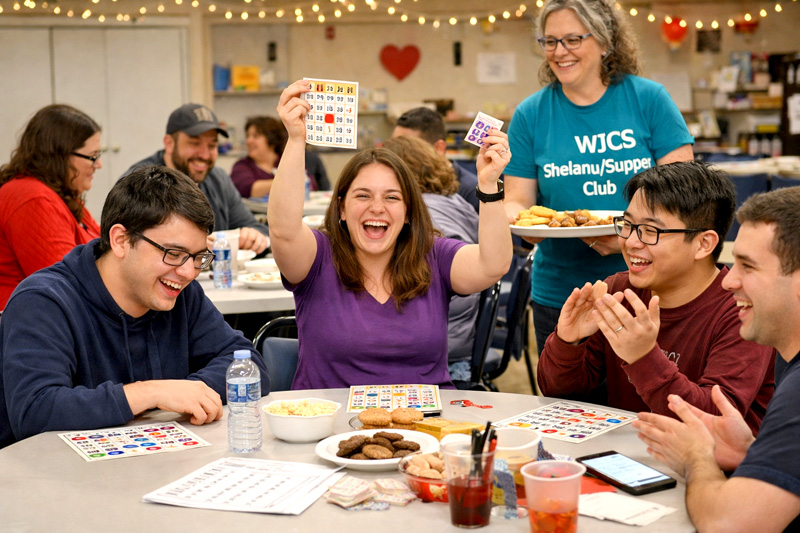
Members played customized bingo games, cheering loudly as numbers were called and erupting in celebration when someone won a prize. The applause was not subtle or restrained. It was enthusiastic, authentic, and shared. When one person won, everyone celebrated. That collective joy is not a small detail. It is fair to say that when an individual feels like they belong with a shared positive experience, the strength of the group increases, and the individual’s wellbeing improves.
Throughout the evening, members also had the opportunity to take home therapeutic stuffed animal horses and have their photographs taken, thanks to the generosity of Garrett’s Promise. For many, these were more than keepsakes. They were tangible reminders of being valued and seen. Photographs capture moments, but they also reinforce identity. They say, “You were here. You mattered.” What is even more inspiring is that I have got feedback that the horses now play a role in some of the participants’ everyday lives, as they hold the horse close to their chest when they need support.
Recreation Has Become a Bridge to Independence
For adults on the autism spectrum, structured recreational environments can provide predictable routines while still encouraging social flexibility, which is where the WJCS Shelanu/Supper Club programs come into play.
It may begin with something as simple as a shared meal at their favorite restaurant. The magic of the program is when members volunteer on their own to help set up tables, distribute food, and ensure everyone has what they need. Others assist with attendance, greeting peers at the door and checking names off the list. Some wait patiently with friends for paratransit to arrive, making sure each person boards safely. These roles are meaningful and an important part of creating independence and purpose which emerges through participation.
Studies show that meaningful activity contributes directly to positive self-esteem and perceived competence in autistic adults (Hendricks, 2010). When members are entrusted with responsibilities, they internalize the message that they are capable contributors, not passive recipients of services.
In one program, a member who struggles with verbal communication helped another participant practice reading aloud. The moment was quiet but powerful. Peer support replaced hierarchy. Strength supported vulnerability. In spaces where communication differences are understood rather than judged, individuals often discover abilities that had previously remained hidden.
Reducing Isolation Through Consistency
Consistency is one of the defining characteristics of WJCS Shelanu/Supper Club. Programs are offered regularly, at predictable times, in environments that emphasize emotional safety. Members know they will be welcomed and families know their child will be supported and cared for. Even though isolation rarely disappears overnight, it lessens gradually and is replaced by routine, familiarity, and trust.
Parents share that their adult children have found their first true friendships. Members describe looking forward to the program all week. For individuals who previously spent evenings alone, the shift is profound. Through social participation, we see the improved mental health of many individuals and reduced anxiety in many situations.
When members return week after week, relationships deepen and even some inside jokes are created. This is rooted in the feeling of belonging and the creation of a community where confidence is formed and relaxation happens.
The Power of Being Seen
At large gatherings like Valentine’s Day 2026 or our yearly Thanksgiving/holiday party, the room is filled not only with activity but with affirmation. Cheers during Bingo. Applause for prize winners. Smiles captured in photographs. Volunteers and staff offering encouragement. Peers helping one another navigate social moments. These experiences reinforce identity, a sense of belonging, being seen, and feeling valued.
When autistic adults are part of a community where differences are normalized and strengths are celebrated, their sense of self shifts from what they see as their own shortcomings to endless possibilities. WJCS Shelanu/Supper Club focuses on what members can do and helps them believe in themselves.
Each person brings their own unique strength to the event. One person takes attendance with precision. Another ensures everyone is fed. Someone else reminds peers of upcoming events. Others assist with reading, games, or helping friends board transportation safely. Each role communicates competence and reinforces mutual respect.
Growth as Evidence of Impact
The growth we have seen over the last few years reflects that families are searching for safe spaces where their adult child can feel included and develop authentic friendships. It reflects a broader recognition that recreation and leisure are not luxuries, but necessities.
Many of the families I speak with informed me that there are limited or no real opportunities for community and recreational activities in their area. WJCS Shelanu/Supper Club began with six or seven regular attendees. Today, weekly averages have doubled, and milestone celebrations approach triple digits. Growth does not dilute intimacy. Instead, it expands the circle of belonging. It is fair to say that when you prioritize belonging, it fills a critical gap.
As numbers increase, so does visibility. Community members witness what inclusion looks like in practice. They see individuals cheering, volunteering, leading games, and supporting one another. The more the community is exposed to these practices, the more it helps to shift their perceptions of viewing themselves as limited to viewing themselves as contributory and meaningful.
Creating Stronger Communities for Everyone
When communities make room for neurodivergent adults to gather, contribute, and lead, the social identity strengthens. Inclusive recreation challenges stereotypes and fosters empathy. It demonstrates that diversity enhances, rather than detracts from, communal life.
Members carry newfound confidence into other environments. Families experience relief and hope. Volunteers grow up with understanding and compassion; what begins as a place to gather becomes a place to thrive. Each new member that walks through that door strengthens the mission, belonging comes into play and we can see how the transformation follows.

Nicholas R. Primavera, MS, MBA, is Coordinator of the WJCS Shelanu/Supper Club/Wellness. To learn more about Westchester Jewish Community Services, please visit www.wjcs.com.
References
Hendricks, D. (2010). Employment and adults with autism spectrum disorders: Challenges and strategies for success. Journal of Vocational Rehabilitation, 32(2), 125–134.
Howlin, P., & Moss, P. (2012). Adults with autism spectrum disorders. Canadian Journal of Psychiatry, 57(5), 275–283.