Spending time outside offers more than just fresh air — it opens doors to physical wellness, emotional growth, and social inclusion, especially for adults with intellectual and developmental disabilities (IDD). With thoughtful support from caregivers, family members, and direct support professionals (DSPs), outdoor experiences can be tailored to everyone’s interests and needs, creating meaningful opportunities for self-expression and connection.
Why Outdoor Engagement Matters for Adults with IDD
Incorporating outdoor activities into daily or weekly routines can significantly enhance the lives of individuals with IDD. Movement-based activities like walking or gardening support overall health and mobility, while creative outdoor experiences outdoors foster emotional well-being and personal growth.
Natural environments can help reduce stress and provide sensory-rich experiences. Feeling the breeze, noticing wildlife, or simply listening to outdoor sounds can offer calming, grounding effects. These small but powerful encounters with nature can make a big difference in day-to-day quality of life.
Engaging in outdoor group activities also nurtures social bonds and a sense of belonging. Whether it’s participating in a shared hobby or simply enjoying time together outside, these experiences build trust, communication, and community.

Outdoor Activities That Promote Growth and Joy
When outdoor activities are chosen and adapted with intention, they can meet a wide range of abilities and preferences. The goal is not just to have fun — though fun is certainly part of it — but to support independence, skill-building, and meaningful engagement.
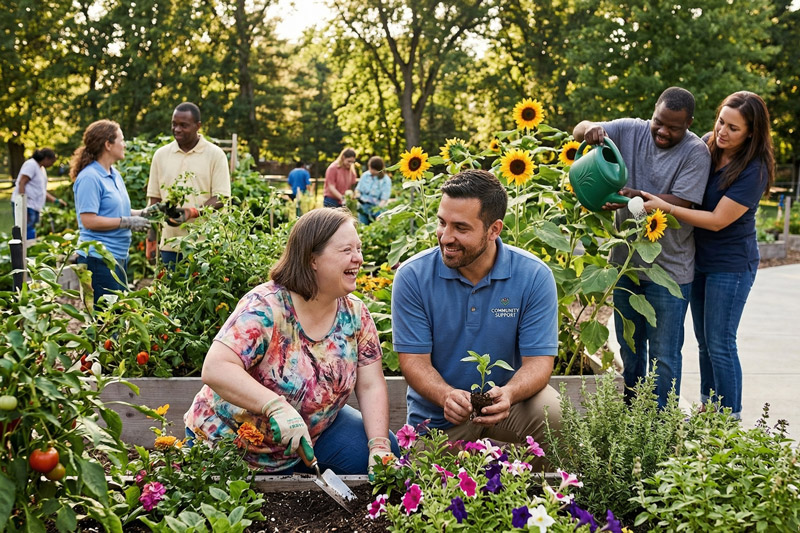
Gardening is a favorite among many adults with IDD because it’s both calming and empowering. Planting, watering, and harvesting provide structure, responsibility, and sensory interaction. Plus, nurturing plants over time helps cultivate patience, focus, and pride.
Outdoor art projects allow for creative exploration in nature. Whether painting in a park, crafting with natural materials, or making sidewalk chalk murals, these activities blend imagination with movement and motor skill development — all in a relaxed, pressure-free environment.
Adapted physical activity — from nature walks and yoga in the park to inclusive sports like bocce or seated movement games — is essential to health and community participation. These activities promote fitness and confidence while supporting peer relationships and reducing feelings of isolation. In fact, research has shown that exposure to nature improves cognitive function, blood pressure, and mental health, while decreasing the likelihood of cardiovascular disease.
Training Supporters to Facilitate Outdoor Success
For adults with IDD to fully benefit from outdoor experiences, the people supporting them must be prepared with the right tools and mindset. Training both family caregivers and DSPs ensures consistency, safety, and an emphasis on empowerment.
Supporting Families and Friends
Family members and close friends are often a constant presence in the lives of individuals with IDD. Their role in outdoor engagement is critical — not just for safety, but also for creating experiences that feel natural and enjoyable.
Effective training should cover communication techniques, sensory considerations, and ways to support autonomy. Loved ones should learn how to identify environments that are welcoming and accessible, and how to introduce new outdoor activities in a way that feels manageable.
It’s also important to reinforce inclusive practices — allowing individuals to make choices, express preferences, and participate in meaningful ways. With the right guidance, families can create outdoor routines that are empowering, not overwhelming.
Preparing DSPs for Outdoor Engagement
Direct support professionals are key partners in helping individuals with IDD explore the outdoors confidently. Their training should center on person-centered approaches that consider mobility, behavior support, communication preferences, and individual goals.
DSPs benefit from scenario-based learning that prepares them to handle common challenges — like navigating public spaces, supporting individuals during transitions, and adapting plans due to weather or health concerns.
In addition to safety and planning, training should emphasize how to promote independence and inclusion during outdoor time. That might mean helping someone join a group activity, encouraging them to try something new, or simply creating space for choice and exploration.

Jordan Baker is Content Marketing Manager at Relias. For more information, visit www.relias.com.