At AABR’s Program Without Walls (PWOW) and Day Habilitation Programs, we believe that access to hobbies, recreation, and cultural exploration is not a luxury — it is a pathway to growth, confidence, identity, and belonging. For individuals with intellectual and developmental disabilities (IDD), opportunities to garden, explore museums, engage in immersive art, and document their experiences through photography are powerful tools for expanding horizons and strengthening self-determination.
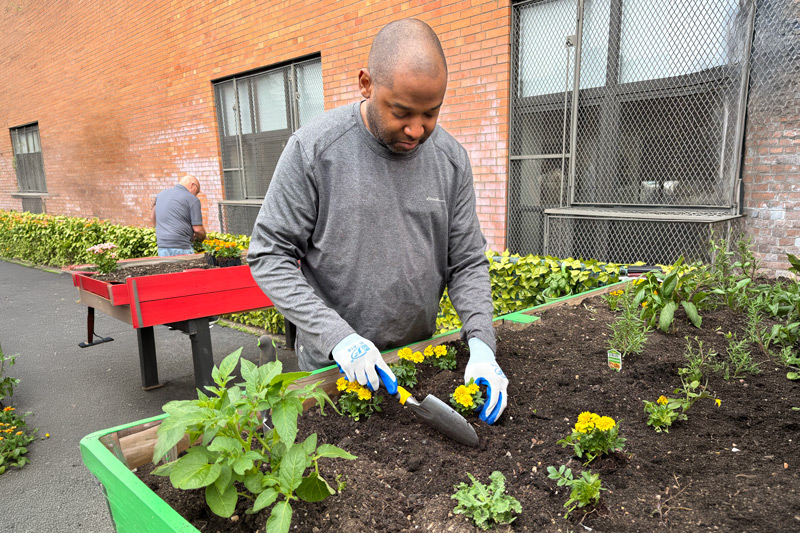
Every plant tells a story of care, consistency, and building confidence that comes from creating something with your own hands.
Through our Move, Create & Meditate initiative, we intentionally design experiences that push beyond routine and into discovery. The goal is to create structured opportunities for individuals to try something new, build mastery, and see themselves reflected in the broader community.
Cultivating Growth: Urban Gardening in Action
At our Day Habilitation site, participants have been tending to urban raised garden beds — planting, watering, harvesting, and learning about seasonal cycles. Gardening provides far more than fresh herbs and vegetables. It builds patience, responsibility, sensory awareness, and pride in tangible accomplishment. Watching something grow under your care reinforces a powerful internal message: I can nurture, I can create, I can sustain.
Our Program Without Walls participants have expanded this work through urban agriculture at Shirley Chisholm State Park, where individuals engage in hands-on farming experiences. Named for the first Black woman elected to Congress, the park itself symbolizes resilience and leadership. Participants prepare soil, plant crops, and learn sustainable growing practices while also learning about community stewardship and environmental responsibility.
Urban agriculture allows individuals to see themselves as contributors to something larger. It reinforces interdependence, teamwork, and connection to community spaces that are fully integrated into city life.
Seeing Ourselves in History: Cultural Exploration
Recreation and leisure include access to cultural institutions — spaces that haven’t always been designed with true inclusion in mind.
Recently, our PWOW group visited the Jackie Robinson Museum. One participant, DJ, was skeptical at first. He assumed a museum trip would be “boring.”
But as he moved through the exhibits, his attention sharpened. He learned not just about Jackie Robinson’s accomplishments, but about the hostility, isolation, and relentless pressure Robinson endured to integrate Major League Baseball.
“I didn’t know how much he had to overcome to succeed,” DJ said. “Being African American, like me, it made me feel proud. I’m grateful I didn’t have to struggle the same way, but it makes me want to achieve more for myself.”
That’s why access matters. Cultural spaces aren’t just repositories of history; they are places where people locate themselves within them. For DJ, the visit wasn’t passive. It connected past struggle to present possibilities and reframed what achievement can look like in his own life.
When individuals with IDD engage with spaces that affirm culture, identity, and contribution, they build a stronger narrative about who they are and what they can become.
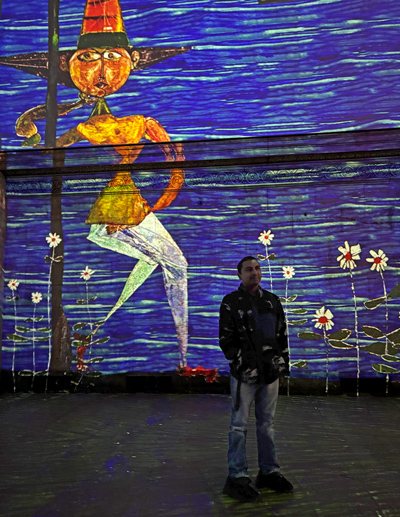
Stepping inside the art — where imagination expands and new ways of seeing take shape.
Immersed in Creativity: Experiencing Art Differently
Our Day Program also recently visited Hall des Lumières for the immersive Gustav Klimt: Gold in Motion light exhibit featuring the work of Gustav Klimt.
Unlike traditional museum viewing, the exhibit surrounded participants with moving projections of art — walls, ceilings, and floors transformed into living canvases. The experience was sensory, expansive, and participatory.
Tina described it beautifully:
“It was so different. It wasn’t just an art picture — it was all around us. We were in the art. It made me feel like I could float and be part of the art.”
For individuals who may process information differently or benefit from multisensory engagement, immersive art creates accessibility through design. It removes barriers to understanding and replaces them with movement, light, and embodied experience.
More importantly, it reinforces imagination. Tina didn’t just observe art — she became part of it.
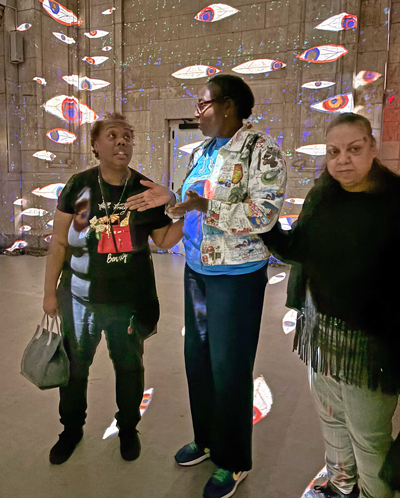
In spaces designed for immersion, connection happens naturally through conversation, movement, and shared discovery.
Documenting Our Journeys: Photography as Voice
Through newly acquired cameras, participants are now memorializing their adventures across New York City’s cultural institutions. Photography empowers individuals to choose what is meaningful, frame their own perspective, and tell their own story.
The act of documenting — rather than simply attending — shifts individuals from passive participants to active creators. They are building portfolios, reflecting on experiences, and sharing their viewpoints with peers and families. In doing so, they strengthen communication skills, creative expression, and confidence.
These experiences are guided by a simple belief: people grow when they are supported through new challenges — not protected from them.
- Move: Physical engagement through gardening, walking tours, and active exploration.
- Create: Artistic expression through immersive exhibits, photography, and hands-on projects.
- Meditate: Intentional reflection that helps participants process what they’ve experienced and what it means to them.
Trying something unfamiliar — entering a museum for the first time, standing inside a room of projected digital art, or tending crops at an urban farm — can be uncomfortable. That discomfort is not a barrier; it’s part of the process. With the right supports in place, participants build tolerance for uncertainty, develop problem-solving skills, and strengthen confidence through real experience.
When someone moves from hesitation to participation, the shift isn’t theatrical. It’s practical. “I’m not sure” becomes “I did that.”
Expanding access to recreation and leisure is not a luxury. It’s an equity issue. Individuals with IDD deserve the same access to cultural institutions, public spaces, art, agriculture, and shared civic life as any other New Yorker. Inclusion means being present in the places where community happens — not on the sidelines.
These experiences are not about filling a calendar. They’re about expanding opportunity — and allowing individuals to see themselves as participants in the broader community.
As DJ reminded us, something that begins with hesitation can lead to unexpected connection and motivation.
Through intentional programming, strong community partnerships, and a commitment to inclusive exploration, AABR’s Program Without Walls and Day Programs continue to demonstrate a simple truth: when access increases, so do expectations — and outcomes.

Libby Traynor, LSCW, is Chief Executive Officer of AABR, Inc.