For researchers who study autism and related neurodevelopmental conditions, postmortem brain tissue is a critical scientific resource that cannot be replicated by imaging technologies, tissue culture, animal experiments or artificial intelligence. However, survey results published by Autism BrainNet in April1 show that while Americans theoretically support autism research using postmortem brain tissue, in practice, there is very limited understanding of the brain donation process.
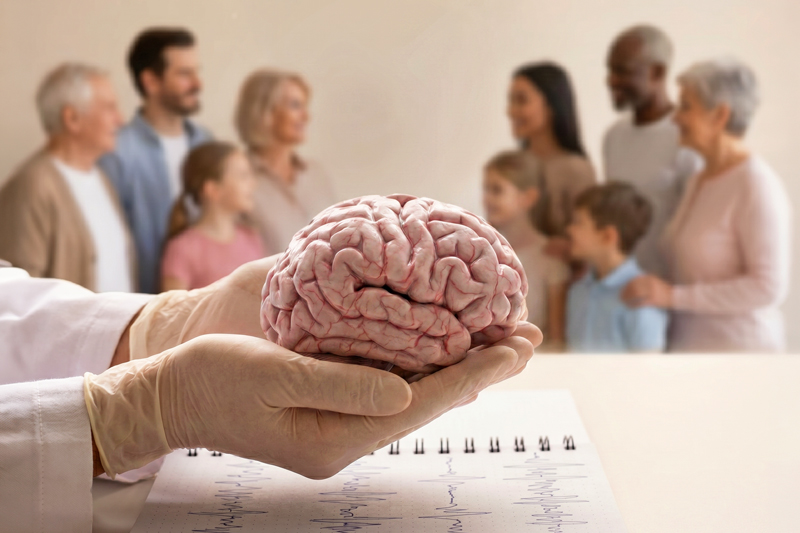
Specifically, the survey of more than 1,000 people found that 70 percent of respondents had never heard of brain donation, despite 92 percent agreeing that analysis of the autistic brain is extremely or very important to advance research.
Brain Donation Awareness Lags Behind Organ Donation
Signing up to be an organ donor is relatively common. For example, you can indicate your preference for organ donation when renewing a driver’s license.2 According to the survey, more than 80 percent of respondents are familiar with organ donation and more than half are registered organ donors. Yet, despite this knowledge, only 15 percent of respondents know that brain donation is not included when you sign up for organ donation. It is a separate process that requires advanced consideration and planning.
Survey Highlights Misunderstandings About Brain Donation
The survey, conducted Feb. 26-Mar. 2, 2026, also reveals widespread confusion about how brain donation works and who is eligible. For example, less than half of the respondents know that postmortem brain donation needs to take place hours, not days or weeks, after death, and not when a person is alive, as a small percentage indicated.
In addition, misunderstandings about eligibility were common as nearly one‑third of respondents incorrectly believe certain medical or neurological conditions, specifically autism or epilepsy, disqualify someone from donating, despite their high value to researchers who need a heterogeneous selection of brains to study autism and related conditions.
At Autism BrainNet, more than 400 families have already donated their loved ones’ brains after their passing. Kathy Stein donated her autistic brother Ed’s brain when he passed in the summer of 2024. Of the experience, she has said, “My younger, autistic brother Ed led a rich and happy life, surrounded by friends and family who adored him and appreciated his many interests and his big, loving character. When he passed, I donated his brain because it is a positive way to acknowledge what a wonderful person he was and to extend his legacy. Imagine how much we can learn about the biological causes of autism and related neurodevelopmental disorders through his contribution.”
Importantly, brain donation is for research purposes only, not for transplantation. While brain donation is not included in organ donor registries, brain donors can also be organ and tissue donors, and brain donation is not limited by most medical conditions.
What Can We Learn From Autistic Brains?
When researchers have direct access to human brain tissue, many different types of studies can be conducted using a wide variety of techniques. Investigators might study disease-relevant cellular changes or map biological pathways that may be amenable to therapeutic intervention.3 They can also identify autism genetic markers and/or study the relationship between autism and other, often co-occurring, neurological conditions. While Autism BrainNet doesn’t conduct this research directly, the program does evaluate the goals and methods of all studies that request postmortem tissue from our repositories to ensure that the studies are of the highest quality.
Autism BrainNet accepts donations from people with a diagnosis of autism, even when other diagnoses are present, from people with a genetic diagnosis associated with autism, whether or not they have a diagnosis of autism, and from nonautistic people. To preserve the scientific value of the brain tissue, a donation should be received within 48 hours after death. Notably, there is no cost to families, and all logistics are handled by Autism BrainNet. Brain donation does not impact any kind of funeral arrangements preferred by families.
Making the Donation Decision
As a Clinical Coordinator at Autism BrainNet, my job is to support families and autistic adults through the donation process. In my experience, the autistic adults (before their death) and families who donate feel very good about how they are creating connections between the autism community and researchers worldwide. One single brain donation can fuel hundreds of studies for decades, yet more are needed given the heterogeneity of the community. When a brain is donated, you are extending the legacy of that individual.

Autism BrainNet, funded by the Simons Foundation and Simons Foundation International, facilitates the collection, processing, storage and distribution of postmortem brain donations to advance autism and related neurodevelopmental disorders research worldwide. To learn more about brain donation and Autism BrainNet, please visit our website at AutismBrainNet.org or call the 24/7 hotline at 1-877-333-0999.
Footnotes
- Autism BrainNet. Survey: Americans Strongly Support Autism Research— But Most Don’t Know Brain Donation Is Needed to Advance It, https://www.autismbrainnet.org/2026/04/01/survey-americans-strongly-support-autism-research-but-most-dont-know-brain-donation-is-needed-to-advance-it/ Last accessed on 5-4-26
- Donate Life. https://donatelife.net/donation/donor-registries/dmv/ Last access on 5-4-26
- Drug Target Review. How brain donation is driving autism research. March 6, 2026. https://www.drugtargetreview.com/how-brain-donation-is-driving-autism-research/1866805.article Last accessed on 5-4-26