For many autistic students, receiving a college acceptance letter is not the end of the journey; it is the beginning of a new set of opportunities and challenges. While conversations surrounding autism often focus on early intervention and K–12 education, far less attention is given to what happens when autistic individuals enter higher education. Yet college is a critical period for developing independence, self-advocacy, community connections, and future career pathways.
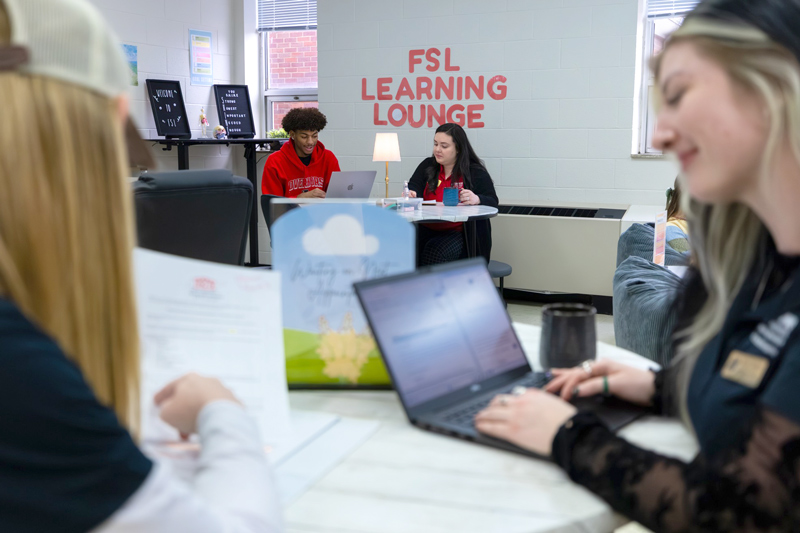
Students engage in collaborative executive functioning guidance, peer support, and academic skill development within the FSL Learning Lounge, a welcoming and sensory-responsive space designed to promote belonging, self-advocacy, and student success.
As institutions continue to prioritize inclusion, autistic students deserve more than access to accommodations. They deserve environments where they experience belonging, autonomy, and meaningful participation in campus life.
Beyond Access
Federal disability laws have helped increase access to higher education for autistic students. However, access alone does not guarantee success. Many autistic students continue to encounter barriers related to executive functioning, sensory environments, social navigation, communication differences, and self-advocacy (Cai et al., 2018).
College campuses are often designed around unwritten expectations. Students are expected to manage competing deadlines, navigate complex social systems, communicate with professors, advocate for accommodations, and independently seek support when challenges arise. These demands can create obstacles for students whose strengths and communication styles may differ from those of their peers.
Research suggests that autistic students are less likely to complete postsecondary degrees than their non-disabled peers despite demonstrating the intellectual ability to succeed academically (Anderson et al., 2017). This reality highlights the need to move beyond compliance-based approaches toward intentional practices that foster inclusion and belonging.
The Importance of Self-Advocacy
One of the most significant transitions for autistic students entering college is the shift from parent-directed support to self-directed advocacy. In elementary and secondary education, families and educators often play a central role in coordinating services and accommodations. In higher education, students are expected to disclose disabilities, communicate needs, and navigate support systems independently.
Self-advocacy is not simply a skill; it is a pathway to autonomy. Students who understand their strengths, challenges, and support needs are better positioned to make informed decisions, build confidence, and access resources that promote success. Colleges can support self-advocacy by providing opportunities for students to practice communication, goal setting, problem-solving, and decision-making in supportive environments. Faculty and staff can also create spaces where students feel safe discussing needs without fear of judgment or stigma.
Creating Autism-Friendly Campuses
Inclusion is not achieved through a single accommodation or program. It is built through a campus culture that recognizes and values neurodiversity. One area receiving increased attention is sensory responsiveness. College environments are often filled with sensory demands such as bright lighting, crowded hallways, noisy classrooms, and unpredictable social settings. For many autistic students, these environments can contribute to stress, fatigue, and reduced engagement.
Many institutions are also beginning to recognize the value of intentionally designed sensory-responsive spaces. On our campus, students have access to a variety of environments designed to meet different sensory and learning needs. These include a Learning Lounge that provides a welcoming, flexible space for connecting with trained peer tutors; a dedicated Study Room for structured academic work; and a Sensory Room designed to support regulation and restoration during periods of stress or sensory overload. Students will also have access to a sensory-responsive computer lab equipped with flexible seating, noise-reducing support, and adaptive technology. Recognizing that sensory needs vary widely, we have worked to create spaces that support both sensory-seeking and sensory-avoiding students through a campus sensory hub model that offers a range of environmental options. These spaces communicate an important message: students do not need to change who they are to belong; campuses can be designed to support diverse ways of learning, regulating, and engaging. Importantly, sensory-responsive practices benefit more than autistic students. They contribute to learning environments that are accessible and supportive for all learners.
Belonging Matters
Perhaps one of the most overlooked aspects of student success is belonging. Many autistic students report feelings of isolation and difficulty connecting with peers (Van Hees et al., 2015). While academic support is essential, students also need opportunities to build relationships, develop community, and participate fully in campus life (Van Hees et al., 2015).
Belonging is fostered when students see themselves reflected in campus culture, feel respected for who they are, and have opportunities to contribute to their strengths. Peer mentoring, student organizations, leadership opportunities, and inclusive programming can all play important roles in creating these experiences.
A Lifespan Perspective on Inclusion
The theme of advocacy and inclusion extends across the lifespan. For autistic individuals, college can represent an important bridge between adolescence and adulthood. The lessons learned during these years often shape future employment, community involvement, relationships, and self-determination.
Supporting autistic college students is not simply about helping them succeed in the classroom. It is about creating environments where they can develop confidence, exercise agency, and discover their own voices. As the autism community continues to expand conversations around communication, advocacy, and inclusion, higher education must remain part of that dialogue. Every student deserves the opportunity not only to attend college, but to thrive there.

Jena Collins, EdD, is a Support Specialist Coordinator at Full Spectrum Learning, Austin Peay State University. She can be reached at [email protected] or (931) 221-7550.
References
Anderson, A. H., Stephenson, J., & Carter, M. (2017). A systematic literature review of the experiences and supports of students with autism spectrum disorder in post-secondary education. Research in Autism Spectrum Disorders, 39, 33–53.
Cai, R. Y., Richdale, A. L., Uljarević, M., Dissanayake, C., & Samson, A. C. (2018). Emotion regulation in autism spectrum disorder: Where we are and where we need to go. Autism Research, 11(7), 962–978. DOI: 10.1002/aur.1968
Van Hees, V., Moyson, T., & Roeyers, H. (2015). Higher education experiences of students with autism spectrum disorder: Challenges, benefits, and support needs. Journal of Autism and Developmental Disorders, 45(6), 1673–1688. DOI: 10.1002/aur.1968