
Congratulations to the Class of 2026, along with the families, caregivers, mentors, faculty, and support systems who helped make it happen, often through sacrifice, stress, and some very real sticker shock. (Yes, I have a son in higher education and have seen enough tuition statements to feel the pain.)
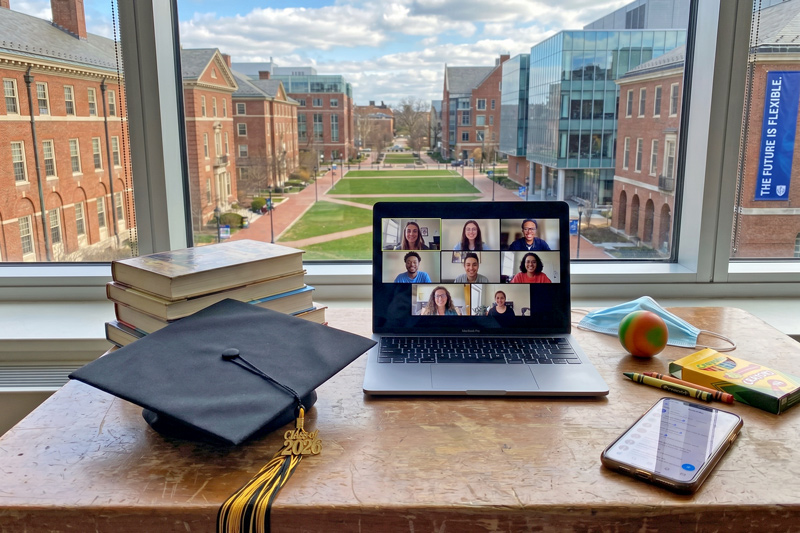
Today’s students took a unique path to graduation.
They finished high school during a pandemic, inherited political and social instability, and came of age tethered to a digital umbilical cord of notifications and endless scrolling. At times, it feels as though campuses handed them a stress ball and a box of crayons and expected them to somehow hold themselves together.
Yet they have shown remarkable resilience.
I’ll admit this graduation season felt oddly meta. AI mispronounced student names while speakers discussing the future of AI were booed off the stage. Somewhere in the distance, you could almost hear the Skynet soundtrack beginning to play. There was something painfully on-the-nose about NYU inviting Jonathan Haidt, author of The Anxious Generation, to speak at commencement. It felt a little like inviting the person documenting the fire to hand out diplomas in a burning building.
But beneath the irony lies a deeper truth: colleges are educating a generation whose needs have fundamentally changed.
Recent reporting, including in The New York Times, points to growing numbers of students with autism, neurodivergence, developmental disabilities, and chronic health conditions entering higher education. Many are not navigating one challenge alone. Anxiety and depression frequently travel alongside those diagnoses, particularly for autistic students. These realities shape everything from academics and social life to whether a student feels they belong on campus at all.
These realities do not exist in isolation, even if university departments often do.
Counseling, disability services, advising, student life, equity offices, campus ministry, career services, and academic departments frequently operate as separate worlds. Students are left trying to connect the dots.
I’ve seen that firsthand for years.
Modern inclusion must move beyond accommodation forms and think more broadly about how students actually experience campus life. Students should not have to constantly mask, suppress, or over-adapt simply to survive systems that were supposedly built to support them.
For some students with complex support needs, parents, caregivers, siblings, and other natural supports continue to play an important role in long-term success. Independence remains an important goal, but inclusion should not require institutions to pretend that support systems suddenly disappear the moment a student moves into a residence hall.
Colleges should be thinking less about isolated services and more about connected support. A single weekly counseling appointment, often with a clinician who may not be trained in co-occurring conditions, is rarely enough to address challenges that touch every part of a student’s life.
Campuses should also create more sensory-friendly, flexible, and supportive environments that reduce burnout, overload, and the constant need to mask. Most importantly, institutions need to build systems for the students who are actually arriving on campus today, rather than relying on assumptions inherited from previous generations.
I do wonder if higher education has spent the last two decades building for the wrong future.
Many colleges invested heavily in expansion, branding campaigns, luxury amenities, and a version of campus life that largely existed before the pandemic. Today’s students often need something different: flexibility, accessibility, quieter spaces, hybrid and technology-integrated learning environments, and systems that acknowledge the realities of modern life.
As a student myself in a largely virtual counseling program, I’ve still managed to build meaningful relationships, learn from my peers, and grow professionally. In fact, I’m the oldest person in my cohort, and the experience has challenged some of my assumptions about what higher education needs to look like. I can complete coursework before work, be present for my family, and still fully participate in the academic experience.
Obviously, in-person learning still matters, especially in creative endeavors. Yet having spent more than two decades around a prestigious Brooklyn creative institution, I’ve heard versions of the same concerns from hundreds of students. Critique is important, and nobody becomes a better artist, designer, architect, or writer without honest feedback. But there is a difference between challenging students and subjecting them to unnecessarily harsh, emotionally exhausting dressing-downs. Particularly at a time when education has moved toward more strengths-based approaches, the expectation of constant all-nighters and extreme workloads shouldn’t be treated as a badge of honor. The goal should be growth, not survival.
Higher education should absolutely remain a place where difficult, controversial, and uncomfortable ideas can be explored. But faculty also have a responsibility to lead those conversations thoughtfully. Today’s students are navigating unprecedented levels of anxiety, polarization, and digital overload. Intellectual challenge and psychological safety are not opposites.
I’ll be honest. As someone who is neurodivergent myself, the emotional intensity, bureaucracy, and growing divisions on many campuses can be genuinely anxiety-producing. I know I’m not the only one who feels that way.
The future of college inclusion depends on whether institutions are willing to move beyond liability, compliance, and siloed services toward a more connected vision of student support.
This generation has already proven its resilience.
The real question is whether higher education is willing to evolve alongside them.

Simcha Weinstein is a best-selling author, syndicated columnist, and Community Engagement and Inclusion Coordinator at Families Together in New York State. He is the founder of the Jewish Autism Network, a grassroots advocacy initiative, and serves as a statewide lead for NYADD, the New York Alliance for Developmental Disabilities. In 2026, he was honored as Family Advocate of the Year by the New York State Office of Mental Health through its What’s Great in Our State awards program. Simcha also serves on the New York State Council on Developmental Disabilities. He lives in Brooklyn, New York.


ישר כוח רבי
I think in Israel they really doing inclusion for the maximum extent from what I know . They don’t have the funding but they have the hart and soul .