
He stood over me and his companion Steve on the steps leading into the Senate building and prayed “God, give me the words today.” It was March 24, 2026, and my 30-year-old autistic brother Stephen was invited to Capitol Hill to meet with Congressional staffers and share his experience living with a severe disability in the United States. He was nervous as he felt like this could be a fight for his life.
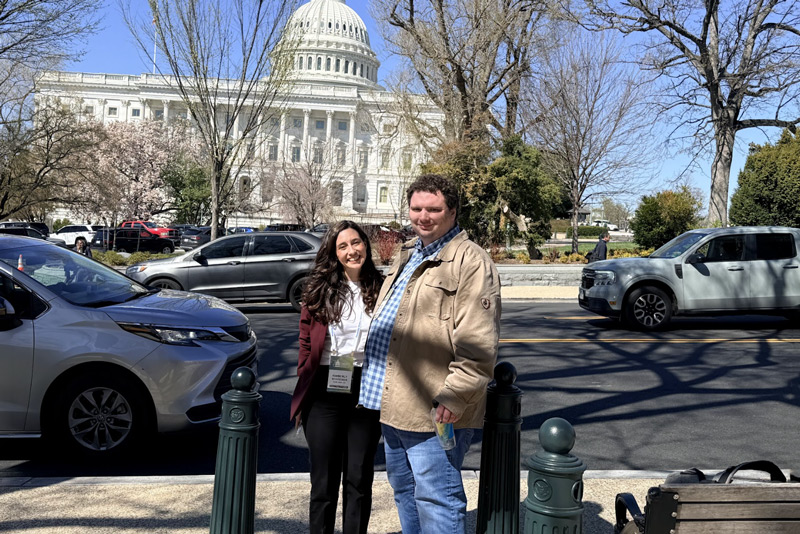
Kimberly Schreiber with Brother Stephen
When Stephen was six years old, I remember playing with him on the floor of a doctor’s waiting room while my mom whispered with the doctor on the other side of the room. We had spent the past few weeks in these waiting rooms. I knew something was wrong, and I worried that somehow it was my fault.
My mother explained that he had something called Autism Spectrum Disorder. I didn’t understand what that meant. How was his love of Blue’s Clues a symptom? What would his life look like?
As we grew up together, our opportunities and experiences diverged sharply. He started going to a special school away from mine. Navigating the special education system was a nightmare for my parents and traumatizing for Stephen. One facility we visited looked more like a prison than a school with high fences, morose inhabitants, and staff whose role seemed more about restraining “behaviors” than nurturing students. Stephen tried every bad program that didn’t work for him, multiple times over, until he finally landed somewhere he thrived.
He was learning. Building friendships. Growing into a thoughtful, compassionate, intelligent young man with hopes of living on his own and working in healthcare. Attending his graduation was one of the happiest days of our family’s life.
Then the whispers came back.
The same fears my parents had carried since his diagnosis returned as they came to understand his options in adulthood. It turns out there would be no support.
He aged out, came home with nothing to do, and sat on a waitlist to receive services of any kind. Within a year, Stephen tried to take his own life.
Stephen spent that first year of his adulthood in a mental institution. When I visited him, I found a different man. He was emaciated with a scraggly beard and unkempt hair. He was scared. He shared a room with people with serious mental health problems, some with violent histories. There were fluorescent lights overhead. Under them, there was no healing. This was a place to keep you from killing yourself, not to help you live.
Because of this horrific crisis, we were informed that Stephen was off of the waitlist and would receive the Home and Community Based Service (HCBS) Waiver through Medicaid. He transitioned from the mental institution to a group home. He got on his feet again in an environment of support. He now has his own apartment through Section 8 housing, a wonderful day program, a job at his local grocery store and Steve. Steve is his companion who came with him to Capitol Hill, cracking jokes the whole time. Steve teaches Stephen how to cook healthily, talk to girls, go to the gym, and how to be a gentleman. His life is transformed.
And now, it is all at risk.
H.R. 1, President Trump’s sweeping budget bill moving through Congress, would slash federal Medicaid funding by more than $1 trillion, forcing states into impossible choices about where to cut. Home and Community Based Services waivers, which fund everything Stephen has — his apartment, his day program, his job support, Steve — are optional under federal law. States are under no obligation to protect them. When budgets tighten, they are the first to go. Stephen went to Capitol Hill because he knew that without explicit federal protection, a single budget decision could take everything he has rebuilt and send him back to that fluorescent-lit room.
When President Trump’s H.R. 1 goes into effect, federal Medicaid funding will be slashed by over $1 trillion forcing states to make impossible choices about where to cut. HCBS waivers are optional under federal law. States are under no obligation to protect them. When budgets tighten, they are the first to go.
Stephen understands this better than any policy analyst. Standing before Congressional staffers, he asked them directly: “How can you say that support is only optional when it is really not? It is like needing a wheelchair. Are you saying the wheelchair is optional? It is not. It is just a different type of support for a different need.”
The room went quiet.
He went to Capitol Hill because he knows that without explicit federal protection, a single budget decision could take everything he has rebuilt.
He closed his remarks by invoking the familiar principle that a society is measured by how it treats its most vulnerable.
Congress has a choice. It can treat disability care as optional line items to be sacrificed when budgets get hard, or it can establish the explicit federal protections that make this kind of support a guaranteed right rather than a conditional favor. If you believe the wheelchair is not optional, you already know what the right answer is.
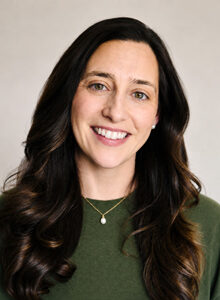
In addition to being Stephen’s sister, the author is the founder and CEO of NeuroNav, which helps individuals with intellectual and developmental disabilities design and manage their own support programs under California’s Self-Determination Program. NeuroNav is the largest independent provider of facilitation services in the state.


“How can you say that support is only optional when it is really not? It is like needing a wheelchair. Are you saying the wheelchair is optional? It is not. It is just a different type of support for a different need.”
Too right, Stephen. Well said.