Everyone has a voice, even if they don’t communicate through speech. Expression can take many different forms — from gestures and facial expressions to communication devices, pictures, and written words. When people with developmental disabilities are given the tools, support, and opportunities to communicate in ways that work for them, they can more fully express themselves, advocate for their needs, build relationships, and participate in their communities.
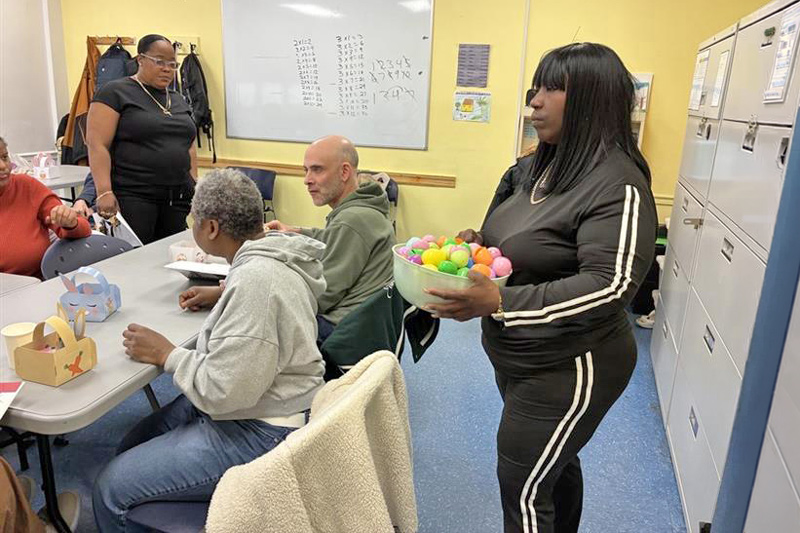
Keshia in her classroom at WellLife Network
For Keshia Bellot, a Direct Support Professional (DSP) at WellLife Network, helping people find and use their voice is one of the most meaningful parts of the job. Through her work, she has learned that meaningful communication isn’t defined by speech alone, it’s about understanding each person’s way of communicating and ensuring they have opportunities to be heard.
“Everyone communicates differently,” Keshia explains. “Part of our role as DSPs is learning how each person communicates and making sure they have opportunities to express themselves.”
That support from DSPs can have a profound impact and is often the foundation that makes inclusion possible.
Communication Takes Many Forms
While some people communicate verbally, others may rely on augmentative and alternative communication (AAC), sign language, gestures, visual supports, or a combination of methods.
Learning to recognize and respond to those forms of communication is an important part of a DSP’s role. Too often, people who communicate differently are underestimated or excluded from conversations that directly affect them. By taking the time to understand different communication styles, DSPs can help ensure that their perspectives, preferences, and goals remain at the center of decision-making.

Communication access is crucial. Studies have found that people with developmental disabilities who require communication supports often experience greater participation in their communities, stronger relationships, and improved quality of life when those supports are available (McNaughton et al., 2025).
Recent advancements in services for people with developmental disabilities have provided more opportunities for people to find and use their own voice and exercise their independence, such as Supported Decision-Making and Home Enabling Supports. Direct support workers are increasingly critical in supporting people to exercise their ability to have their own voice and make their own decisions.
NYS Office for People With Developmental Disabilities Commissioner Willow Baer said, “There is no more powerful right than the ability to make your own choices and to be able to have those choices be understood.”
Communication Creates Opportunity
Keshia has seen firsthand how empowering it can be when people are given the time, support, and resources they need to communicate.
When people have access to communication tools and supportive communication partners, they are better able to make choices, participate in decisions that affect their lives, and advocate for themselves. Researchers have found that effective communication supports can increase opportunities for autonomy, social participation, and meaningful engagement within communities (Yau et al., 2024).
People with complex communication needs are often excluded from social interactions and decision-making opportunities, not because they lack the desire to participate, but because others may not recognize or support their preferred methods of communication (Taylor, 2020). This can lead to isolation and limit opportunities for meaningful engagement.
Direct support professionals play an important role in changing that experience by advocating for access in everyday settings. This might mean ensuring communication devices are available during a community outing, encouraging peers to engage with someone who communicates differently, or simply taking the time to listen and respond thoughtfully.
“When we take the time to understand how someone communicates, we’re showing them that their thoughts, feelings, and opinions matter,” Keshia says. “Everyone deserves to be included and have their voice heard.”
A person who is able to communicate their preferences gains more control over their daily life. Someone who can share their thoughts and experiences is better equipped to build relationships and connect with others. Over time, these opportunities help foster confidence, independence, and a stronger sense of belonging.
Communication Creates Connection
At its core, communication is about human connection. It is how people share experiences, express emotions, advocate for themselves, and participate in the world around them. Having access to the right communication supports can open doors to opportunities that might otherwise remain out of reach.
This is one of the many reasons why the work of direct support professionals is so meaningful. DSPs are not simply assisting with daily tasks; they are helping people exercise choice, build relationships, pursue their goals, and participate more fully in their communities.
“Every person has a voice, even if it doesn’t sound the way people expect,” Keshia says. “When you help someone communicate, you’re helping them show the world who they are.”
That philosophy reflects the heart of the #MoreThanWork campaign, which highlights the many ways direct support professionals empower people with developmental disabilities to live fulfilling lives. Whether supporting communication, fostering independence, or helping someone advocate for themselves, DSPs make a difference through the relationships they build and the opportunities they create.
References
McNaughton, D., Light, J., Beukelman, D., et al. (2025). Supporting Meaningful Participation in Society by Adults With Developmental Disabilities Who Require Augmentative and Alternative Communication. Augmentative and Alternative Communication.
Taylor, S. (2020). The Ethics of Inclusion in AAC Research of Participants with Complex Communication Needs. Scandinavian Journal of Disability Research, 22(1), 204–213.
Yau, S. H., Brock, K., & colleagues. (2024). Comparing and Contrasting Barriers in Augmentative and Alternative Communication: Perspectives of AAC Users, Families, and Professionals. Journal of Developmental and Physical Disabilities.