Key Points
- Autistic individuals often experience significant barriers to recreation, limiting social engagement, physical development, and overall well‑being.
- Drowning risk remains a major safety concern, with autistic children being 160 times more likely to drown than their neurotypical peers (APD Florida, 2024).
- The aquatics program’s dual‑focus, and scope‑and sequence curriculum strengthens both waters safety skills and broader developmental abilities.
Individuals with autism often encounter barriers that limit participation in recreational activities, reducing opportunities for social connection, physical development, and overall wellbeing. Water based recreation, such as water safety instruction and swimming lessons, can offer meaningful engagement when delivered in environments tailored to the needs of autistic individuals. Research and practice show that structured aquatic instruction supports regulation, builds confidence, and promotes inclusion across the lifespan.
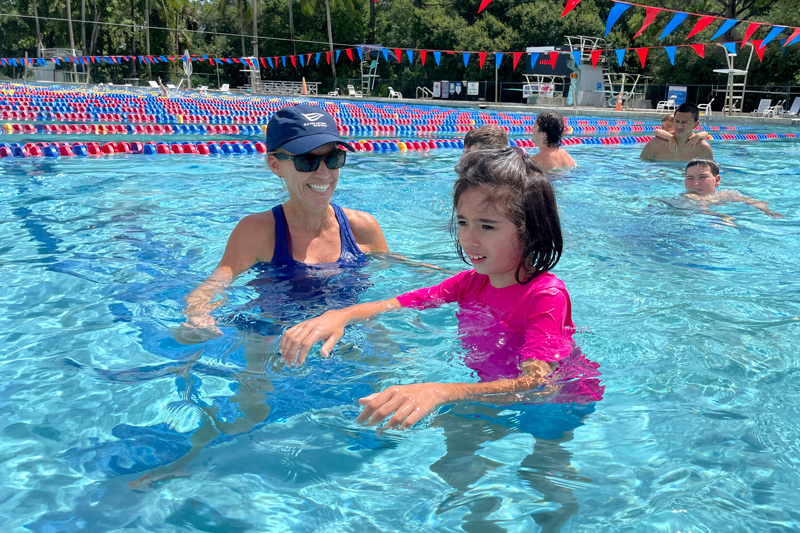
Swim instruction will be taught at the Els for Autism® Specialized Autism Friendly Recreation Complex starting in Spring 2027
High-quality aquatic programming is especially important given the significantly elevated drowning risk among autistic children. Addressing safety and access requires programs grounded in evidence‑based best practices that include professional training for adaptive swim instructors, individualized instruction, and the use of a structured scope‑and‑sequence curriculum. Implementing programs with these essential components ensures that participants progressively develop water safety skills, strengthen broader life skills, and cultivate lifelong participation in aquatics.
The Urgent Need for Water Safety
The urgency of water safety cannot be overstated. Drowning is the leading cause of death for children with autism. Florida data since 2021 show persistent, preventable fatalities among autistic children, with Palm Beach County among the most affected regions (Children’s Services Council of Palm Beach County, 2024). Therefore, water safety instruction must begin early, be explicit and repetitive, and be reinforced across people and environments.
The Benefits of Swimming and Autism
Aquatic environments offer unique sensory, physical, and emotional benefits. Water provides natural resistance, deep pressure, and buoyancy, elements that can support regulation, motor development, and confidence (van ‘t Hooft et al., 2024). The rhythmic qualities of movement in water can help some individuals with autism attend, sequence actions, and tolerate new sensations (Hynes & Block, 2023). Yet, access remains inequitable due to limited program availability, few trained instructors, and environments not suited to autistic individuals’ sensory or communication needs. Inclusive programs, integrating evidence-based practices for autism are essential to remove these barriers, ensure access, and sustain meaningful engagement.
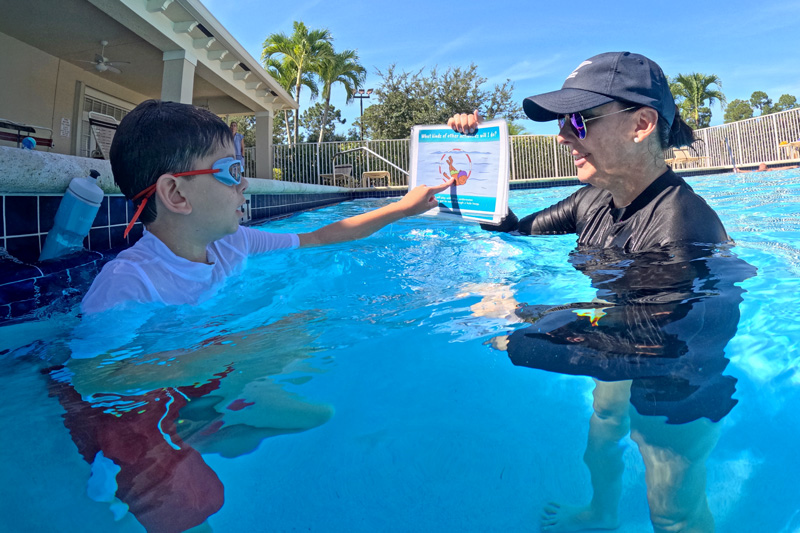
Autism‑informed swim instruction in progress: Instructor uses visual supports and graduated prompting in 1:1 lesson
A Dual‑Focused Program Model
A dual‑focused instructional model underscores high‑quality aquatic instruction for individuals with autism. Therefore, aquatic programming should include: (1) professional training for certified adaptive swim instructors through online learning modules, accessible materials, and opportunities for consultation; and (2) direct instruction for autistic individuals using a curriculum grounded in evidence‑based practices identified by the National Clearinghouse on Autism Evidence and Practice (Steinbrenner et al., 2020). Instructor training emphasizes effective environmental arrangement, clear prompting hierarchies, visual supports, reinforcement systems, behavior supports, and family collaboration, ensuring that instructors are prepared to individualize water safety and swimming instruction while maintaining fidelity to research‑informed teaching strategies.
Scope‑and‑Sequence Curriculum in Practice
A structured scope‑and‑sequence curriculum is a central component of evidence‑based aquatic instruction for individuals with autism. Instruction typically begins with safety routines, water acclimation, and tolerance, then progresses to breath control, floating and rolling, propulsion, and safe exits. Progressive curricula that include leveled lessons, each broken into teachable steps with clear mastery criteria, help ensure systematic skill development. Instructor‑to‑participant ratios are recommended to shift across levels, often beginning with 1:1 or 1:2 instruction for early learning and gradually moving toward 1:3 or 1:4 formats as participants demonstrate water safety and swim skill competencies. A layered learning approach helps participants build foundational comfort before introducing more complex skills, promoting confidence, safety, and early success.
An evidence‑based program also incorporates systematic assessment to guide individualized, data‑driven instruction. A comprehensive process should include a pre‑lesson questionnaire, an in‑water skills evaluation, a progression checklist with ongoing tracking, and mastery‑based advancement criteria. These measures assist instructors in identifying strengths, tailoring supports, and monitoring acquisition, maintenance, and generalization of skills.
Session lengths typically average 40 minutes and follow a predictable structure to support regulation and learning, including a warm-up, core instruction, play based reinforcement, and a structured exit routine. To ensure individualization, lessons should be adapted through flexible pacing, skill-based grouping, and adjustments for sensory, behavioral, and communication needs. Safety protocols, such as deck checks, consistent safety cues, arm’s reach supervision, and visual pool rules, are critical to integrate in each lesson. Visual supports, including schedules, cue cards, first/then boards, communication boards, and social narratives, enhance comprehension, reduce anxiety, and promote independence across aquatic activities.
Communication Supports
Communication supports are central to safe, accessible water safety and swimming instruction. Participants benefit from concise language paired with visuals (e.g., symbol icons, photos, gestures), consistent routines, and embedded choices. Instructors use scripts and rehearse key phrases (e.g., “wait for whistle,” “roll to back,” “hold wall”), pairing language with demonstrations and tactile cues as appropriate. For those who need additional support, waterproof devices, picture-based boards, or gesture-based systems are integrated directly into lessons to ensure ongoing access and active participation. Integrating communication supports increases regulation and engagement while reducing the likelihood of challenging behavior.
Family Involvement and Layered Protection
Family involvement is an evidence‑based practice for autism and plays a critical role in safety, well‑being, and skill generalization. Active engagement strengthens outcomes. Caregivers are encouraged to observe sessions, practice key safety routines (e.g., using door alarms, preparing swim‑ready clothing, locating safe exits), and follow brief home‑practice plans. Families should also share their child’s sensory preferences, motivators, and calming strategies to support a positive start and effective regulation. Family involvement creates layered protection through safe environments, skilled instruction, vigilant supervision, and informed communities.
Beyond Safety: Building Life Skills
Beyond immediate safety outcomes, aquatic instruction can accelerate growth in self‑regulation, following directions, social engagement, motor planning, and physical fitness, core life skills that promote independence and participation across environments. Aquatics instruction also offers opportunities to practice joint attention, turn-taking, and peer interaction, while building endurance and strength that support participation in other sports and recreational activities. Motivational elements such as behavior‑specific praise, peer encouragement, and certificates of completion help build confidence, reinforce effort, and celebrate progress in meaningful and developmentally supportive ways. Finally, an evidence-based aquatics program facilitates continuous improvement and research, generating insights that support ongoing quality and inclusion in aquatic experiences.
Getting Started: Practical Guidance for Families and Providers
- Start early: Prioritize water‑safety instruction even before a child shows interest in water or swimming.
- Vet programs: Ask about autism‑specific staff training, pre‑assessment, individualized goals, and how progress is tracked.
- Use visual supports: Request visual schedules and communication aids, review teaching plans and procedures, and ask about the best practice proactive behavior supports in place.
- Plan generalization: Practice safe entries/exits at different pools, rehearse “stop and look” routines near all bodies of water, and coordinate with schools and community programs to ensure generalization and consistency of supports surrounding water safety and swim instruction.
Conclusion
Expanding access to well‑designed aquatic programming is both a safety imperative and an inclusion opportunity for individuals on the autism spectrum. When water safety instruction and swim lessons follow a structured, evidence‑based scope and sequence, participants gain essential competencies, such as breath control, floating and rolling, propulsion, and safe exits, while also benefiting in areas of regulation, social interaction, communication, and confidence. A dual‑focus instructional model that pairs professional training with individualized instruction equips instructors to implement visual supports, prompting and fading strategies, reinforcement systems, and behavior supports with fidelity. Family engagement further strengthens outcomes by promoting consistent routines, layered protection, and generalization across settings.
Programs such as the Ernie Els #GameOn Autism® Aquatics Program demonstrate how inclusive, research aligned approaches can reduce drowning risk while expanding pathways to meaningful recreation and community participation. Continued investment in professional development, sensory friendly environments, and rigorous progress monitoring will support communities in building sustainable, high quality aquatic experiences that safeguard lives and foster lifelong engagement, in the pool and beyond.

Dr. Erin Brooker Lozott, BCBA-D, CCC-SLP is the Program Director at Els for Autism®, where she leads the development and implementation of evidence‑informed programs supporting autistic individuals and their families. With experience in program design, professional training, and inclusive recreation services, she focuses on expanding access to high‑quality opportunities that promote safety, skill development, and lifelong engagement. You can reach Dr. Lozott via email at [email protected] and learn more about Els for Autism recreation programs and services on the Els for Autism website: Recreation Services – Els for Autism.
For more information about evidence-based water safety and aquatics programming email [email protected]
References
Agency for Persons with Disabilities (Florida). (n.d.). Water Safety. https://apd.myflorida.com/watersafety/
Children’s Services Council of Palm Beach County. (2024). The Rise in Drownings of Children with Autism in Florida. https://www.cscpbc.org/sites/default/files/documents/2024-04/The-Rise-in-Drownings-of-Children-with-Autism-in-Florida.pdf
Hynes, R., & Block, M. (2023). The impact of aquatic exercise on emotional regulation in individuals with ASD. Adapted Physical Activity Quarterly.
Steinbrenner, J. R., Hume, K., Odom, S. L., Morin, K. L., Nowell, S. W., Tomaszewski, B., Szendrey, S., McIntyre, N. S., Yücesoy‑Özkan, Ş., & Savage, M. N. (2020). Evidence‑Based Practices for Children, Youth, and Young Adults with Autism. Frank Porter Graham Child Development Institute (NCAEP). https://ncaep.fpg.unc.edu/wp-content/uploads/EBP-Report-2020.pdf
van ’t Hooft, P., Moeijes, J., Hartman, C., van Busschbach, J., & Hartman, E. (2024). Aquatic interventions to improve motor and social functioning in children with ASD: A systematic review. Review Journal of Autism and Developmental Disorders. Advance online publication. https://doi.org/10.1007/s40489-024-00464-z