When people think about autism and communication challenges, they often focus on speech itself. However, many autistic children develop age-appropriate vocabulary and grammar while continuing to experience significant difficulties with social communication. These challenges may include understanding emotions, maintaining conversations, interpreting nonliteral language, recognizing social cues, and navigating peer relationships. For these children, communication difficulties are often less about what they can say and more about how language is used in social situations. As our understanding of autism has evolved, speech-language intervention has shifted from focusing solely on correcting behaviors to supporting meaningful communication, social participation, and quality of life.
The Importance of Pragmatic Language Skills
Pragmatic language refers to the social use of language. It includes skills such as taking turns in conversation, staying on topic, understanding another person’s perspective, interpreting facial expressions, and recognizing humor or figurative language. Research consistently shows that pragmatic communication differences are among the most persistent challenges for autistic children, even when structural language skills appear strong. As a result, speech-language therapy increasingly focuses on helping children develop practical communication skills that can be applied in everyday interactions. Common intervention strategies include role-playing, social narratives, video modeling, conversational practice, and emotion-recognition activities. These approaches aim to help children navigate real-world social situations more effectively while building confidence in communication.
Developmental and Relationship-Based Approaches
Developmental Social-Pragmatic (DSP) approaches emphasize the importance of relationships, emotional connection, and shared engagement. Rather than relying solely on structured teaching, these interventions encourage communication through naturally occurring interactions and child-led activities.
DSP approaches often focus on joint attention, social reciprocity, emotional regulation, and meaningful interaction between children and communication partners. Models such as Social Communication Emotional Regulation and Transactional Support (SCERTS) highlight the interconnected roles of social communication, emotional regulation, and environmental support.
Many clinicians have observed that children are often more communicative when they feel emotionally safe, understood, and actively engaged. Building therapeutic rapport can therefore become an essential foundation for communication growth.
Learning Through Peer Interaction
Children learn communication most effectively when they have opportunities to practice with other children. Peer-mediated intervention has emerged as an effective approach for supporting social communication development.
In these programs, typically developing peers are taught strategies to encourage interaction and communication during everyday activities such as classroom tasks, playtime, or group projects. Research has shown that peer-mediated approaches can increase social engagement, conversational participation, and friendship development.
One of the greatest strengths of peer-mediated intervention is that communication practice occurs in natural environments rather than only within therapy sessions. This helps children generalize newly learned skills to real-life situations.
The Critical Role of Families
Speech therapy does not end when a child leaves the clinic. Family involvement is often one of the strongest predictors of successful communication outcomes.
Parent-mediated interventions teach caregivers how to support communication during daily routines and interactions. Parents may learn strategies such as communication prompting, conversational scaffolding, emotional coaching, and responsive interaction techniques. When communication support becomes part of everyday family life, children have significantly more opportunities to practice and strengthen their skills. Family-centered intervention also helps improve understanding between children and caregivers, fostering stronger relationships and more meaningful communication experiences.
Technology as a Support Tool
Technology has become an increasingly valuable component of autism intervention. Video modeling, tablet-based communication applications, virtual reality systems, and interactive learning platforms can provide structured opportunities for communication practice. Many autistic children respond well to visual learning formats and predictable digital environments. Video modeling, in particular, has shown promise in supporting emotional recognition, conversational skills, and social understanding. While technology can be highly beneficial, it is most effective when used to supplement—not replace—human interaction. Meaningful communication ultimately develops through authentic relationships and real-world social experiences.
Expanding Our Understanding of AAC
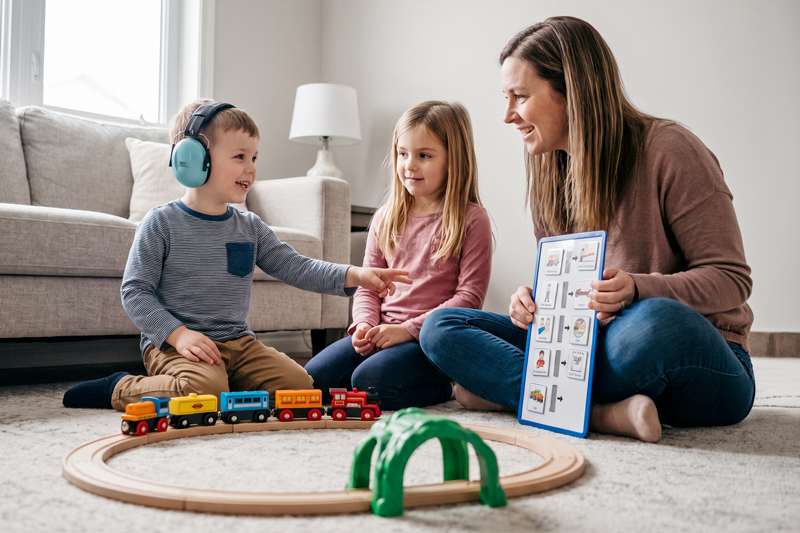
Augmentative and Alternative Communication (AAC) is often associated with individuals who are minimally verbal. However, growing evidence suggests that AAC can also benefit autistic individuals who speak fluently. Visual supports, communication apps, text-based systems, and other AAC tools can provide valuable assistance during periods of sensory overload, emotional stress, or communication breakdown. Rather than replacing speech, AAC can serve as an additional pathway for expression and self-advocacy. This broader view of communication recognizes that spoken language is only one of many valid ways individuals express themselves.
A Neurodiversity-Informed Perspective
Modern autism intervention increasingly incorporates neurodiversity-informed principles. These approaches encourage professionals to focus on communication effectiveness, participation, and well-being rather than attempting to eliminate every difference between autistic and non-autistic communication styles. The goal is not to make autistic children appear neurotypical. Instead, the focus is on helping them communicate successfully, build meaningful relationships, advocate for their needs, and participate fully in their communities.
This perspective has encouraged clinicians to adopt strengths-based approaches that respect individual differences while supporting functional communication development.
Clinical Reflections and Practical Implications
In addition to evidence-based intervention frameworks identified throughout the literature, clinical experience also highlights the importance of relationship-centered and emotionally supportive therapeutic environments for autistic children. Although structured intervention models may provide predictability and therapeutic organization, excessively rigid or highly controlled sessions may unintentionally limit authentic emotional expression and spontaneous communication opportunities for some autistic children. From a clinical perspective, therapeutic rapport and emotional safety frequently appear to play a significant role in communication engagement and behavioral regulation during speech-language sessions. When children are provided opportunities to express emotions freely through play, movement, symbolic interaction, or individualized behavioral expression, they may demonstrate increased participation, emotional regulation, and communicative reciprocity within therapy contexts. Relationship-building between the clinician and the child may therefore function not only as a supportive therapeutic component but also as a foundation for meaningful communication development.
These observations are consistent with developmental social-pragmatic and neurodiversity-informed intervention frameworks, which emphasize emotionally meaningful interaction, shared engagement, and child-centered communication support rather than excessive behavioral control or rote performance-based tasks (Prizant et al., 2006; Wetherby & Prizant, 2000).
Family involvement also appears to represent a critical factor in therapeutic generalization and communication development. Clinical observations suggest that active participation of parents and caregivers may strengthen consistency of communication support across environments while simultaneously improving relational interaction between children and family members. In many cases, communication difficulties associated with autism may contribute to relational misunderstandings, emotional disconnection, or reduced reciprocal interaction within family systems. Parent-mediated and family-centered intervention may therefore support not only communication outcomes but also relational rebuilding and increased emotional understanding between children and caregivers.
Furthermore, communication goals may become more meaningful and functionally relevant when therapeutic strategies are integrated into daily family routines and naturally occurring social interactions. Communication practiced exclusively within structured clinical settings may not consistently generalize into authentic daily life experiences unless caregivers are actively involved in therapeutic implementation and reinforcement. From a communication-centered perspective, the primary objective of speech-language intervention should remain the improvement of functional social communication and pragmatic participation.
Looking Forward
There is no single therapy approach that works best for every autistic child. Research consistently demonstrates that effective intervention should be individualized, family-centered, and grounded in meaningful social experiences. Evidence supports a variety of approaches, including pragmatic language therapy, developmental social-pragmatic intervention, peer-mediated programs, family-centered support, AAC, and technology-assisted strategies. The most successful interventions are often those that recognize each child’s unique communication profile and provide opportunities for authentic participation in everyday life. As the field continues to evolve, the emphasis is increasingly shifting toward communication that promotes connection, autonomy, self-expression, and quality of life. For autistic children, helping them communicate effectively is about much more than speech—it is about empowering them to engage with the world around them in ways that are meaningful to them.

Pariya Parhizkar Shahri, MSLP, is a speech and language pathologist at PhysioPlus Medical Center in Dubai, United Arab Emirates. She can be reached at [email protected] or +971 50 464 5380.
References
Adams, C., Lockton, E., Freed, J., et al. (2012). The Social Communication Intervention Project: A randomized controlled trial of the effectiveness of speech and language therapy for school-age children with pragmatic and social communication difficulties.
American Speech-Language-Hearing Association (ASHA). (2021). Autism Spectrum Disorder Practice Portal.
Chang, Y. C., & Locke, J. (2016). A systematic review of peer-mediated interventions for children with autism spectrum disorder.
Gernsbacher, M. A. (2017). Editorial Perspective: The use of person-first language in scholarly writing may accentuate stigma.
Lord, C., Brugha, T. S., Charman, T., et al. (2020). Autism spectrum disorder. Nature Reviews Disease Primers, 6(1), 5.
Prizant, B. M., Wetherby, A. M., Rubin, E., & Laurent, A. C. (2006). The SCERTS Model: A Comprehensive Educational Approach for Children with Autism Spectrum Disorders.
Schlosser, R. W., & Wendt, O. (2008). Effects of augmentative and alternative communication intervention on speech production in children with autism: A systematic review.
Wong, C., Odom, S. L., Hume, K., et al. (2015). Evidence-based practices for children, youth, and young adults with autism spectrum disorder.
World Health Organization. (2023). Autism Spectrum Disorder Fact Sheet.