Media has been a way to share stories, express ideas, and provide a sense of connection and understanding. Many individuals consider shows a special interest, and it becomes a strong topic and passion in their social lives. One example of media that is commonly discussed is cartoons and animated movies, especially those created outside of western countries. Anime (Ah-knee-may) is a form of animation originating from Japan. Many of the shows demonstrate high-action scenes, fantasy-based plots, and exaggerated facial expressions and social situations. While some viewers enjoy the content for the story and the characters, individuals with autism find anime deeply engaging. The vivid visuals and content that align with their own symptoms and create an immersive experience and a sense of belonging. This article will briefly overview some of the benefits of anime for individuals with Autism, in addition to ways anime has formed a welcoming community.
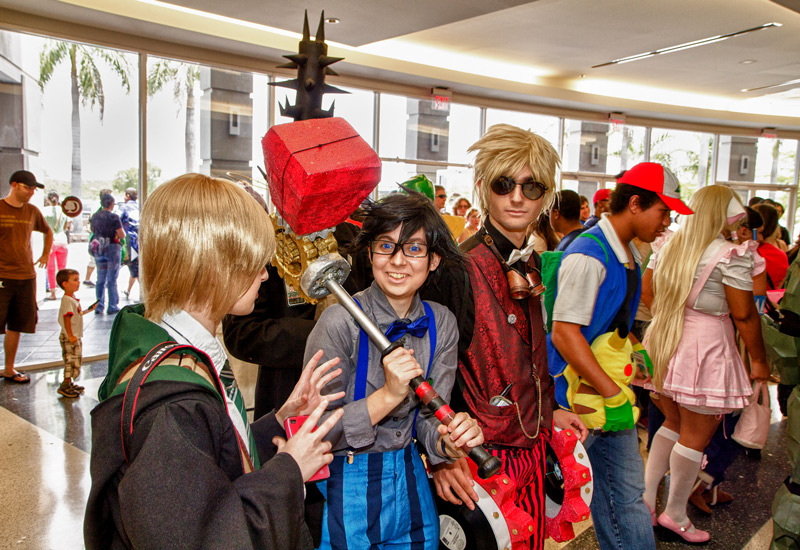
Anime conventions provide opportunities for individuals with autism to meet fellow fans and dress up as their favorite characters. (Photo credit: John Spade)
Despite anime being a series of shows and movies, there are some suspected reasons why individuals with autism may enjoy this form of media. One example is how the content is drawn and how anime shows emotions compared to real-life situations. In one study, researchers were curious about how individuals with autism recognized human faces compared to anime faces. Compared to human faces, individuals with autism were able to recognize emotions more often when it was a drawn anime face (Standiford & Hsu, 2025). Anime styles tend to draw facial expressions with amplified features that emphasize how the character is feeling. In doing so, autistic viewers of anime have an easier time understanding the emotions in each context and can focus more on the conversation itself.
Another benefit of anime is the opportunities for learning social interactions and understanding the different elements of a conversation. For women with ASD, anime contains structured social exchanges that also implement visual cues and exaggerated facial expressions that are easier to understand (Tzila et al., 2025). Predictable flow of conversations in anime reduces the stress of unpredictability and makes the dialogue easier to follow. On the other hand, males with autism become immersed in the dynamic animations and their pairing with emotional cues for scenes. Anime provides a more stimulating and accessible method to learn ways to engage and express emotions in each context (Tzila et al., 2025).
Most of the anime created do not specifically have a character with an established diagnosis of Autism. Compared to western media that demonstrate more externalized, exaggerated symptoms, anime tends to avoid the use of labels on characters with specific traits or diagnoses. Instead, the shows focus on their inner world and how they try to adjust to survive and overcome challenges (Davis, 2026). Any specific symptoms or habits that may come across as autistic may also be used as tokenism, or a way to help the plot or to create moments of humor that become memorable (Davis, 2026). Despite this, some characters are highlighted as having implicit traits that neurodivergent viewers identify as symptoms of autism and discuss on social media.
One final benefit to anime as a special interest is the welcoming communities that are formed. In an article by Rose, Galbraith, and Thomas-Parr (2025), autistic individuals who enjoy anime feel a strong sense of identity within the community. The anime community has been identified as a ‘stim culture,’ or a community in which stimming or sensory experiences are openly accepted. The art of cosplay, or dressing up in costumes, and participating in activities related to their favorite show reduces the need for masking. Additionally, participating in cosplay has been shown to create a sense of self-identity and belonging within a community where they feel safe to express themselves (Rose, Galbraith, & Thomas-Parr, 2025).
In my own personal experience, anime has been a special interest of mine since I was a child. The exaggerated expressions of characters made it easier for me to listen to conversations and understand what was going on. Pokémon was a big series that started when I was in school, and it allowed me to talk to many classmates who I may have never spoken to before. As an adult, going to conventions has also been a great way to meet others who share similar interests to my own. The worries of being judged for liking anime or dressing up in costumes go out the door when I get to talk to fellow excited fans. Many characters I enjoy watching the most also have traits I find myself relating to in my own social life. Specific routines, special interests, and social awkwardness are reflected in characters in ways I see myself. In therapy, I incorporate anime into sessions by discussing different anime protagonists and how the client may relate to them. Seeing their own journeys or struggles through the eyes of a drawn character can make a big difference.
Although anime provides positive experiences, as well as opportunities for social learning and community development, it is important to highlight some potential downsides. For individuals who may also experience symptoms of anxiety or depression, consumption of anime can become a coping mechanism that provides an escape from the real world (Tzila et al., 2025). For parents and caregivers, reducing the amount of screen time for children and adolescents is recommended. In doing so, young individuals with ASD can continue practicing social interactions with peers and developing a sense of community.
More popular anime series also create a network of individuals on different social media websites or chatting services. Many users may post misinformation and theories that can be stressful to individuals with ASD (Georgiou et al., 2024). Parents should remain cautious of the digital environments their children or teens interact with and provide time to discuss their worries. It is also important to monitor the anime they are watching to ensure it is age appropriate. Many websites and journals from families provide insight into anime that would be suitable for different age groups. Parents and caregivers should also continue to monitor any social media content their child may experience surrounding their anime of interest.
In conclusion, anime has become a growing special interest for individuals with autism. The exaggerated art style, straightforward plots, and subtle traits of neurodivergence provide both immersion and opportunities to practice and study socializing. Autistic fans have also found communities to be welcoming and a safe space to unmask and express themselves through cosplay and discussions. It would be of great benefit to further research into ways autistic anime fans relate to characters and what anime means to them personally. Parents and caregivers should also remain involved in their child’s exposure to anime, ensuring they are age-appropriate and easy to follow. School anime clubs and family-friendly conventions can also provide other opportunities for children and teenagers to practice socializing and become accustomed to a welcoming community.

For more information or questions, this author may be contacted via e-mail at [email protected].
References
Davis, C. (2026). Neurodivergent Characters in Anime Representation Progress or Tokenism. https://www.alibaba.com/product-insights/neurodivergent-characters-in-anime-representation-progress-or-tokenism.html
Georgiou, N., Balzan, R. P., Delfabbro, P., & Young, R. (2024). People with autistic traits are more likely to engage with misinformation and conspiracy theories in a simulated social media context. Cognitive Neuropsychiatry, 29(4-5), 286-305.
Rose, M. C., Galbraith, P. W., & Thomas-Parr, G. (2025). Stim culture: Outlining anime’s appeal to the autistic community. International Journal of Cultural Studies, 28(3), 653-668.
Standiford, B. J., & Hsu, K. J. (2025). Autistic traits, alexithymia, and emotion recognition of human and anime faces. Development and Psychopathology, 1-14.
Tzila, E., Panagouli, E., Tsouka, M., Oikonomou, S., Koumparelou, A., & Tsolia, M. (2025). The Impact of Anime on Children with Autism Spectrum Disorder (ASD). Children, 12(8), 1078.