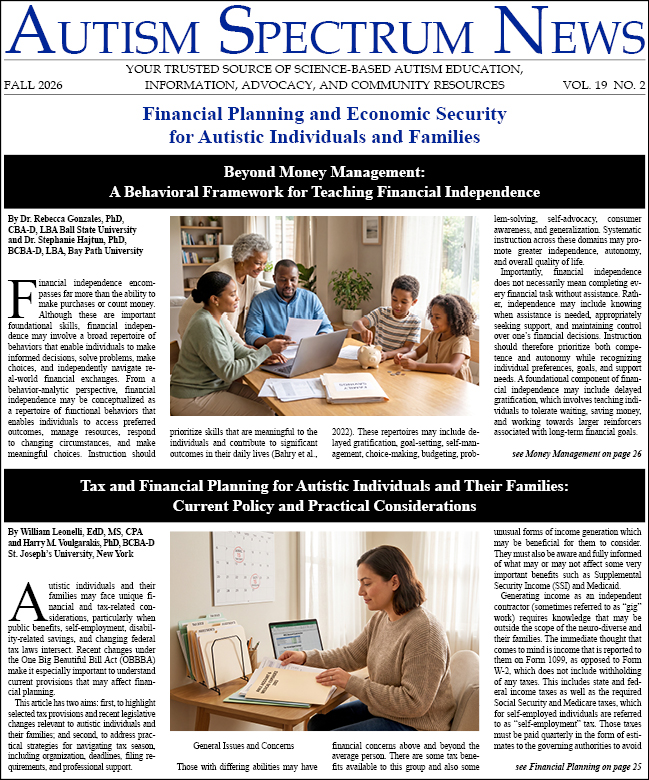
Adults with autism and/or intellectual/developmental disabilities (I/DD), including those with profound autism, are a growing population with well-documented housing needs.1,2 Despite decades of deinstitutionalization and investment in community-based services, a purpose-built housing market has yet to emerge, leaving families and providers—not the market—responsible for finding appropriate housing amid a shortage of more than 7 million affordable rental homes for the lowest-income renters.3
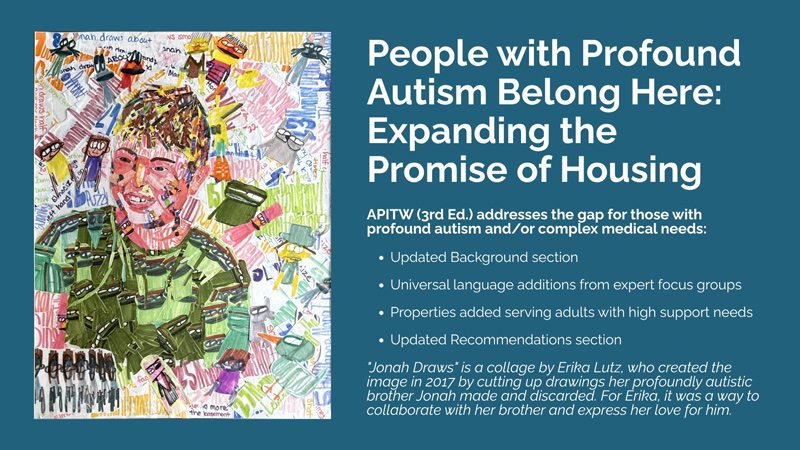
Cover of the third edition of A Place in the World®, First Place® AZ’s groundbreaking 2020 report.
The pressure is mounting. An estimated 1.3 million adults with I/DD live with family caregivers age 60 or older.1,4 As those arrangements end, the lack of alternatives strains families, states, and service systems. Crisis-driven placements—hospital stays, skilled nursing admissions, emergency interventions—consistently cost more than planned, community-based alternatives,5,6 producing a pattern of placements in hospitals, nursing facilities, or other restrictive settings and, at times, correctional settings.7,8,9,10 Such placements may expose providers to legal risk under Olmstead v. L.C., which held that unjustified institutional isolation violates the Americans with Disabilities Act of 1990.11
What the Evidence Shows
First Place AZ points to a workable alternative. In 2021, it partnered with Arizona State University’s College of Health Solutions on a two-year, ARPA-funded pilot testing whether subsidized supportive amenities improve independent living for adults with autism and/or I/DD at or below 300% of the federal poverty level; a second phase is underway.12 Phase 1 findings show measurable gains in self-care, health management, financial management, employment and household maintenance.12 The evaluation also exposed a limit services alone cannot fix: Even with roughly 75% of amenity costs subsidized, residents still owed base rent—prohibitive for many, since Supplemental Security Income (SSI) recipients cannot afford a basic one-bedroom apartment anywhere in the U.S.13 Related research on supportive housing’s effect on chronic-illness costs reinforces the point that supportive services are integral to housing sustainability, and closing the gap requires expanding both rental assistance and dedicated funding for supports, amenities and navigation.6
Consumer-preference data reinforce this. First Place Global’s collection of housing market analyses has captured data from more than 2,500 respondents across the spectrum, documenting unmet demand for purpose-built housing with cognitive accessibility over scattered-site alternatives.14 This is consistent with the preference for intentional, neuro-affirming communities.15
The concept of community-based settings has alarmed those fearing a return to institutionalization—of which First Place Global has been cognizant for decades, addressing this pressing concern through a variety of clarifying reports, models and collaborations.16
A Market Precedent
Senior housing offers a precedent. Over four decades, demographic pressure, capital buildup, and regulatory clarity have given developers the confidence to invest at scale, producing a marketplace spanning independent living to memory care.17 Adults with autism and/or I/DD share the conditions that made this possible: a well-defined population, motivated families willing to pay for options that don’t yet exist, and growing capital interest.30 These conditions are prompting leaders from the philanthropic, nonprofit, public, and private sectors to consider how to make housing more affordable and accessible. What’s missing is the same regulatory clarity. What prompted the proliferation of the senior housing market was not oversight, but calibration—predictable compliance paired with accountability and the model this article recommends.
Regulatory Barriers
Two federal frameworks, constructive by design, currently create ambiguity. The HCBS Settings Rule’s bar on settings with “the effect of isolating individuals”19,20 has sometimes been read to preclude disability-specific or mixed-use communities—even those offering true community access and resident-directed supports. Because no pre-approval mechanism exists for innovative models, developers cannot confirm compliance before building—a deterrent to private capital.21
Protections by the Fair Housing Act are foundational, but current interpretation constrains disability-specific development in ways age-restricted housing does not. The Housing for Older Persons Act (HOPA) establishes a clear, structured framework permitting age-restricted communities.22 No equivalent exists for the neurodivergent population. Separately, federal guidelines cap units at 25% in certain developments designated for people with disabilities, limiting purpose-built, subsidy-dependent projects supported by the U.S. Department of Housing and Urban Development (HUD).23 Disability discrimination remains the largest category of fair housing complaints filed annually, reflecting a supply-demand inequity and not a case for less oversight.24
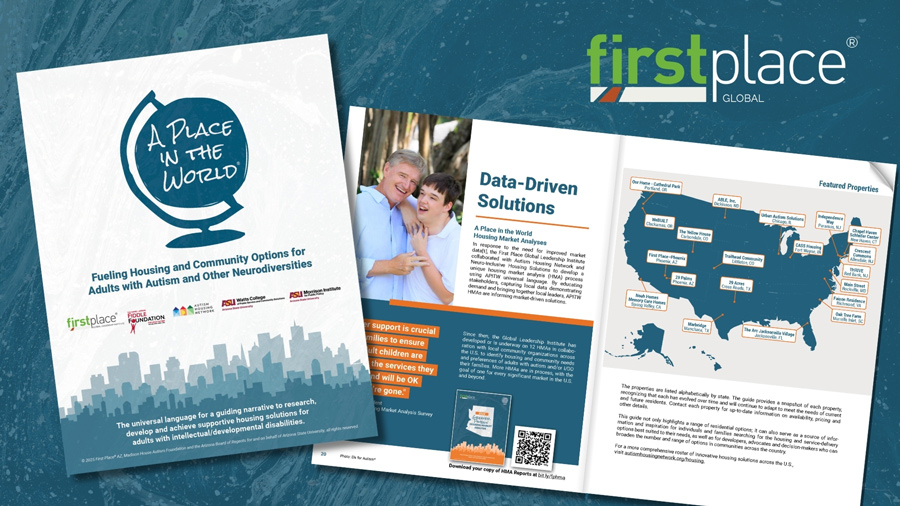
A Place in the World® (3rd. Ed.) has been updated to include those with profound autism and/or complex medical needs.
Policy Recommendations
Federal policymakers can act on several fronts. First, expand targeted rental assistance—including dedicated housing choice vouchers—for adults with autism and/or I/DD who rely on SSI covering a fraction of market rents. Second, fund supportive amenities that contribute directly and at scale to positive outcomes in residential settings, so access doesn’t depend on personal resources. Third, build regulatory certainty: a pre-approval mechanism under the HCBS Settings Rule for innovative models and guidance comparable to HOPA that accommodates disability-specific communities while preserving the anti-discrimination core. Congress and the Centers for Medicare & Medicaid Services (CMS) must also revisit the restrictive 25% cap to ensure financial and operational sustainability.
Finally, sustained investment in independent pilot evaluation that builds on featured properties like those in A Place in the World (3rd ed.) will guide future public investment, enabling a focus on what’s possible, permissible and pragmatic in communities across the U.S.16 Such pilot programs align with Domain V, Initiative 5 of the Interagency Autism Coordinating Committee’s Draft 2026–2028 Strategic Plan, which directs the Administration for Community Living and HUD’s Office of Community Planning and Development to co-lead a funded demonstration initiative that builds, evaluates and compares supported-living models. This includes a minimum of 10 sites across rural, suburban and urban areas spanning small specialized homes, enhanced behavioral-support residences, supported apartments, intentional communities, farmstead- or campus-based communities, clustered housing, technology-assisted supports and hybrid models.25 The shared purpose of a 10-site demonstration project is not only to offer near-term local housing solutions but also to build the knowledge, operating discipline and evidence base that make crucial housing projects possible.
Conclusion
The failure here is not a lack of evidence but the gap between what research shows works and what funding and regulation deliver. Pilot results and consumer-preference data show both the feasibility of and demand for a neuro-inclusive housing market. Targeted federal action—together with trisector collaboration offering rental assistance, supportive-service funding, and regulatory clarity—can jump-start how we close that gap through sound data, immediate action, and sustainable outcomes.


Denise D. Resnik is Founder & President/CEO of First Place AZ/First Place Global, co-founder of Southwest Autism Research & Resource Center (SARRC), and the parent of an adult with autism. Contact Denise at [email protected].
Toyosi Adesoye, JD/MPA, is associate director for applied research at First Place Global. Contact Toyosi at [email protected].
References
- Larson et al. (2022). Residential services for people with I/DD: Status and trends through 2020. U. Minnesota.
- Roux et al. (2021). National autism indicators report. Drexel.
- National Low Income Housing Coalition. (2026). The gap: A shortage of affordable homes. nlihc.org/gap
- Tanis et al. (2025). The state of the states in intellectual and developmental disabilities. U. Kansas. stateofthestates.ku.edu
- First Place Global. (2024). Aligning housing and health outcomes.
- Bausch, Cook-Davis & Springer. (2021). Housing is health care: The impact of supportive housing on the costs of Chronic Mental Illness. ASU.
- Shea et al. (2018). Misunderstood and mistreated: Adults with ASD in the criminal justice system. Drexel.
- Paode. (2020). Housing for adults with autism/I-DD: Shortcomings of federal programs.
- Jan et al. (2026). State-based variations in risk of institutional placement among dually eligible non- elderly adults with intellectual/developmental disabilities. Disability and Health Journal, 19(2). doi.org/10.1016/j.dhjo.2025.101973
- National Council on Disability. (2010). State of housing in America: A disability perspective.
- U.S. DOJ. (2011). Statement on enforcement of the ADA integration mandate and Olmstead v. L.C.
- First Place Global. (2024). Residential supportive amenities pilot program report.
- TAC & Consortium for Citizens with Disabilities. (2024). Priced out: The housing crisis for people with disabilities.
- First Place Global. (Unpublished manuscript, 2026). Housing market analyses compilation study.
- Inclusive Housing Colorado. (2023). Intentional Communities Research Project. ihccolorado.org
- Resnik, D. D. & Kameka Galloway, D. (2025). A place in the world: Fueling housing and community options for adults with autism and other neurodiversities (3rd ed.).
- National Investment Center for Seniors Housing & Care. (2023). Seniors housing & care: A market overview.
- First Place Global. (2024). Housing market analyses brief.
- CMS. (2023). HCBS Settings requirements: Compliance toolkit.
- Centers for Medicare & Medicaid Services. (n.d.). Guidance on settings that have the effect of isolating individuals receiving HCBS from the broader community. Medicaid.gov. https://www.medicaid.gov/medicaid/home-community-based-services/downloads/settings-that-isolate.pdf
- CMS. (2014). Medicaid program; State Plan HCBS. 79 Fed. Reg. 2948.
- Housing for Older Persons Act of 1995, 42 U.S.C. § 3607.
- HUD. Section 811 PRA program FAQ: The 25% cap.
- HUD. (2024). Annual report to Congress on fair housing.
- IACC Working Draft Strategic Plan 2026–2028, Life Course Domain V, Initiative 5, p. 220 (working draft released July 17, 2026, for public review and discussion through July 31, 2026).