Mac Anderson and Tom Feltenstein wrote; Change is Good… You Go First and understanding that change and the transitions it requires is a source of anxiety for much of humanity. Twenty-eight years ago, a group, all parents of neurodivergent children, were feeling the full weight of transition terror. Their fear fueled action and Moving Forward Towards Independence (MFTI) was founded in Napa, California.
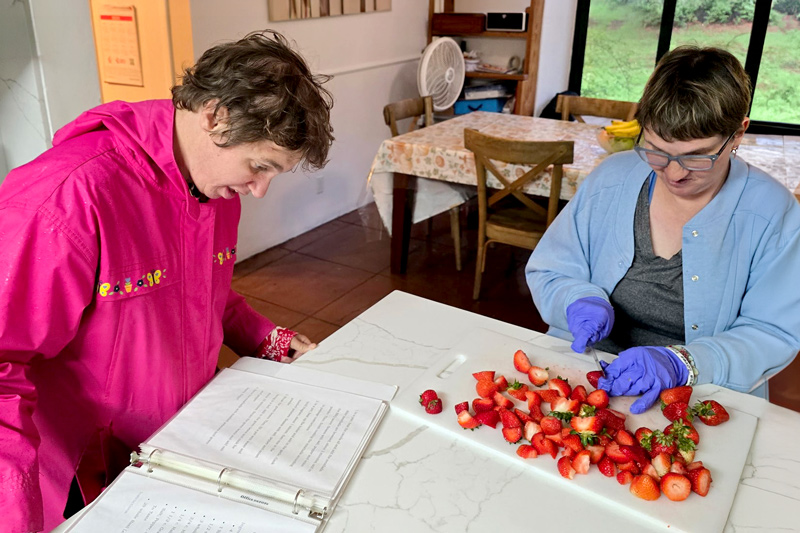
Moving Forward Towards Independence residents refer to a seasonal menu guide and prepare items for Front House dinner in Napa, CA
wFamilies know that the path toward independence for our neurodiverse community requires careful planning and appropriate resources. Our founding families recognized this back in the late 1990s. MFTI is a transitional residential program that provides Independent Living Support (“ILS”) for adults 18 years and older who can live on their own. We also offer support throughout the transitional process, along with guidance and options for prospective families and participants. Our goal is to assist in streamlining this process and provide families with the resources they need to make informed decisions.
MFTI charged itself with creating an environment that allowed neurodivergent adults to live, work, volunteer, learn and engage with peers. Building a meaningful life with meaningful relationships is a facet of adult life which in our experience has proven to be something that all our residents value. This task has faced a multitude of challenges over the years, and our folks have met each hurdle with determination familiar to any parent of a neurodivergent child.
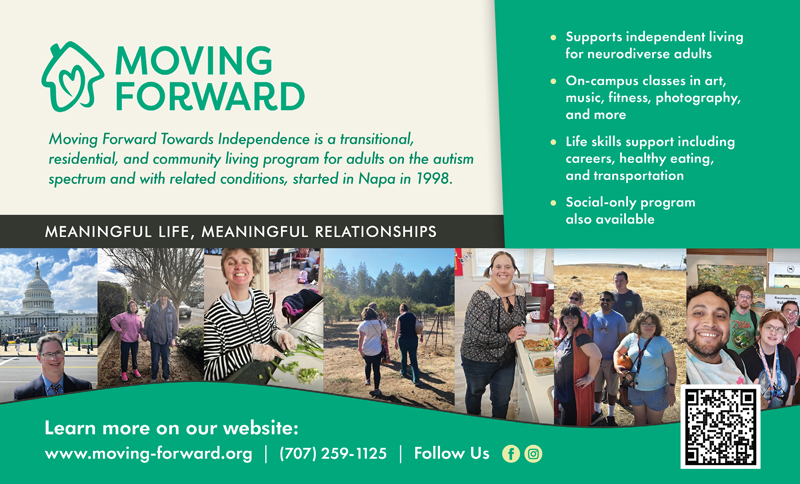
MFTI’s program participants are referenced as “residents.” They occupy three distinct tiers within the program. Potential residents may opt to attend the annual family picnic, holiday gathering, or monthly BBQ before making any significant commitment. A three-day and 2-night stay followed by a 30-day trial period in Tier 1 introduces prospective residents to staff and, equally importantly, peers. MFTI familiarizes us with the individual’s needs, wants and dreams and, in turn, the individual’s feelings and observations take root.
MFTI’s tiers reflect their essence. Residential, Tier 1, participants live in one of two houses in either a private or shared room. Both homes have modern kitchens with dining areas, two full baths, living rooms and laundry facilities. The homes share an open, shady courtyard and community room with the program at large. All residents are always welcome on our campus. Tier 1 residents take turns as lead dinner cook, share home maintenance chores, and may attend a day program or volunteer activity, take classes on campus or at the nearby Napa Valley Community College, and work continuously with staff to gain independent living skills. A 24-hour staff presence is maintained on campus.

Volunteering at the downtown Napa library gives MFTI residents who are working towards employment the scaffolding of work skill development opportunities and responsibilities
Apartments and a collection of small cottages adjacent to our campus comprise housing for Transition, Tier 2. Residents prepare their own breakfast and lunch, but most join the Residential crew for dinner pitching in with meal prep and clean-up. With staff support, Tier 2 residents shoulder the responsibilities of shopping, banking, laundry and other “adult administrative tasks,” building that sometimes-elusive executive function capacity.
MFTI’s Community, Tier 3, residents have acquired a level of depth and mastery in independent living skills. Tier 3 residents often drop by for a meal or social time but most of their time is dedicated to employment or volunteer activities. Private homes and rentals within a five-block radius comprise Tier 3.
Transitions among tiers are fluid, and as with all of us, life circumstances can alter what support is necessary. Change can induce anxiety. Knowing that change is bidirectional is a comfort to MFTI residents. If they need a break from a housemate, experience a loss, have a nasty cold or need shelter from a storm/fire/earthquake, comfort, safety, and solace are available at our campus.
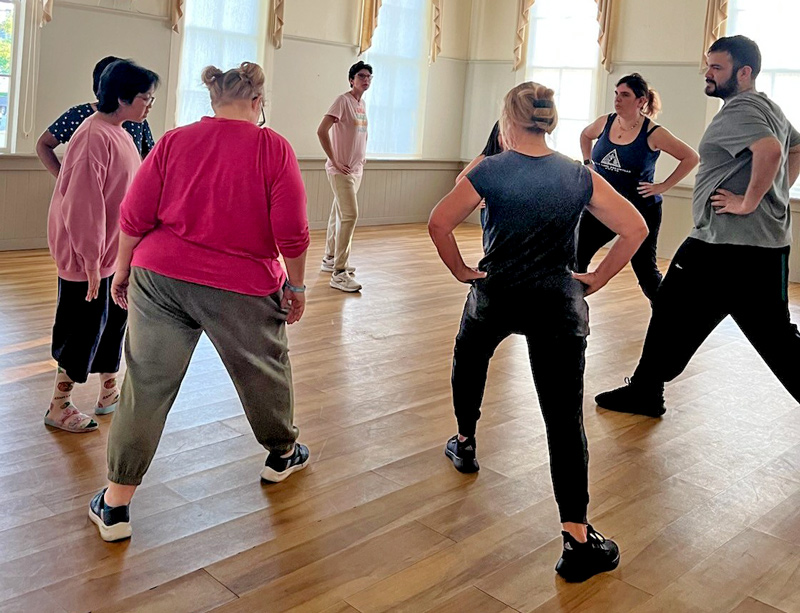
Dance and Movement Class stretches out as the session gets going on a Wednesday night
Case Managers, Support Staff and the Executive Director Team communicate and support residents daily. Most residents are State of California Regional Center Clients, participating in the Self Determination Program or as recipients of traditional services. MFTI’s Case Managers collaborate with residents and their families/caregivers to set goals, evaluate progress and identify unmet needs. Independent living skills are built through both one on one and group activities. MFTI residents live, work, volunteer and play in Napa. Regional outings are common on weekends as residents attend sporting events, Farmers markets, performances or other requested activities in our region, connecting with each other as they engage with the greater community. Peer social activities stave off the isolation and loneliness that can impede the sense of belonging we all desire.
MFTI is proud to have residents of founding families still connected to our program – stability amid transition. Overall, there is also an interconnectedness to this transition focus, with flexibility at the core of the practice. In fact, this combination of flexibility during transitions along with set programmatic goals helps all parties but is also demanding in various situations with the resident. The classic presentation of the suboptimal results from unsupported novel situations for people with IDD exists but MFTI’s program carefully lessens these negative moments via Case Manager, Support Staff, and family communication. Residents and their MFTI Case Managers draft personal goals that entail transitions in all life skills, climbing the pyramid of success.


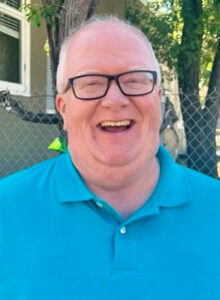
Marita Musante is Board President, Barbara Montaldo is Co-Executive Director for Community, and Mark Goodenough is Co-Executive Director for Operations at Moving Forward Towards Independence, located in Napa, California. For more information, visit www.moving-forward.org.