Autism spectrum disorder (ASD) is a complex neurodevelopmental condition. Autistic people may experience differences in communication, sensory processing, and their responses to change. These differences can affect how an autistic girl experiences menstruation and how she communicates pain or discomfort.
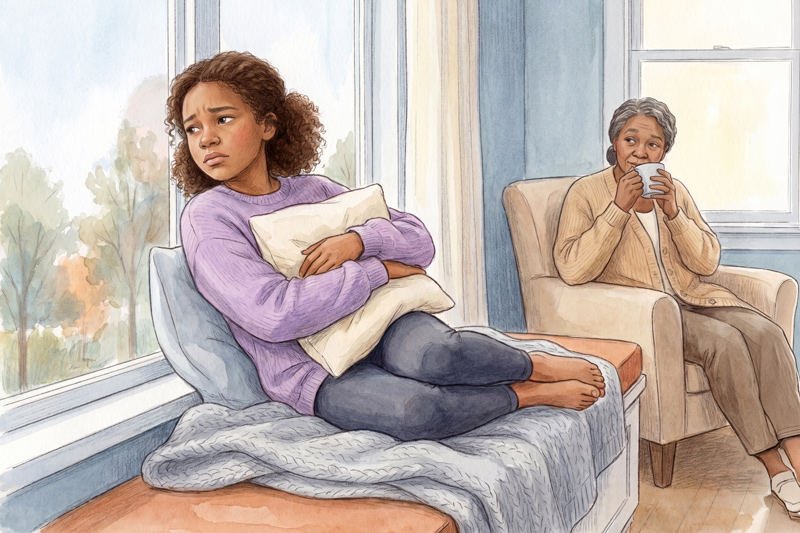
Menstruation brings physical, hormonal, and emotional changes. For some autistic girls, these changes may be especially difficult because they interrupt familiar routines and introduce unfamiliar sensations. A girl may become anxious, withdrawn, irritable, or distressed without being able to explain what is happening. Adults may see the change in her behaviour but fail to recognize the pain behind it.
Research on the menstrual experiences of autistic girls and women remains limited. Recent reviews have found that menstruation can affect sensory experiences, emotional well-being, and daily life for autistic people, but they also note important gaps in the evidence (Ellis et al., 2025; Skommer & Gunesh, 2025). Autism research has historically focused on children and males, and females have been underrepresented in research participation (D’Mello et al., 2022; Brickhill et al., 2023). Many studies have also relied on caregivers’ observations. Although caregiver reports are valuable, they may not fully represent what autistic people feel and experience in their own bodies.
Why Menstrual Distress Can Be Difficult to Communicate
Periods may cause abdominal cramps, nausea, fatigue, headaches, bloating, breast tenderness, and changes in mood. Research suggests that menstruation may also intensify anxiety, sensory sensitivity, communication difficulties, meltdowns, or self-injurious behaviour in some autistic people (Burke et al., 2010; Steward et al., 2018; Lee, 2004). These experiences vary, and they do not affect every autistic girl in the same way.
Some girls may have difficulty identifying where the pain is coming from or describing how severe it is. This can be especially challenging for girls who use limited speech or communicate in other ways. However, even a girl with strong verbal skills may struggle to describe a new internal sensation. She may know that something feels wrong without having the words to explain it.
Gray and Durand (2023) found that autistic people with dysmenorrhea, or painful periods, sometimes had difficulty describing their pain in ways that healthcare professionals accepted. Some also felt that they were expected to cope with the pain. When pain is not communicated in a familiar way, parents, teachers, and professionals may underestimate it.
When Pain Is Mistaken for Behaviour
Menstrual pain may appear as crying, anger, withdrawal, refusal to participate, poor concentration, sleep changes, or an increased need to be alone. A girl may hold her abdomen, avoid certain clothes, sit differently, or use the bathroom more often. For girls with higher support needs, distress may also appear as increased self-injury.
These signs do not prove that menstruation is the cause. Similar changes can result from illness, constipation, anxiety, lack of sleep, medication, bullying, or another source of pain. Still, when the same behaviour appears before or during a period, menstrual discomfort should be considered.
If adults treat the situation only as a behaviour problem, the underlying pain may remain untreated. The girl may be punished or given more demands when she actually needs support. Over time, this can reduce her trust in the adults around her and make it more difficult for her to ask for help.
Sensory Difficulties During Menstruation
Sensory sensitivity can make menstruation more difficult. Autistic people have described increased sensitivity to pain, touch, smell, noise, and the sensation of blood flowing during their periods (Steward et al., 2018). A busy school bathroom, bright lighting, tight clothing, or a lack of privacy can add to the discomfort.
Menstrual products may also create sensory problems. The smell of a sanitary pad, the feeling of adhesive against the skin, or the dampness caused by bleeding may be difficult to tolerate. A girl may remove a pad or refuse to wear it because it feels uncomfortable, not because she is being uncooperative.
Different products work for different people. Some girls may be comfortable with pads, while others may prefer period underwear or another option. The product should be safe, suitable for the girl’s needs, and as comfortable as possible.
Tracking Patterns and Respecting Privacy
A simple menstrual calendar can help families identify patterns and make periods more predictable. Parents can record the first day of bleeding, pain, sleep, appetite, mood, school participation, sensory difficulties, and the strategies that helped. After several cycles, the record may show whether certain changes regularly occur before or during menstruation.
The girl should be involved as much as possible. Depending on her age and communication style, she may use a calendar, body map, visual pain scale, emotion cards, pictures, or a communication device. Her menstrual information is private and should be shared only with people who need it to support her. Tracking may help during a medical appointment, but it cannot replace a professional assessment.
How Adults Can Provide Support
Preparation should begin before the first period whenever possible. Girls need clear information about bleeding, physical symptoms, menstrual products, and when to ask for help. Teaching words, pictures, or symbols for cramps, nausea, fatigue, bleeding, and pain can make it easier for a girl to explain what she is experiencing.
At home or school, support may include access to a quiet space, water, the bathroom, spare clothing, preferred menstrual products, rest, or flexibility with physical activity and schoolwork. A private card, picture, or agreed phrase can allow a girl to ask for help without discussing her period in front of other people.
Adults should pause before responding to distress with punishment or increased demands. Asking, “Could she be in pain?” may lead to a more helpful response. Parents, educators, and healthcare professionals can then work together to understand what the girl is communicating and what support she needs. Her privacy, preferences, and bodily autonomy should remain central to menstrual care.
When Medical Assessment Is Important
Severe menstrual pain should not be dismissed as normal or treated as part of autism. Medical advice is important when pain repeatedly interferes with school, sleep, or daily activities. Very heavy or prolonged bleeding, fainting, dizziness, vomiting, extreme fatigue, or a clear increase in self-injury also requires professional attention.
Before an appointment, parents can inform the clinic about the girl’s communication and sensory needs. Healthcare professionals may be able to explain each step before touching her, allow additional time, use visual supports, or permit a trusted person to remain with her. These adjustments may make the examination less distressing and help the girl participate in her own care.
Conclusion
A change in behaviour may be a way of communicating pain. When an autistic girl becomes distressed around menstruation, adults should look beyond the behaviour and consider what her body may be telling them. Careful observation, respectful communication, and appropriate medical support can prevent menstrual pain from being mistaken for misbehaviour.

To contact the author, please email [email protected].
References
Brickhill, R., Atherton, G., Piovesan, A., & Cross, L. (2023). Autism, thy name is man: Exploring implicit and explicit gender bias in autism perceptions. PLOS ONE, 18(8), e0284013. https://doi.org/10.1371/journal.pone.0284013
Burke, L. M., Kalpakjian, C. Z., Smith, Y. R., & Quint, E. H. (2010). Gynecologic issues of adolescents with Down syndrome, autism, and cerebral palsy. Journal of Pediatric and Adolescent Gynecology, 23(1), 11–15. https://doi.org/10.1016/j.jpag.2009.04.005
D’Mello, A. M., Frosch, I. R., Li, C. E., Cardinaux, A. L., & Gabrieli, J. D. E. (2022). Exclusion of females in autism research: Empirical evidence for a leaky recruitment-to-research pipeline. Autism Research, 15(10), 1929–1940. https://doi.org/10.1002/aur.2795
Ellis, C., Cook, J., Hull, L., & Mandy, W. (2025). Menstruation and autism: A qualitative systematic review. Autism in Adulthood. https://doi.org/10.1089/aut.2024.0307
Gray, L. J., & Durand, H. (2023). Experiences of dysmenorrhea and its treatment among allistic and autistic menstruators: A thematic analysis. BMC Women’s Health, 23, 288. https://doi.org/10.1186/s12905-023-02370-8
Lee, D. O. (2004). Menstrually related self-injurious behavior in adolescents with autism. Journal of the American Academy of Child and Adolescent Psychiatry, 43(10), 1193. https://doi.org/10.1097/01.chi.0000135624.89971.d1
Skommer, J., & Gunesh, K. (2025). Autism, menstruation and mental health: A scoping review and a call to action. Frontiers in Global Women’s Health, 6, 1531934. https://doi.org/10.3389/fgwh.2025.1531934
Steward, R., Crane, L., Roy, E. M., Remington, A., & Pellicano, E. (2018). Life is much more difficult to manage during periods: Autistic experiences of menstruation. Journal of Autism and Developmental Disorders, 48(12), 4287–4292. https://doi.org/10.1007/s10803-018-3664-0