
The school district I attended between 4th and 9th grades included a professionally managed theater arts program. In fifth grade, my class was treated to a live performance of Pippi Longstocking. The following year, I was cast in a small, non-speaking role in Tom Sawyer. My parents enrolled me in Heights Youth Theatre classes upon starting Junior High.
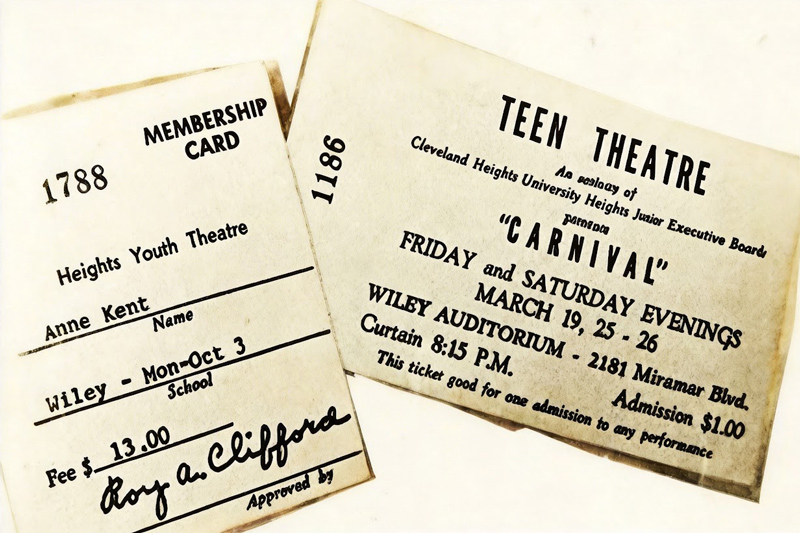
Classes were held after school and during the summer. Using the Stanislavski Method, we were tutored in how to step into a role, not just to play “make believe.”
Unfortunately, I didn’t understand many of the scenarios, and, worse, failed to understand why I didn’t get it. One lesson challenged us to enact waiting for a bus in the freezing cold. How might we convey that to an audience?
At times I felt like an imposter. I learned through echoing and mimicking others. I despaired of ever having a lead role in a play but learned some social skills and, for the first time, felt like I belonged.
The program, Heights Youth Theatre, is among the oldest children’s theaters in the US. Founded in 1945, it operated under the auspices of the Cleveland Heights–University Heights Board of Education. Jerry Leonard, the group’s first director and guiding force, shaped it into a full-fledged professional children’s theater company. Heights Youth Theatre was initially the only children’s theater in the country that performed plays by and for young people that were not subsidiary to a regular theater.
In recent years, Heights Youth Theatre expanded its offerings to include programs that provide opportunities for young participants to engage in dialogue around timely social issues such as diversity, building relationships, and being equitable and inclusive. (hytstagemanager, 2022)
Structured Environment and Purposeful Engagement
Long focused on Neurotypical performers, the “needs of autistic students… have not been investigated to the same level [as those with other disabilities] perhaps due to perceptions of autistic people as only engaging with theatre in educational or therapeutic contexts or as audience members, rather than as professionals.” (Glen, 2025)
The dramatic arts (Drama) tend to be a highly structured environment, which certainly aligns with the preferences of many autistic individuals who thrive on routine and predictability. The process of rehearsing, learning lines, and following stage directions provides purposeful, meaningful experiences in a controlled setting, making it easier for autistic participants to engage and succeed.
Social Skills, Communication, and Emotional Growth
Participating in theater helps build social and communication skills. Through collaborative activities—such as acting, improvisation, and group rehearsals—autistic individuals can practice eye contact, dialogue, turn-taking, and non-verbal communication in a supportive, low-pressure environment. Theater also evokes a wide range of emotions, fostering empathy, compassion, and emotional expression.
Community, Belonging, and Friendship
Theater can be a powerful basis for community. Specialized theater groups for autistic people offer a sense of belonging and mutual support. The shared experience of creating and performing builds trust, teamwork, and lasting friendships, helping to reduce isolation and increase social cohesion.
Freedom from Identity Constraints
Theater allows players to explore a wide range of social behaviors and identities beyond their everyday selves. This is often especially valuable for autistic people, who—like me—may feel limited by social expectations or their own self-concept. By taking on different roles, we can experiment with different ways of interacting and expressing ourselves, ideally leading to increased confidence and personal growth.
Reduction of Social Anxiety and Increased Confidence
Many Aspies experience social anxiety, which may make group activities daunting. Theater arts provide an incremental pathway to participation, starting with observation and moving toward more active involvement. The confidence learned from performing in front of an audience and the opportunity to “try on” less anxious personas can help reduce overall anxiety.
Personally, adopting less anxious personas was important to my social development. Among my earliest memories is self-identifying as favorite TV and movie characters. I had no sense of “Me” but had to engage socially and academically with others. Through internally “becoming” the character, I could respond as I believed that character would. How that affected my personality or outward demeanor, I don’t know, but what mattered was how I felt inside.
Activities That Simulate Real-life Interactions
Group role-playing that mimics realistic social activities encourage players to collaborate, share, and communicate. For example, participating in games of ‘store’ or ‘restaurant,’ allow children to take turns playing different roles. Such exercises promote cooperation, patience, and an understanding of group social dynamics.
Such activities are also designed to help players recognize and interpret non-verbal cues, including facial expressions, gestures, and body language. For example, children may practice noticing when a peer looks upset or when someone signals a desire to pause a game. These role-playing exercises may also incorporate resolving interpersonal conflicts, sharing, and taking turns, all of which support the development of emotional regulation and social awareness.
Improvisational theater activities encourage cognitive flexibility— “thinking on your feet”—a skill that challenges many autistic people. Regular practice in safe settings, like drama class, may help to improve the ability to respond more confidently to social situations.
Empowerment and Self-Discovery
Theater empowers autistic individuals by providing opportunities for self-expression, creativity, and independent achievement. Applause and positive feedback reinforce self-worth, while the process of preparing and performing fosters a sense of ownership and pride in one’s abilities.
Quality of Life and Well-Being
Engagement in theater arts may improve overall quality of life by offering a safe space for self-discovery, social interaction, and creative fulfillment. The transformative “magic” of theater lies in helping individuals of any age become comfortable with themselves and share their unique perspectives with others.
Important Considerations and Challenges
Sensory Sensitivities: Traditional theater environments can be overwhelming due to loud sounds, bright lights, and crowds. Sensory-friendly performances and accommodations are crucial for accessibility.
Individual Differences: Not all autistic people will enjoy or benefit from theater. The suitability of any given program depends on the individual person’s interests and the culture of the group.
Autistic individuals often have heightened sensory awareness, insight into autistic social challenges and differences, a strong understanding of our thought processes and problem-solving approaches, and clear insight into our emotional states, despite the challenge of expressing these emotions to others. and differences. These challenges may discourage some neurodivergent people from trying theater.
My memories of Youth Theater are emotionally mixed. I met my best friend there, and she’s still my best friend many years later. We dreamed of leading roles, or at least important parts in plays. But auditions terrified me. I could sing well enough to be in the school chorus and choir for three years. But when I tried to sing in front of the Director, Mr. Leonard, my vocal cords froze. I was so afraid of being judged by my peers, and especially by him.
He was, after all, a Professional. During rehearsals, he could be overheard yelling, “You are replaceable.” He was a strict, no-nonsense teacher and mentor who pointed out our mistakes, determined that we would learn from them. On the other hand, to be praised for a job well-done filled us with joy and boosted our confidence.
Mr. Leonard tried to find some way for every child in the program to involve themselves in productions. If you didn’t get a part in the play, he would offer behind the scenes roles. I was too young for the Teen Theatre summer musicals but was always offered a job as an usher at Cleveland’s historic Cain Park amphitheater. Even that provided a sense of inclusion and belonging.
Recently, I found some Heights Theatre memories and comments on social media. ‘Tom’ wrote:
My few years at Heights Youth Theatre taught me about people in the theatre. From my high school, I learned fear, scorn, and a deeply mined ambivalence to learning or growing.
[Heights Youth Theatre] might as well have been an alien world. Here were people that actually loved. And shamelessly embraced me, my lowly, undeveloped talent, and welcomed me into their little artistic home. I was caught in a wave of serendipity and flabbergasted by love. For all of you with your welcome arms, I thank you… (HEIGHTS YOUTH THEATRE ALUM – the JERRY LEONARD DAYS | Facebook, 2026)
I only engaged in drama through my university years and auditioned for the occasional production thereafter. But I feel fortunate to have had the opportunity to access theater classes. While I can’t identify all the ways it benefitted me, in retrospect, I know it did.
Conclusion
Theater can be profoundly beneficial for people with autism, offering structured opportunities for social learning, self-expression, empowerment, and community. With savvy accommodations and inclusion practices, the performing arts become a welcoming space where autistic individuals thrive and enrich the creative world with their unique talents and perspectives. With more neurodivergent leadership and advocacy today, theater could rival psychosocial therapies in improving the lives of autistic people.

Annie Kent, MA, spent two decades working in public sector disability, mental health, and infectious diseases advocacy and education. Diagnosed with three closely related types of neurodiversity, a lack of awareness and understanding led to burnout and retirement from the field. She remains an active advocate, learning and engaging personally and remotely with several Autism and ADHD organizations and Forums. Contact Annie at [email protected].
References
Blaine, J. (2025). Exploring the psychosocial effects of theatre on individuals and the community. South African Theatre Journal, 1–16. https://doi.org/10.1080/10137548.2025.2513866
Dwyer, P. (2018, August 22). Theatre and Autism – Autistic Scholar. Autistic Scholar. https://www.autisticscholar.com/theatre/
Glen, Z. (2025). Neuronormativity, naturalism and the neurotypical gaze: the equating of neurotypicality and quality in actor training. Journal of Theatre Dance and Performance Training, 16(1), 1–17. Taylor & Francis Online. https://doi.org/10.1080/19443927.2024.2428615
Goldstein, S. (2019, April). The Development of Theatre Arts to Facilitate Social and Communication Skills for People with Autism Spectrum Disorder – Autism Spectrum News. Autism Spectrum News; Mental Health News Education, Inc.,. https://autismspectrumnews.org/the-development-of-theatre-arts-to-facilitate-social-and-communication-skills-for-people-with-autism-spectrum-disorder/
HEIGHTS YOUTH THEATER | Encyclopedia of Cleveland History | Case Western Reserve University. (2020, January 30). Encyclopedia of Cleveland History | Case Western Reserve University; Encyclopedia of Cleveland History. https://case.edu/ech/articles/h/heights-youth-theater
HEIGHTS YOUTH THEATRE ALUM – THE JERRY LEONARD DAYS | Facebook. (2026). Facebook.com; Facebook Groups. https://www.facebook.com/groups/22355259587/
hytstagemanager. (2022, July). HYT celebrates finding a new home! HYT. https://www.heightsyouththeatre.com/post/hyt-celebrates-finding-a-new-home
On The Stage. (2023, April 2). The Art of Inclusion: Empowering Neurodiversity in Theatre. On the Stage. https://onthestage.com/blog/the-art-of-inclusion-empowering-neurodiversity-in-theatre/


This article is great. I’m going to explore options for my 18 year old granddaughter. Thank you so much!