“I still struggle to put into words what it felt like to finally communicate in a personal, voluntary, and unscripted way. I’ve described it before as a prison door opening, but it was even more profound than that – more freeing, more life-changing.” – Lisa, nonspeaking co-author
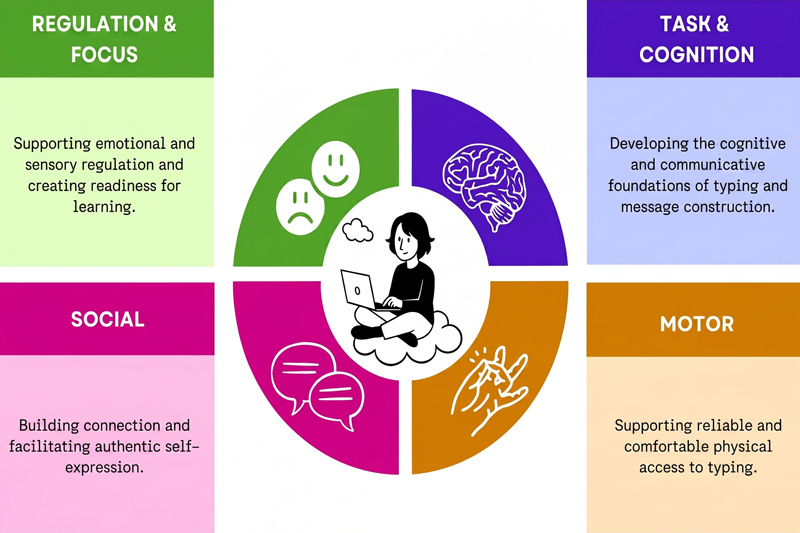
What co-designers find essential for learning and practicing typing
For many people, communication happens so effortlessly it is almost invisible. A thought forms, and out it comes. We rarely stop to consider everything that happens between having something to say and successfully expressing it.
Lisa is describing what it felt like when that pathway finally opened. After years without a reliable way to communicate her own thoughts, she was able to express herself in a way that was personal, spontaneous, and unmistakably her own.
Lisa is not alone. Around one in three autistic people are nonspeaking, moving through a world that often treats speech as the standard. Some eventually learn to communicate fluently by typing, but the path is often long, intensive, and difficult to access.
Many technologies designed to support communication reflect neurotypical assumptions about how communication works, what successful communication looks like, and which challenges matter most. Far less often are they shaped by the people who must navigate those assumptions every day.
What might we learn if they were? That question is at the heart of TYPE, an ongoing effort to design an affordable, AI-supported system to help nonspeaking autistic people learn and practice typing. The project brings together engineers, researchers, clinicians, educators, and six nonspeaking autistic adults who type to communicate. From the start, the nonspeaking collaborators joined as equal co-designers, helping shape the project’s priorities and its direction.
Over the past year, the conversations expanded beyond the technology itself. Together, our co-design team explored what communication feels like from the inside: how thoughts become actions, how support creates opportunity, and how communication technologies can better reflect the realities of the people who use them.
The Hidden Work of Communication
One of the first ideas we talked about was motor planning – the invisible work of turning intention into action.
“As I have autism there are motor planning issues that I face every minute,” explained Sujit, a nonspeaking co-designer.
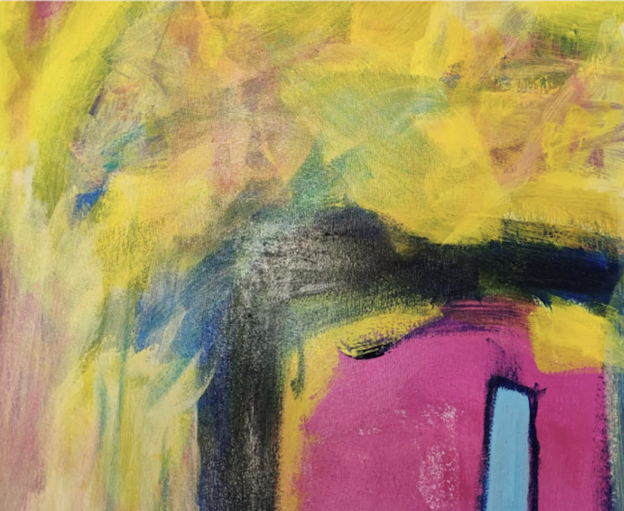
Sujit’s art piece: “Obstacles of Freedom”
For many nonspeaking people, communication involves far more than finding the right words. Between having something to say and expressing it lies the complex work of turning thought into movement. A hand may not move where the mind intends. A finger may hesitate or miss its mark. The words are there, but the path from intention to expression can be far more demanding than it looks from the outside. When communication is judged by speed or fluency, that effort is easy to miss.
For Graciela, another nonspeaking co-designer, the strain was felt in the body itself:
“A lot of my younger years were spent in physical pain because my carefree spirit was not meant for my physical body. I had to spend my energy always fighting off my discomfort. In the calm of finally accessing communication, my body began healing itself.”
Stories like Sujit’s and Graciela’s show that communication extends beyond the keyboard itself. What started as a conversation about motor planning opened onto a hidden world behind communication: staying regulated and focused, turning thoughts into words, linking letters to ideas, and connecting with others who type to communicate.
Communication support, then, has to do more than supply letters and words. Just as important is making room for all that allows communication to happen in the first place.
Does Success Have One Shape?
Our conversations revealed how much effort can lie behind a single word. They also raised a larger question: what should communication support actually help a person achieve?
As Grant, a nonspeaking co-designer, noted:
“I think the biggest roadblocks are societal expectations without understanding that disability is not going away.”
In education, therapy, and technology, success is often measured by what a person can do alone. Independence becomes both the goal and the yardstick of progress, and support becomes something you are expected to leave behind.
Yet the experiences shared by our nonspeaking co-authors point to a more complicated reality.
Grant reflected on a consequence of overvaluing independence:
“I don’t think I am the only one who will say words and ideas were given to us to mimic, and that was viewed as success because we hit a button alone.”
Elizabeth, an occupational therapist and co-designer, recognized this tension inside her field:
“Everyone keeps telling us that OTs should help people be independent. . independence at any cost, but that’s so fake. Even non-disabled people are not independent with everything. . autonomy and choice and the ability to do things and participate in ways most meaningful to them should be the actual goal.”
Isaiah’s experience brought that tension into focus:
“When I type independently, it feels like free-falling, but with someone holding the keyboard, it’s like falling with a parachute.”
Together, these perspectives point toward a different idea of success. The goal, as Elizabeth put it, is not “independence at any cost” but autonomy: having a say in how you communicate, participate, and make choices about your own life.
Seen this way, support is not the opposite of success. It is often part of what makes success possible. For some people, communication becomes more independent over time; for others, support stays part of how they communicate. What mattered to our co-designers is not whether everyone arrives at the same place, but whether communication works better for them than it did before.
For assistive technology, this means remembering that the person using the technology is the one who gets to decide whether it is helping.
Designing Together
None of these insights would have emerged without the active involvement of the nonspeaking co-designers who helped shape this project. But meaningful participation does not happen automatically. It has to be built into the way a project works.
For the TYPE team, that means paying as much attention to how we work together as to what we are building. Many of the practices that shaped the project grew out of ongoing conversations about what actually helps people take part. Four stand out as lessons others hoping to collaborate with nonspeaking people may find useful:
- Make communication work for everyone. Rather than expecting everyone to communicate the same way, we make room for different ways. A comment typed in a shared document should carry the same weight as one spoken aloud.
- Make space for time. Some of the most valuable contributions do not arrive at the speed of live conversation. Ideas need time to form, to be reflected on, and to be revised before they are shared. Treating time as a form of access means slowing down and resisting the pull to move on too quickly.
- Keep the work visible. When agendas, notes, and decisions are shared and easy to return to, no one has to hold the whole project in their head to take part. People can follow how ideas develop and how decisions get made.
- Decide Together. Meaningful participation is more than sharing personal experiences. Co-designers are involved in discussions about project goals, emerging ideas, and design decisions throughout the process. Their perspectives help refine questions, uncover hidden assumptions, and shape the direction of the work as it evolves.
These choices may seem procedural, but together they helped determine whose voices informed the work.
The conversations that shaped TYPE began with experiences that rarely reach the rooms where technology gets designed. But they have gone on to shape the project itself.
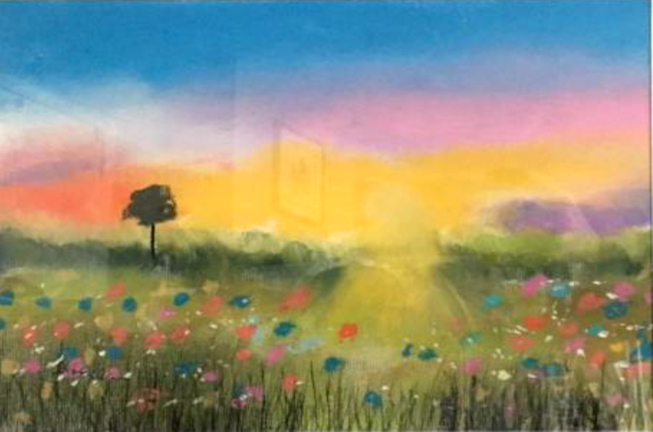
Kyle’s art piece
Kyle, a nonspeaking co-designer, shared what being part of TYPE means to him:
“It gave me hope for a voice in this world.”
Perhaps that is what meaningful participation ultimately makes possible: a world where more people can shape the systems, decisions, and technologies that affect their lives.
We call for a world where people don’t settle for using what has been built. They help decide what gets built.
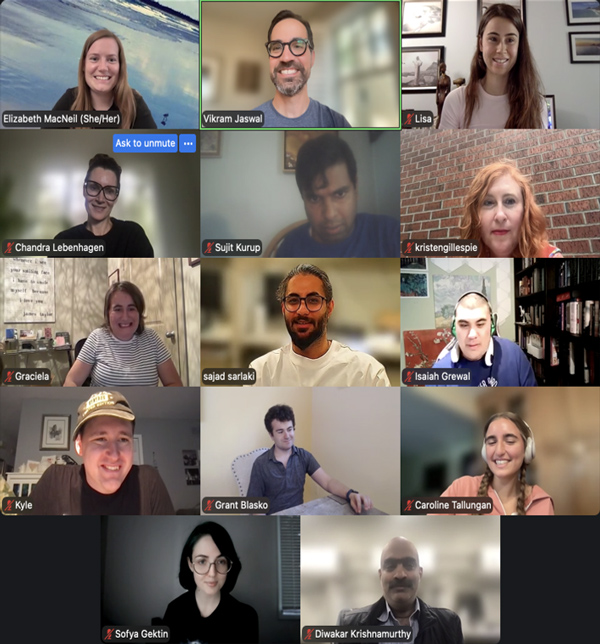
Authors of this article
This article was authored by Sofya Gektin (University of Virginia), Sajad Sarlaki (University of Calgary), Grant Blasko (University of Washington), Kristen Gillespie-Lynch (College of Staten Island and The Graduate Center of the City University of New York), Isaiah Tien Grewal (Stony Brook Medicine School of Social Welfare), Vikram Jaswal (University of Virginia), Sujit Kurup (Autism National Committee), Chandra Lebenhagen (Including Autism), Graciela Lotharius (Georgia Perimeter College), Elizabeth MacNeil (University of Alberta), Kyle Stauber, Caroline Rose Tallungan (University of Virginia), Lisa Vallado (Washington Adventist University), and Diwakar Krishnamurthy (University of Calgary).
Correspondence may be directed to primary author Sofya Gektin at [email protected] or (434) 340-5771, and to supporting co-author Kristen Gillespie-Lynch at [email protected] or (718) 982-4121.