Most disabled adults are forced to live segregated, impoverished lives absent of the security, life expectancy, community, and agency that all human beings deserve. For those of us from historically marginalized communities, including non-speakers, the isolation can be even more profound. The life outcomes of people with disabilities are funds- and systems-driven and parent- and/or agency-controlled and often predetermined by professionals when we are 2 to 10 years old.
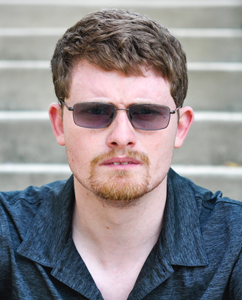
DJ Savarese
Credit Pamela Harvey Photography
Systems manage us, forcing many of us to live lives of convenience for other, nondisabled people. And even those who claim to be person-centered don’t consider our opinions. They aren’t collaborating with us and often don’t even personally know any people with disabilities. Innovative solutions must insist on a world beyond inclusion.
We all have the capacity to make the world a better place. We all yearn to be an essential part of something bigger than ourselves, but to do so we need to begin to imagine a world beyond inclusion, one in which everyone, not just the disabled, has equal access to wellness; meaningful community engagement; unpaid, authentic relationships; and the freedom to pattern our own lives.
Ableism underlies and drives every bias in this country, including structural racism; the disabled are members of every community; and our intersectional identities compel us to fight for the freedom of all people, not just the disabled, and yet we are often left out of broader social justice movements focused on homelessness, food insecurity, poverty, unemployment, and educational reform.
We need to empower all of our communities not by competing for funds, proliferating the creation of more nonprofits and newsletters, or racing to learn and conform to the central power structures in our country. We empower all of our communities by recalling what bell hooks taught us: that power exists at the margins, where we all currently reside, and that if we develop interdependent, authentic, cross movement collaborations, we are more resilient, creative, and expansive.
Health systems manage us; to simply better align the current systems would just further disempower our people to be even more efficiently managed. Before we can collaborate and engage with medical professionals, we need to unearth the concepts and tools that confine us and peel away our internalized ableist beliefs about ourselves and our potential lives.
We need funders and traditional researchers to clearly differentiate family or caregiver experience from our real lived experience as disabled people. Currently most lived experience grants, which should be awarded to disability-led initiatives, are awarded to family-, caregiver-, or agency-led initiatives, actually contributing to the status quo.
We need more trust-based grantors whose application process foregrounds the strengths of community-based organizations, values the language of those with lived experience over the professional jargon and constructs of university-based researchers and, at the same time, encourages us to learn how to engage in formative evaluations. The funding process usually requires us to make our research partners the lead on the proposal, often burying our community-based and founded initiatives under academic jargon that makes it largely unrecognizable.
We need to build cross-movement initiatives that bring together subgroups the status quo seeks to divide.
And we need to begin by being the ones who ask, and don’t just answer, the questions that drive the innovative content and processes we create. If we’re simply answering others’ questions, we’re often stuck reinforcing the status quo.
With all of this in mind, we’ve opted to run The Lives-in-Progress Collective (LIPC) as a collaborative of fluid, dynamic groups of diverse, multigenerational, cross-disability leaders whose lived experience and expertise inform our resources, trainings, materials, and formative evaluation methods. Our goal is to always ensure that those accessing LIPC feel represented in the team employed to support them through mentorship, training, and facilitation and that systems-based professionals learn from, and work directly with, those most impacted. For example, LIPC’s current Robert Wood Johnson Foundation (RWJF) Equity Capacity Building Grant (ECBG) project works exclusively with diverse, disabled BIPOC leaders, including those who identify as LGBTQ+, people with diagnoses of developmental disabilities, and/or people who don’t use their vocal cords to communicate, to disrupt systemic and internalized ableism and advance health equity and security for ALL people with disabilities.
Phase 1 began with a group of 15 intersectionally diverse, black, brown, and indigenous disabled leaders, nine of whom use alternative and augmentative communication, who came together as paid research assistants from across the country to help us fill out and understand the health equity and community barriers they face, what they need, and how to assess whether our innovative learning forums empower participants to advocate for their own well-being. Rather than ask them to create evaluative questions for a curriculum that was already developed, their research questions shaped the curriculum we developed.
So far we’ve learned that these issues really matter to them. Of the 15 disabled BIPOC leaders we recruited, 100% of them committed, followed through, and expressed interest in more involvement with the project.
We’ve learned in discussions and responses from our research assistants that, for them, health equity centers around holistic wellness, meaningful community engagement, defining potential, and developing and maintaining authentic relationships; that health and wellness are multifaceted and center around different kinds of energy, such as physical, mental, emotional, and spiritual; that meaningful community engagement involves multiple communities, some disabled, some not, and some mixed; and that authentic relationships are interdependent and able to connect us with others.
We also learned that it was more important to pay our disabled BIPOC leaders well than to have an administrative assistant.
We learned that we can meet with other large foundations claiming to fund lived experience-led projects and attend conferences and show them what diverse disability leadership actually looks like.
We learned that certain tools, charts, and questions can unwittingly influence others’ thinking and that who asks the questions, when, and how matters.
And we learned that a primary barrier and proliferator of ableist, racist, paternalistic, and exceptionalist tendencies among medical, educational, public health, and social service professionals is a lack of cultural humility, a lack of knowing us, our cultures, and our potential both individually and collectively.
Currently, in Phase 2, we’re building and empowering community; developing curricula for two 8-week online, communal learning forums designed and facilitated by and for BIPOC with disabilities; engaging with and educating the general public; trying to innovate new ways forward based on the lived experience and expertise of those most impacted; and meeting with funders and policymakers about the need for cross-disability leaders to drive the implementation of a universal home care guarantee.
We’re planning four whole-group learning experiences with alternate weeks offering time to apply, practice, connect, and learn experientially, whether that involves joining a group centered around a preferred interest or energy, exploring the LIPC Mentor online resource, seeking advice from a mentor about navigating some new aspect of their life, or discovering and developing authentic relationships and unpaid supports.
Phases 3 & 4 will involve facilitating and assessing the curriculum into actionable research and disseminating our findings and online LIPC mentor resource to every parent, caregiver, and professional who interacts with someone who’s disabled.
As we complete Phases 3 through 4 in the coming year, LIPC and our research partners at the National Leadership Consortium on Developmental Disabilities (NLCDD) have already gathered letters of support for a systems alignment pilot based in Philadelphia and a community-building and empowerment project for people in rural Georgia with I/DD diagnoses.
It is LIPC’s collective goal that future generations will know disabled self-advocates as active, meaningful, visible, essential, and self-efficacious participants in their local communities. Expectations for ourselves and the realization of those expectations will be rising. We will be enjoying longer lives with decreased incidences of anxiety, depression, suicide, and fratricide. Nobody will be warehoused in segregated day programs and aggregate residential facilities. Our rights to our own decision-making will be common knowledge. We will all understand that involuntary guardianships are not an inalienable right our parents have over us and will know how to ask for help to either terminate or refuse said guardianships. We will know where and whom to turn to find mentors, counsel, resources, and — if necessary — temporary financial support. We will be proud of ourselves and perceive of ourselves as human beings with collective and individual liberties and aspirations, capable of growing, learning, and contributing to society. Having disrupted the in/dependent binary, we will make visible for ALL Americans the interdependence that underlies EVERYONE’s relationships. No longer deemed voiceless and invisible, we will know we are heard and seen. Rather than living a life of convenience for our parents, we will be living the lives we imagine for ourselves.
David James “DJ” Savarese, BA, is Founder and Facilitator of The Lives-in-Progress Collective and Co-Chair of The Alliance for Citizen Directed Supports. He can be reached by text at (641) 990-2600, or by email at [email protected] or [email protected].