Note: Names and identifying details have been changed to protect privacy.
The phone rang on a weekend.
On the other end was a young woman from one of our community-based programs. Just hours earlier, she had experienced every child’s nightmare. She had witnessed her mother suffer a fatal heart attack. The person who had loved her, cared for her, advocated for her, and been the constant in her life was suddenly gone.
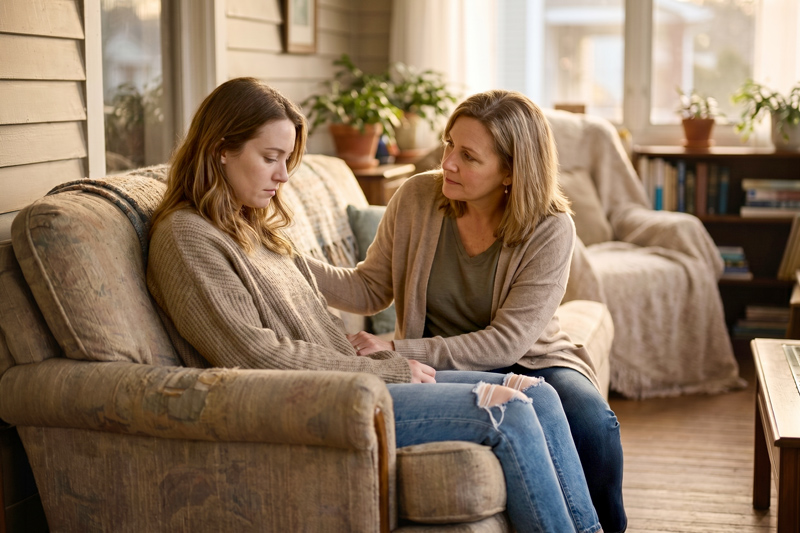
Faced with one of the most devastating moments of her life, she reached out for help.
What struck me was not that she made the call, but who she called.
It wasn’t a supervisor, an administrator, or an emergency line.
She called her instructors, the staff members who had become trusted figures in her life through their consistent presence, encouragement, and support.
It was a weekend. There was no scheduled program. No expectation that they would hear from her. Yet instinctively, she knew exactly who she wanted beside her during that moment.
As I reflected on her story, I realized it perfectly captured something individuals with autism and intellectual and developmental disabilities have been teaching me throughout my career: Communication begins with relationship.

For much of my early career as a social worker, I thought communication was primarily about helping people find the right words. Over several decades in this field, I have learned that understanding often has far less to do with words and far more to do with trust. The most effective communication systems, therapies, devices, and interventions in the world cannot replace the power of a trusted human relationship.
Long before people communicate through speech, gestures, behavior, or assistive technology, they communicate through connection. The individuals we support have taught me that lesson time and again.
One of our residential leaders recently shared a story that illustrates this perfectly.
She oversees several homes supporting individuals with developmental disabilities and is also the mother of a non-speaking son. When she spoke about her experiences, she described learning something as a parent that fundamentally changed the way she approached her work.
“My son taught me that communication is much bigger than words,” she told me.
As a mother, she learned to listen differently. A smile, a glance, a change in routine, a gesture, a behavior, or even silence could communicate far more than spoken language ever could. Over time, she realized that meaning is often found not in what is said, but in what is observed.
Today, she brings that same perspective into her professional life.
She recalled an individual who suddenly began refusing activities they normally enjoyed. At first glance, it would have been easy to label the behavior as resistance or noncompliance. The individual was withdrawing from preferred activities and becoming increasingly reluctant to participate.
But one staff member recognized that something wasn’t adding up. The behavior was out of character, and instead of focusing on the refusal itself, the team began asking a different question: What was the individual trying to communicate?
Because of the relationship they had built, staff recognized this was not typical. They knew what brought the individual joy. They knew their routines. They knew their personality. Most importantly, they knew when something wasn’t right.
Further evaluation revealed that the individual was suffering from a painful tooth infection. The behavior was never the problem. The behavior was the message. What changed the outcome was not a treatment plan or an assessment tool.
It was a relationship.
Someone knew the individual well enough to recognize that what appeared to be noncompliance was actually pain. The individual had been communicating all along. Someone simply knew how to listen. Stories like this challenge us to think differently about communication.
In our field, we often focus on teaching individuals how to communicate more effectively. While that work is critically important, perhaps we should spend equal time teaching ourselves how to become better listeners.
Not simply listeners for words, but listeners for meaning. We need to pay attention to changes in routine, expressions of discomfort, and the many ways people communicate joy, fear, frustration, and hope. When we broaden our understanding of communication, we become better equipped to support the people we serve.
The longer I work in this field, the more convinced I become that communication is not something that happens only through language. It happens through relationships.
I saw a similar dynamic with a woman I’ll call Maria. She attended the same day habilitation program for years. While she was generally a woman of few words, she consistently expressed dissatisfaction with her experience. She wanted something different — more opportunities in the community, more social interaction, and more chances to participate in activities that reflected her interests.
She loved fashion, shopping, dining out, creative pursuits, and exploring her community. Yet her current program was no longer meeting those needs. Like many people, she did not always have the words to clearly articulate what was missing. As a result, her dissatisfaction sometimes manifested as frustration, resistance, or behaviors that could easily have been misunderstood.
Fortunately, her team looked beyond the behavior itself. By paying attention to patterns and taking the time to understand her experience, they recognized that what they were witnessing was not simply frustration. Maria was advocating for herself in the ways available to her. She was communicating that she wanted something different for her life.
When Maria learned about a more community-based program, she immediately expressed interest. During a trial visit, staff observed a remarkable transformation. She was engaged, enthusiastic, social, and excited about the possibilities in front of her.
What struck me most was that Maria had not changed. Her interests had always existed. Her preferences had always existed. Her voice had always existed. The difference was that people listened. As a result, her future changed.
For me, that is what inclusion truly means. Inclusion is not simply being present. It is being heard. It is knowing that your preferences matter. It is having enough influence that your voice can shape your own life.
As I think back to the young woman who called her instructors after losing her mother, I am reminded that some of the most important outcomes in human services cannot be measured by a report, a data point, or a service plan.
Some outcomes live in relationships. They live in trust. They live in knowing there is someone you can call when your world falls apart.
At AABR, our vision is a community where all abilities are beloved and respected. That vision requires more than quality services. It requires creating environments where people are understood. It requires relationships strong enough to build trust. It requires communities willing to listen.
Perhaps the question we should be asking is not, “How do we give non-speaking individuals a voice?” They already have one.
Perhaps the better question is this: Are we creating homes, schools, programs, workplaces, and communities where that voice can be heard?
Because every individual has something to say. And some of the quietest people in the room may have the most important things to teach us.

Libby Traynor, LCSW, is Chief Executive Officer of AABR, Inc.