Beginning as a small child, school is where you make friends and learn to process the world around you. Most of modern society is formed on the basis that people have received a formal education. Whether that education be from primary to high school, or onward to a college education, it is presumed that all children had that foundation.
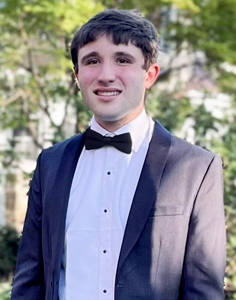
Matthew Cramer
Ever since I was a young boy, I have had the desire to learn. There was an itch I needed to scratch from early on. I was extremely curious about the world around me. However, as a nonspeaking autistic, I was left with questions I was unable to verbalize. I faced enormous challenges in getting the education I dreamed of and deserved. However, I did not let this stop me from chasing my passions and dreams, though it did not come easily. Like other students, I, too, had to prove my intelligence, but even more so than my neurotypical peers. Through my education, I have learned about the world in ways I was told I would never understand. If this educational foundation is presumed, what about the students who do not receive it?
In elementary school, before I found spelling as an effective form of communication, I struggled. I understood what others were telling me to do, but I could not show it. I remember the frustration I felt in not being able to explain to my teachers that I fully understood the books we were reading in class or basic math problems. That all changed at the age of 12, after discovering Spelling to Communicate, a technique that taught me how to spell out my thoughts on an alphabet letterboard or do calculations on a numberboard. Despite this breakthrough, I needed to adapt and adjust early on to achieve my dream of being educated. It required more resources than my school could provide. My devoted parents encouraged me not to give up, and we searched for other resources. With much hard work, tremendous support, and advocacy, including transfer to a school that would allow my use of a letterboard and then keyboard in the classroom, I have been fortunate to have had educational opportunities typically denied to nonspeaking autistics.
My personal journey through the education system thus far, from an autistic support classroom in elementary school to honors and AP classes in high school, and now to a dual enrollment program with Temple University, gives me a unique perspective. I understand and appreciate the value of an appropriate and inclusive education for all individuals, especially neurodivergent students who have difficulty communicating.
Education is the systematic process of learning, gaining new skills, and acquiring healthy life habits. It sets the foundation of any young person’s life. School is where you gain knowledge that you can continually build upon. It is where you develop reasoning and critical thinking skills. It is where you can discover your interests and passions. A formal education challenges an individual to think freely and independently and promotes liberties in self-expression. This freedom of thinking and creativity is critical for personal growth and development. It is clear that the impact of a formal education is life-changing. If students’ needs are not met, then this critical foundation for learning is missing. The reality of this can feel alienating. Everyone deserves a solid and appropriate formal education. I argue that access to such education is a sacred human right that needs to be protected.
Much of the world has some sort of education system, although it varies across the globe. Modern society is based on the premise that children receive a formal education. The field of education has vastly changed in the modern age. It has integrated modern technology, acceptance of learning differences, and a diverse range of students with different socio-economic backgrounds, ethnicities, and neurodivergencies. With adjustments and improvements, educational opportunities have opened up to more students. Yet, despite these advancements, barriers to education access persist.
Education systems are influenced by a variety of factors including inequities by socio-economic background, early education opportunities, and societal structures (Ilie et al., 1238). It can be extremely difficult to move past these barriers without the proper resources. I faced such barriers in elementary and middle school and had to make changes to achieve my dream of being educated. All students deserve to learn, including nonspeaking autistic students, whatever mode of communication they use.
Education denial has occurred throughout history. Discrimination based on race has prevented Black Americans from accessing education. Martin Luther King, Jr., in his “I have a Dream” speech, wrote, “even though we face the difficulties of today and tomorrow, I still have a dream. It is a dream deeply rooted in the American dream. I have a dream that one day this nation will rise up, live out the true meaning of its creed: We hold these truths to be self-evident, that all men are created equal.” (King). My dream of accessible education is also deeply rooted in the American dream. This stems from my foundational belief in the protection of individual freedom for all Americans. All Americans deserve their promised freedom. If there is denial of formalized learning, then freedom is restricted. The dream of inclusion, unity, and diversity applies to all forms of education. Despite strides in progress, injustice unfortunately still exists.
According to a research article on compassionate pedagogy for neurodiversity in education, “neurodiversity can be understood as naturally occurring variation in the ways that humans perceive, experience and interact with the world.” (Hamilton and Petty 2). Unfortunately, this sensitivity and understanding is not the reality. This naturally occurring variation in human experience, for a long time, was considered the “other.” The idea of the “other” was first explored by the French philosopher Jean Paul Sartre in his existentialist play, No Exit. A gazing judgement is cast onto anyone considered different – the “other.” Sadly, this mindset is held by many and it has been applied all throughout history. It has adversely affected the lives of many autistic individuals.
Throughout my life, I have experienced the effects of the “other.” I have felt the constant weight of people’s pressure to act a certain way in a neurotypical society. Autism has always been a part of my identity. It is naturally occurring and therefore not the “other” from my perspective. This has been my life and it has brought me strength to overcome the incorrect judgments burdened on people with autism. We are not the “other.” We are one.
Often, when I meet people for the first time, they speak to me in a “baby voice.” It is the automatic assumption that I do not comprehend due to my autism. This was certainly the case in school before I had a way to communicate. Autistic nonspeakers often have little control over their bodily movements. They may also vocalize without restraint and speak gibberish. This can look very weird and lead to the perception that we are not intelligent. This severely limits the opportunities for nonspeakers in the educational system. It can be extremely hurtful to be underestimated and this misconception can ruin our lives. For many years, I worked hard to show that I could keep up with my neurotypical peers. Besides doing well on all of my assignments, I was adamant about never leaving the classroom for a break. I wanted to show my teachers and peers that I took education seriously. We are capable and motivated to learn. Teachers need to respect our abilities and presume we are competent. We need to be treated with deeper understanding and dignity.
I strive for a future with educational opportunities for all, including neurodiverse children. Children need people to advocate for them to ensure healthy growth. Children with nonspeaking autism especially need advocates who believe in their beautiful minds. I will be that example. I am enough as I am; there is nothing to fix. And the same goes for everyone else.
It is time for schools to meet students where they are and accept all learning differences. Education sets the foundation of your life. In our experiences, relationships, and thought patterns, education impacts how we view the world around us. I am passionate about ensuring other nonspeaking children are being treated with dignity. Treating autistic children with dignity can change the outcome of their lives.
The need for formal education is undeniable. It is time more neurodiversity is welcomed in education systems. A lack of education never gives students, who are considered the “other,” a chance. What can be observed is that humans have faced injustice and inequality through the power of the person in control who sees them as “other.” Without adequate formal education, an individual will not be able to gain skills needed to live in society or learn about how the world has changed. The learning done in schools is irreplaceable. Access to education is a human right. Educational opportunities for all is my life’s goal.
Matthew Cramer is a Nonspeaking Autistic Student at the Philadelphia Performing Arts Charter School.
References
Hamilton, Lorna G., and Stephanie Petty. “Corrigendum: Compassionate Pedagogy for Neurodiversity in Higher Education: A Conceptual Analysis.” Frontiers, Frontiers, 1 May 2026, www.frontiersin.org/journals/psychology/articles/10.3389/fpsyg.2023.1345256/full.
Ilie, Sonia, et al. “Understanding Higher Education Access: Inequalities and Early Learning in Low and lower‐middle‐income countries.” British Educational Research Journal, vol. 47, no. 5, 6 Apr. 2021, pp. 1237–1258, https://doi.org/10.1002/berj.3723.
King, Martin Luther. “‘I Have a Dream’ Speech by the Rev. Martin Luther King Jr. at the ‘March on Washington,’ 1963 (Excerpts).” The Gilder Lehrman Institute of American History, www.gilderlehrman.org/sites/default/files/inline-pdfs/king.dreamspeech.excerpts.pdf. Accessed 17 Apr. 2026.
“No Exit.” YouTube, 17 Jan. 2017, https://youtu.be/0v96qw83tw4?si=QVwglZ4XadkMdoYj. Accessed 17 Apr. 2026.