
The Diagnostic and Statistical Manual of Mental Disorders (DSM) defines Autistic people through medicalized criteria that judge Autists from the outside; its diagnostic framework is constructed on allistic (nonautistic) observations, largely without Autistic input. As a result, the dominant definition of autism is deficit-based, autistiphobic, and profit driven.

To medicalize Autistic people is to practice neurobigotry, a form of ableism that currently disables neurodivergent people, those whose neurology is not neurotypical. Only Autistic people can be experts on the Autistic experience. Allistic people, no matter how credentialed, lack Autistic bodyminds and inevitably misdefine the Autistic neurotype from the outside. If we discard these allistic value judgments and psychological projections, what, then, is autism?
Autism is a neurotype. The word “neurotype” is short for “neurological type.” Everyone has a neurotype, or neurological profile, and variances in neurology, like variances in height, biological sex, sexual orientations, and skin and hair color, are all natural. Just as each human has their own appearance, each has their own neurological profile, though everyone shares neurotypes. Autists have a name for their neurotype: autism. Or: the Autistic neurotype.
There are many different neurotypes within the human population, including: bipolar, dyspraxia, Machiavellianism, synesthesia, schizophrenia, dyslexia, apraxia, neurotypical, dyscalculia, narcissism, dysgraphia, Tourette, psychopathy, and aphantasia.
The Autistic neurotype is attuned to logical and monotropic thinking. (Monotropic thinking, a cognitive style that tends to focus on a narrow set of interests at a time, can support hyperfocus, pattern-making, and conceptual work but can make task switching and interruptions difficult to manage.) In fact, logical and monotropic thinking often form the basis of Autistic behavior. Understand, too, that each Autistic neurotype is specialized, individualized, so Autists are different from each other but share enough experiences and similarities to constitute a culture: Autistic culture.
Still, each Autist lives in their own individual space and time. Autists tend to be honest, factual, and direct speakers due to the logical nature of Autistic minds. Most Autists adhere to fairness and honesty and are devoted to their routines, interests, and values.
Common Autistic strengths include logical, pattern, bottom-up, analytical, nonlinear, systems, conceptual, monotropic, visual, analytical, and orthogonal thinking; visual and long-term memory; intuitive empathy and creativity; and hyperfocus and tenacity. Calmness during emergencies is another Autistic strength, of which there are many. So, Autists work at every level of every profession—and many Autists hold expertise in at least one area of interest—though traditional workplaces are commonly hostile towards Autistic professionals, and to disabled professionals in general, leading to mass underemployment and unemployment for this minoritized population.
Autistic neurology absorbs large amounts of information from its environment. And since most environments are designed for neurotypical bodyminds—and since most people view the Autistic neurotype in a negative light—Autists tend to experience disability as a regular occurrence, some more than others. Heightened sensory perception also means that Autistics notice details allistics tend to miss and can experience sensory overwhelm due to lights, sounds, scents, and other stimuli neurotypicals can tune out and fail to notice. Autistics can be disabled by (overstimulating) environments that don’t bother most people, places like restaurants, grocery stores, schools, hospitals, and other public spaces most people regularly visit.
All Autists are neurodivergent, meaning their thinking and behavior diverge from neurotypicality, the dominant neurotype. However, not all Autists identify as neurodivergent, and most experience at least some level of disability, though autism is simply a neurotype and is not inherently disabling.
Not all Autists identify as disabled. Similarly, not all Autists identify as Autistic, either due to internalized ableism/autistiphobia or because they simply haven’t identified their neurotype.
What disables Autists is not Autistic neurology itself, but—to emphasize the social model of disability—sensory, attitudinal, and other environmental and systemic barriers. Attitudinal barriers include autistiphobia and neuronormativity. Autistiphobia is a form of ableism or neurobigotry that disables Autistic people; neuronormativity is the upholding of neurotypicality as the only proper way to think and behave, the only proper neurological culture—and the practices that go along with this type of thinking. Neuronormativity, which disables most, if not all, neurodivergent people, has resulted in the medicalization of Autistic people.
Autistic disabilities are wide-ranging and are often inconsistent between each day and each person, meaning Autistic people are dynamically disabled. Additionally, many Autistic people are multiply neurodivergent, meaning their neurological profile contains multiple neurotypes. Many Autists, for example, are attention abundant (commonly labelled “ADHD”).
Common Autistic challenges include executive functioning, meltdowns, shutdowns, prosopagnosia, mutism, gastrointestinal issues (due to eating samefoods), unreliable short-term memory, the double empathy problem, and vulnerability to manipulation, discrimination, sensory access barriers, and physical and psychological abuse.
Neuronormative thinkers frequently pathologize Autists for failing to uphold neuronormativity. Many Western people, for instance, are suspicious of those who neglect or refuse to make eye contact and view Autists as somehow “disordered” for failing to participate in this cultural practice. Additionally, typical Autistic behavior, such as echolalia, stimming, and a desire for routines, passions, and solitude, is somehow seen as a set of “symptoms” that must be excised from the person, rather than elements of their core human selves that deserve nurturing and acceptance.
Many Autists find the dominant neurological culture (neurotypical culture) confusing, and many neurotypicals find Autistic culture confusing. This mutual understanding illustrates what Dr. Damian Milton, an Autistic researcher, terms the double empathy problem: the reality that Autistic people don’t have social “deficits” but come from a (neurological) culture many allistics fail to understand, just as Autistic people can struggle to interpret neurotypical culture, despite trying.
On many disability-organization websites, “What Is Autism?” pages still frame autism as a condition or “disorder” that causes social “deficits,” restrictive or repetitive behaviors, and sensory sensitivities. These pages rarely acknowledge that Autistic people have Autistic social skills rather than social deficits, that so‑called repetitive behaviors are stimming, a self‑soothing and regulating activity, and that so‑called sensitivities reflect Autists’ heightened perception in disordered environments.
The Autism Industrial Complex (AIC) manufactures and maintains Autistic disablement by overlooking the double empathy problem and simultaneously creating their medicalized version of Autistic culture while erasing Autistic-defined culture, created by Autists. In the AIC’s untrue version of Autistic culture—which the AIC doesn’t identify as a distinct culture—Autistic people have some kind of “condition” or “disorder” that results in social “deficits” and therefore deserve to take the blame for miscommunications and for generally failing to adapt to neuronormativity. The AIC disables Autistic people by framing Autists as problematic people who are inherently broken and need fixing to think and behave neurotypically. Instead of trying to change Autistic people, institutions can do better by changing environments and attitudes so that they are more welcoming and inclusive to Autistic people and neurominorities as a whole.
Neuronormative beliefs have concrete consequences for Autistic adults and children. Children, whether Autistic or allistic, should play, not waste away in so-called therapies (see applied behavior analysis or ABA) that train them to reject themselves and prize neurotypicality, which many humans equate with normalcy. “Normal” is an imaginary concept. Changing how we think and talk about Autistic people helps prevent harm. Rather than asking “What is autism?”, why not ask “Who are Autistic people?”
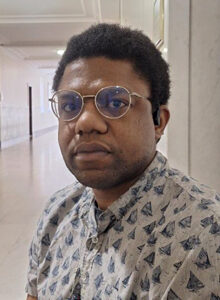
Bernard Grant is a writer. Learn more at their website BernardGrant.com.


I think that making general statements about “Autistic people” is a form of stereotyping. Regardless of whether I am allistic or autistic (to use your terms) I am able to observe that Autistic people do not form a homogeneous group.
You, Bernard, seem to have little in common with some of my clients with diagnoses of ASD, who could not begin to write, or indeed read, your article. Many have low cognitive capacity, and are unable to use intellect to develop their identity and social skills. Many are housebound, and many struggle to talk even to their primary attachment figure.
But do not think for a moment that I am trying to define “autistic people” according to this profile. I also know autistic people who lead fulfilling lives and whose adaptive responses to their divergent neuro-functioning have given them different strengths and understanding.
As you say, there are autistic people who do not identify, or wish to identify, as autistic. And there autistic people who [insert your own experience of autistic people here].
It is a bare fact that each of us would have something different to say about what goes in those brackets! Each of us have different experiences.
When we disagree about what autism is, to a great extent we are simply arguing about our different experiences, and inadvertently doing so in a bigoted way (again, to use your term), because we unconsciously assume that our experiences are representative of all autistic people, when they are not.
Autistic people do not form a homogeneous group, and when we do ask ourselves your question: ““Who are Autistic people?”, our answer is simply a composite of all the autistic people we know.
On many of your points I would agree with you. But DSM5 and ICD11 are the best the professional community can do, really. Classification and descriptions of psychological conditions are a mess, because we are trying to classify something which is multidimensional, fluid, environment- and experience-mediated, and relational.
But we must have some sort of common framework and ontology, or there can be no research, no discussion, and no progress, because we would have no means to talk about what we observe. How could we even talk about boiling an egg without first defining egg, saucepan, water, cooker, spoon, temperature, and time?
Physical objects are well boundaried and easy to define. But psychological phenomena are not. Still we try. What else can we do?
I would certainly be in favour of finding new ways to describe and understand Autism. We will know when we have that better model, because people with very different needs, strengths and adaptive challenges will not then be lumped together uncomfortably under a single badly-defined term like autistic.
It’s not a big enough umbrella, and it always leaves some people ‘out in the rain’.