Shortly before Christmas 2022, I needed extra cash. I owned a varsity football jacket that I seldom wore and posted it for sale on Facebook Marketplace. My ad received little attention, until December 24th when someone inquired about it. He needed a last-minute gift for a friend he was going out-of-town to visit. He swore that she’d love the jacket.
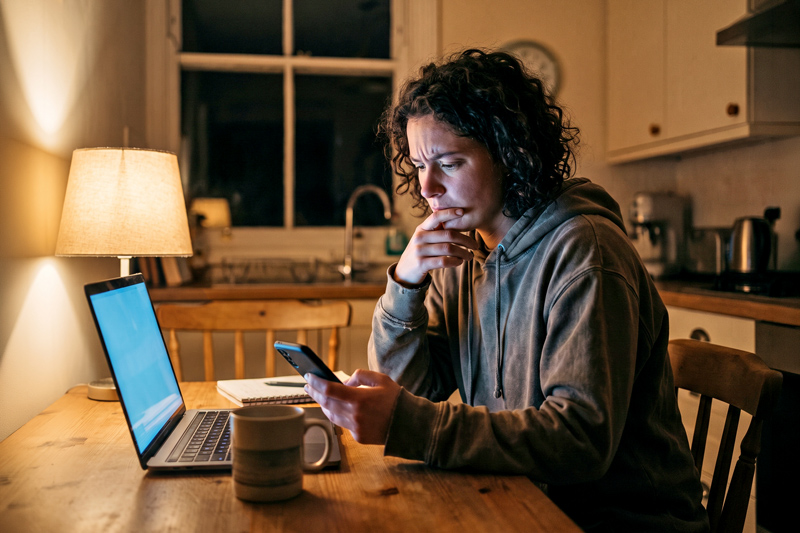
That piqued my interest to the extent that anything could that night. I was sick in bed with COVID-19 and eager to make the transaction and feeling profoundly befuddled. He asked whether I had a PayPal account, and I answered, I do, but that’s not how payment works.
He assured me that it would work. I just needed to open a PayPal business account; he’d talk me through the process. Clouded by brain fog, I followed his steps, and ended up sending him nearly $800 plus the jacket. (~$735 USD) I don’t believe I told him I’m autistic, but I did tell him I had COVID. I became the perfect target.
These days, the internet is the go-to place for learning, working, socializing, managing money, accessing services, and building relationships. For autistic people, online spaces can be especially valuable — offering communication, access to specialized communities, opportunities for self-advocacy, and alternatives to in-person settings that may cause social and sensory overwhelm (Chan et al., 2022). And yet these spaces also expose users to phishing, impersonation, identity theft, malware, financial thefts or scams, cyberbullying, and online exploitation (CISA, 2021).
Some autistic people have the technological skills to hack or cyber assault others. A few have been arrested and charged for such offenses (Lim et al., 2021). Regardless of one’s knowledge and abilities, cybercrime awareness is a life skill connected to independence, confidence and safety, and autistic people should be empowered to use the internet independently, with clear, concrete, and respectful education about online risks.
Cybercrime Awareness Matters
Cybercriminals more often rely on manipulation than advanced technology. A scam may begin with an ordinary message: an email claiming an account will be closed, a text about a missed delivery, a social media message from a copied profile, or a gaming link offering free rewards. These tactics work by creating pressure, confusion, curiosity, fear, and projecting trustworthiness (CISA, 2021). Because many autistic individuals use online spaces for friendship, special interests, education, employment, and/or entertainment, cybercrime awareness directly supports safer independence and financial security (Chan, 2022).
Common Cybercrime Tactics
Online communication depends on hidden social rules, indirect language, emotional cues, and quick judgments about another person’s intentions, all of which carry risk. A message that sounds urgent, official, friendly, or connected to a shared interest may seem sincere despite being designed to exploit. Autistic individuals may interpret messages literally, trust someone who seems helpful, or feel pressured to respond when a person appears kind, authoritative, or emotionally distressed. That doesn’t mean autistic people are incompetent online, but these risks cry out for direct, repeated cyber safety education, particularly information based on realistic scenarios (Wright, 2017).
Common Scenarios
Common scams include fraudulent romantic or friendship requests, gaming scams, fake social media profiles, phishing emails, and false marketplace offers (CISA, 2021).
Gaming communities may seem to offer rare items, free currency, or exclusive access in exchange for a login, download, payment, or authentication code.
In a friendship or romance fraud, a fake profile may build trust through attention, shared interests, and emotional support before asking for money, gift cards, personal information, private images, or secrecy. In both cases, scammers use familiarity and trust to make an unsafe request seem reasonable.
Psychological Impacts of Cybercrime
Cyberattacks against autistic people are not only financial or technical events, but also involve social and psychological harm. Emerging research indicates that online victimization among autistic adolescents is associated with substantial psychosocial harm, including elevated depressive symptoms and suicidality (Montañez et al., 2020). Related studies of autistic adults further suggest that social media environments may expose users to rejection, cyberbullying, and cyber-aggression, with implications for self-esteem, social participation, and psychological wellbeing (Triantafyllopoulou et al., 2022).
These harms matter; online life may be one of the main places where an autistic person finds community, friendship, identity expression, and relief from in-person social pressures. When that space becomes a site of fraud, humiliation, coercion, or betrayal, the consequences may extend far beyond the loss of money.
Damage to Trust
Cybercriminals depend on building believable relationships before exploitation occurs. A fake friend, romantic contact, gaming peer, online seller, or supposed helper may use patience, shared interests, emotional support, or authority to make the victim feel safe. For an autistic person who values sincerity, rules, loyalty, or direct communication, discovering that the relationship was false can produce confusion, shame, self-blame, and withdrawal. The person may begin to question their ability to judge others, or avoid online communities they once enjoyed (Bilz et al., 2023). I felt stupid and humiliated after that scam.
Close friends asked why I clicked, replied, believed the message, and sent the money. Unfortunately, their responses made me less likely to disclose any future financial mistakes. Supportive responses are essential: people need reassurance that manipulation is the offender’s responsibility, not proof of personal failure. Recovery should include emotional support, help regaining control, confidence, and renewing opportunities to participate online, safely.
Societal Responses
If families, schools, or service providers respond to cybercrime only by restricting internet access, they may protect against one risk while increasing others: exclusion from education, work, friendship, advocacy, and community. Overprotection reinforces the idea that the person is unsafe or incompetent online. A better approach recognizes vulnerability while supporting autonomy. Cyber safety should combine practical instruction with self-determination, giving all people — autistic or not — tools to identify manipulation, set boundaries, report harm, and seek help without losing access to meaningful digital participation.
Practical Strategies
A practical way to reduce risk is to teach a pause and verify habit. Before clicking a link, sending money, sharing personal information, accepting a download, or moving a conversation into a private channel, people should pause and ask:
- Who is making this request?
- Do I know them outside this platform?
- Is there pressure, secrecy, urgency, or an offer that seems too good to be true?
- Can I verify this through an official website, a known contact, or a trusted person?
This approach gives autistic individuals a clear decision-making process rather than vague advice such as “be careful online” (CISA, 2021).
Personal cybersecurity habits also matter. Strong, unique passwords, which for me necessitated downloading a password manager app, multi-factor authentication, software updates, privacy settings, and careful control of personal information can reduce exposure to harm (National Institute of Standards and Technology, 2022).
Autistic teens and adults should be encouraged to limit what strangers can see, avoid sharing addresses, phone numbers, financial details, government identification numbers, or authentication codes, and to report suspicious messages instead of engaging with them (CISA, 2021). If fraud occurs, the response should focus on support rather than shame: stop communication, save evidence, change passwords, contact the platform or financial institution, and report the incident where appropriate.
If cyberfraud occurs, support should begin with calm, shame-free action: stop communication, save evidence such as screenshots and receipts, secure accounts, contact banks or payment services, report the scam to the platform, and seek help from police or fraud-reporting services when appropriate. Victims should be reminded that skilled manipulation is the offender’s responsibility, not a personal failure. For autistic victims, recovery should include emotional reassurance, clear next steps, and support to remain safely connected online.
Families, educators, and support professionals can help by teaching cyber safety through concrete scenarios, role-playing, visual checklists, repetition, and calm conversations about real online situations (Wright, 2017). The most effective approach balances protection with autonomy. Autistic individuals need opportunities to practice judgment, ask questions, and build confidence, not simply rules that restrict access. Cybercrime awareness should empower people to use technology safely, maintain relationships, explore interests, and participate in digital life with greater independence.
In an increasingly connected world, online safety is part of everyday wellbeing. For autistic teens and adults, cybercrime awareness must address more than passwords and suspicious links; it must also recognize the emotional and social effects of deception, coercion, rejection, and betrayal. When education is practical, respectful, and grounded in real scenarios, it can reduce vulnerability without limiting possibility. The aim is not to make autistic people fearful of digital life, but to help them recognize manipulation, protect their information, recover from harm, seek support without shame, and continue to participate online with confidence, independence, and financial safety.
I figured out how to recover the varsity jacket, but my bank would not replace the lost money. It was my responsibility to understand and comply with Marketplace policies. Local police were unable to trace the money. They tried, but the scam originated outside my own country.
I absorbed the loss and rebuilt my bank account. I now regard the experience as an important lesson and have focused on learning how to protect myself online. Not everyone is as lucky.
The suicide of SaveAFox Rescue founder Mikayla Raines illustrates the serious human cost of online crime, underscoring the need for empathy, protection, and accountability in the fight against all forms of digital crime (Lavietes, 2025).

Annie Kent, MA, spent two decades working in public sector disability, mental health, and infectious diseases advocacy and education. Diagnosed with three closely related types of neurodiversity, a lack of awareness and understanding led to burnout and retirement from the field. She remains an active advocate, learning and engaging personally and remotely with several Autism and ADHD organizations and Forums. Contact Annie at [email protected].
References
Bilz, A., Shepherd, L. A., & Johnson, G. I. (2023). Tainted love: A systematic literature review of online romance scam research. Interacting with Computers, 35(6), 773–788. https://doi.org/10.1093/iwc/iwad048
Chan, Dara V., et al. “Beyond Friendship: The Spectrum of Social Participation of Autistic Adults.” Journal of Autism and Developmental Disorders, vol. 53, no. 1, 25 Jan. 2022, 10.1007/s10803-022-05441-1.
Cybersecurity and Infrastructure Security Agency (CISA) 2021, February 1. Avoiding social engineering and phishing attacks. https://www.cisa.gov/news-events/news/avoiding-social-engineering-and-phishing-attacks
Lavietes, Matt. “YouTube Star Mikayla Raines Dies by Suicide at 29; Husband Blames Online Abuse.” 24 June 2025. https://www.nbcnews.com/news/obituaries/youtube-star-mikayla-raines-dies-suicide-29-husband-blames-online-abus-rcna214720
Lim, Alliyza, et al. “Revisiting the Relationship Between Cybercrime, Autistic Traits, and Autism.” Journal of Autism and Developmental Disorders, vol. 53, 27 July 2021, 10.1007/s10803-021-05207-1.
Montañez, R., Golob, E., & Xu, S. (2020). Human cognition through the lens of social engineering cyberattacks. Frontiers in Psychology, 11, Article 1755. https://doi.org/10.3389/fpsyg.2020.01755
National Institute of Standards and Technology. Digital identity guidelines: Authentication and lifecycle management (NIST Special Publication 800-63B). U.S. Department of Commerce. https://doi.org/10.6028/NIST.SP.800-63B.
Triantafyllopoulou, P., Clark-Hughes, C., & Langdon, P. E. (2022). Social media and cyber-bullying in autistic adults. Journal of Autism and Developmental Disorders, 52(11), 4966–4974. https://doi.org/10.1007/s10803-021-05361-6
Wright, Michelle F. “Parental Mediation, Cyber Victimization, Adjustment Difficulties, and Adolescents with Autism Spectrum Disorder.” Cyberpsychology: Journal of Psychosocial Research on Cyberspace, vol. 11, no. 1, 31 May 2017, 10.5817/cp2017-1-6