Businesses in science, technology, engineering and mathematics (STEM) can better employ autistic students. 85% of autistic college students after having graduated for 5 years are currently underemployed or unemployed in the industry (Advanced Autism Services, 2025). A model of best practices for better employing autistic students can contribute to better progression of the students in the industry of STEM.
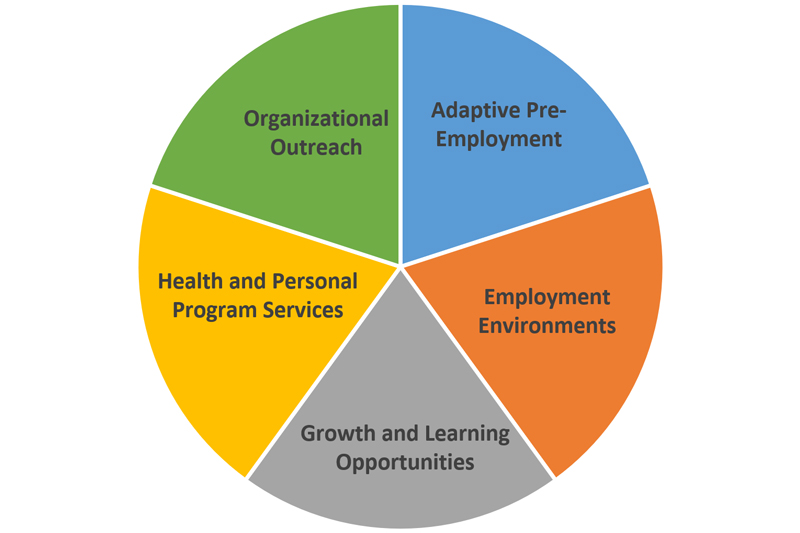
Best Employment Practices Model for Autistic Students
Goals of the Model
Businesses may not appreciate autistics as having a different identity as a neurotype (Scott et al., 2017) and may not have enough of an environment to help autistics (Wittig, 2021). Firms in STEM may not have enough flexible normalizing procedures in helping autistics to do their jobs properly. A check-list model of best employment practices, which I developed from industry research, to fit environments of firms to autistics, non-savant and savant, and not autistics to organizations (Spoor, Bury, & Hedley, 2021), may be ideal in fast-fluid paced practices of STEM in benefiting autistic students. The model is for enabling environments for increased inclusion for autistics to do their jobs to the best of their potential in positive settings of STEM (Fournier, 2023). This model is for employment practices in firms of STEM beyond American Disabilities (ADA) requirements.
Best Employment Practices Model for Autistic Students
The model for the best employment practices of firms in STEM can be characterized in the above diagram.
Adaptive Pre-Employment
In the Adaptive Pre-Employment portion of the model, on customized pre-employment processes for graduating students, the following can be check-listed:
- Career Exploration and Inclusion Paths
- Clarification of Interests of Students
- Clarification of Skills in STEM of Students
- Customized “Friendly” Interviewing of Autistic Students
- Disability Etiquette and Literacy of Managers in Firms
- Feasibility of Pre-Employment Internships in STEM
- Focus Not on Disability but on Abilities of Autistic Students
- Focus on Fit of Autistic Students for Jobs of STEM
- Focused Outreach to Special Education Schools of STEM
- Interviewing with Alumni and Non-Alumni Autistics of Firms
From the checklist, Clarification of Interests and Skills can be considered critical in effectively fitting autistic students to ideal positions in STEM. Customized Interviewing can additionally be considered as a critical practice for autistic students to present their skills. Instead of discomforting face-to-face interviewing, or in one-size fits all students, autistic students can present their skills in STEM in networking with in-house programmers on their projects in school (Farmer, 2022). In this practice, the students are presenting less on non-technical verbal skills and more on technical skills (Scheiner, 2021). Focusing on their abilities in STEM not their disabilities is a crucial neurodiversity practice.
Employment Environments
In the Employment Environments portion, on hiring for positions in inclusive settings of STEM, the following can be check-listed:
- Assistive Communication (ACC) Resources and Technology Tools for Students
- Circles of Support (WCOS) for Students on Office Protocol and Project Tasks
- Clarification of Needs for Services, Supports and Tools for Students from Day 1
- Clear Responsibilities and Roles for Students
- Collaborative and Inclusive Projects of STEM with Non-Autistics on Teams
- Corporate Champion-Executive for Autistics in the Firms
- Cultural Diversity Guidelines for Non-Autistic Managers and Staff
- Defined Expectations for Students upon On-Boarding on Projects of STEM
- Flexible Physical Space Supports for the Students
- Flexible Project Scheduling for the Students
- Flexible Sensory Supports for the Students
- Flextime and Office Remote Supports
- Impactful Inter-Departmental Projects of STEM with Non-Autistics
- Non-Sheltering of Autistics in Silos on Projects of STEM
- Universal Design of Office Project-Routine Standards
From this checklist, an advocate of a Champion-Executive for autistics can be critical in diversity expectations in firms. Guidelines for non-autistics can also be critical, as non-autistics may not know enough on how to engage autistics as individuals and as members of teams and may even have negative opinions however unconscious (Hedley, et al., 2018). Guidelines can help with Inclusive Projects of STEM on which autistics and non-autistics are members of teams. Resources, Spaces, Supports and Tools can help autistic students perform to their full potential in a safe “smart workplace” (Tomczak, 2021). Non-Sheltering in Silos can be especially important in friendships in humanizing with non-autistics in organizations (Grandin, 2022).
Growth and Learning Opportunities
In Growth and Learning Opportunities, on learning non-STEM and STEM skills in inclusive training, parents and students can checklist the following:
- Autistic Career Coaches for Autistic Students
- Autistic and Non-Autistic “Buddie” Networks Beyond the Office
- Autistic and Non-Autistic Colleague Mentoring for Students
- Autistics in Firms Proactive in Refreshing STEM Skills
- Career Formal and Frequent Goal Planning Process
- Catch-Up Discussions of Managers with Students on Job Performance
- Competitive STEM Skills Training
- Competitive Non-STEM Skills Training
- Effective Job Monitoring of Autistic Office Supports and Tools
- External Memberships in Organizations of STEM Sponsored by Firms
- Evaluation of Job Performance of Autistic Students Semi-Annually if Not Quarterly
- Managerial Non-Autistic Mentoring for the Students
- Monitoring of Autistic Goal Performance to Firm and Industry Neurodiversity Goals
- Non-Autistic Colleague Peer Shadowing for Autistic Students in Training
- On-Site Optional Supports and Training
From Growth and Learning Opportunities, Career Coaches and Career Goal Planning Process, accompanied by Colleague Mentoring and Managerial Mentoring, are crucial in helping autistic students in their first jobs in industry (Hamdani, & Biagi, 2022). Evaluation of Job Performance of the students at frequent intervals can also be crucial in helping in the progression and importantly in the retention of the students (Wehman et al., 2020). Skills Training is a practical requirement for STEM students. Non-STEM Skills may nevertheless improve the inter-personal skills of the students in interactions with the non-autistics (Whittenburg et al., 2023). The freedom for autistic students to be independently proactive for Refreshing their Skills is to be encouraged by organizational practices.
Health and Personal Program Services
In the Health and Personal Program Services portion, on disability health and special needs of the students, the following can be check-listed:
- Ancillary Governmental and Municipal Services for Autistics
- Assistive Community Rehabilitation Provider (CRPD) Services for Autistics
- Assistive Autistic External Non-Profit Provider Services for the Students
- Employee Resource Groups (ERGs) and Recognition Award Programs for Autistic Students in STEM
- Personal Supports and Wellness Tools through Internal Health Departments of Firms
From this checklist, autistics could be engaged as feasible with affiliated ancillary programs of the firms, complementing health departments internally. Employee Resource Groups in the firms could be also helpful to STEM autistics with special needs, in learning of services externally and internally from other neurodiverse STEM staff (Washington, 2022). Non-autistic managers and staff could be even helped as needed by provider services in further supporting autistic students.
Organizational Outreach
In the Organizational Outreach portion of the model, on personal and professional relationships of the students, the following can be check-listed by the parents and students:
- Partnerships of Firms with Advocacy Providers for Autistics
- Partnerships of Firms with Community Resource Group (CRG), Municipal and Non-Profit Providers for Autistics
- Partnerships of the Firms on Pre-Employment Projects with Post-Secondary Schools of STEM
- Partnerships of Firms on Pre- and Post- Employment Projects with Special Education Schools of STEM
- Partnerships of the Firms on Neighborhood STEM Volunteering
From this final checklist, firms might continue to learn of autistic potential from providers already knowledgeable of those with autism (Bernick, & Holden, 2018). Firms might learn more of the autistic potential in STEM from on pre-employment internship projects with autism-attuned professors and autistic STEM students at post-secondary schools. Learning from neighborhood projects of the firms might motivate the students to continue fruitfully in the firms with an altruistic satisfaction.
Benefits of the Model
The model can be beneficial for both parents and graduating students as to check-listing commitments of firms in STEM to autistic students. The model can also be beneficial to the firms in STEM, and to firms in non-STEM, in better retaining autistic students, non-savant and savant, as a prudent investment. Finally, this model can be beneficial to autistic students only if they as the best advocates advocate for the best practices of this model if not other practices – Firms in STEM cannot be advocates for the students if the students are not proactive first in self-advocacy.

James P. Lawler, DPS, is Professor of Disability Studies and Information Systems at the Seidenberg School of Computer Science and Information Systems of Pace University, in downtown New York City. Dr. Lawler is the originator and organizer of the Disability Film Festival at the university, in partnership with the Sands College of the Performing Arts, since 2012. The Festival will be next open to the public on the evening of Thursday, April 23, this year. Professor Lawler is a recipient of local Community Partnership Awards and of the national Jefferson Award for Community Service, for his initiatives in helping people and students with disabilities with innovative film programs and technologies at the Seidenberg School of the University. Professor Lawler can be contacted at [email protected].
References
(2025). Autism Unemployment Rate. Advanced Autism Services, June 4, 1-5.
Bernick, M.S., & Holden, R. (2018). Autism Job Club: The Neurodiverse Workforce in the New Normal of Employment. Skyhorse Publishing, Inc., New York, New York, 117-118,191,206.
Farmer, S. (2022). Inside Dell Technologies’ Neurodiversity Hiring Program: An Autistic Cybersecurity Analyst’s Success Story. Autism Spectrum News, September 29, 1-8.
Fournier, E. (2023). Creating a More Inclusive Workplace for Autistic Employees. Workplace Opinions, March 28, 2,5.
Grandin, T. (2022). Visual Thinking: The Hidden Gifts of People Who Think in Pictures, Patterns, and Abstractions. Penguin Random House LLC, New York, New York, 104-107.
Hamdani, M., & Biagi, S. (2022). Providing Performance Feedback to Support Neurodiverse Employees. MIT Sloan Management Review, February 1, 1-5.
Hedley, D., Uljarevic, M., Cameron, L., Halder, S., Richdale, A., & Dissanayake, C. (2018). Transition to Work: Perspectives from the Autism Spectrum. Autism, 22, 528-541.
Scheiner, M. (2021). Neurodiversity Hiring Programs – A Path to Employment? Autism Spectrum News, June 25, 1-11.
Scott, M., Jacob, A., Hendrie, D., Parsons, R., Girdler, S., Falkmer, T., & Falmer, M. (2017). Employers’ Perception of the Costs and the Benefits of Hiring Individuals with Autism Spectrum Disorder in Open Employment in Australia. PLos One, 12(5), 7-8.
Spoor, J.R., Bury, S.M., & Hedley, D. (2021). Non-Autistic Employees’ Perspectives on the Implementation of an Autism Employment Program. Autism, 25(8), 2177-2188.
Tomczak, M.T. (2021). Employees with Autism Spectrum Disorders in the Digitized Work Environment: Perspectives for the Future. Journal of Disability Policy Studies, 31(4), 195-205.
Washington, E.F. (2022). The Five Stages of Diversity, Equity and Inclusion (DEI) Maturity: How to Move from Promises to Results. Harvard Business Review, November-December, 97.
Wehman, P., Schall, C., McDonough, J., Sima, A., Brooke, A., Ham, W., Whittenburg, H., Brooke, V., Avellone, L., & Riehle, E. (2022). Competitive Employment for Transition-Aged Youth with Significant Impact from Autism. Journal of Autism and Developmental Disorders, 50, 1882-1897.
Whittenburg, H.N., Xu, Y., Thoma, C.S., Schall, C., & Ham, W. (2023). Effects of Behavioral Skills Training with Video Modeling and Situ Training on Workplace Conversational Skills of Students with Autism. Focus on Autism and Other Developmental Disabilities, 38(3), September, 188-197.
Wittig, K. (2021). Autistics and Employment: Far Too Many Rivers to Cross. Autism Spectrum News, June 25, 1-13.