Presuming competence is such a core foundational principle for people working with non-speakers to understand. It is the very first thing we talk about in our training programs and a topic we revisit in every coaching session. Parents, staff, therapists, teachers, and anyone else interacting with those who cannot fully express themselves often come into our training thinking that they understand what presuming competence is and think they are talking to their child/student in an age-appropriate way. But like me, they often discover that they have to rethink their understanding and recognize that they have shifts to make.
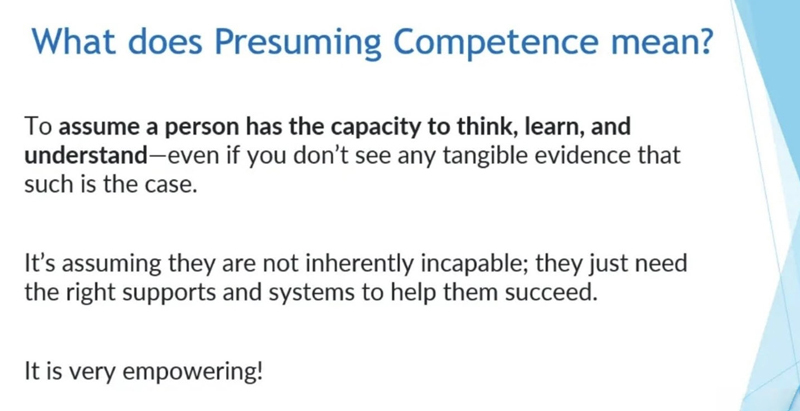
Anne Donnellan, an impactful advocate, researcher, and educator in the field of disabilities, coined the term “Least Dangerous Assumption” back in 1984. She asked the simple question: which is least dangerous — to assume a person can learn so you give her every opportunity, and it turns out she couldn’t, OR to assume a person cannot learn, so you don’t give him the opportunity, but it turns out he could learn? Clearly the first option — to give them every opportunity to learn — is less dangerous, and yet we don’t always implement that practice.
Helen Keller and Stephen Hawking are two examples of brilliant, talented, inspiring people who had highly functional brains inside of dysfunctional bodies. Helen had to prove herself over and over, and doubters suspected that her teacher Anne Sullivan, who presumed competence in Helen, was the one actually communicating. It took time and effort for that perception to change and for others to see her as intelligent. When Helen went to college, she and Anne had to prove themselves all over again to this new community of people. Helen eventually learned how to speak and the naysayers were silenced forever. Stephen started out brilliant and in a healthy body, but as he deteriorated with ALS he physically appeared, at first glance, to be a person most would see as highly dysfunctional; his mind, however, was still brilliant and he continued to teach, write, and inspire generations of people.
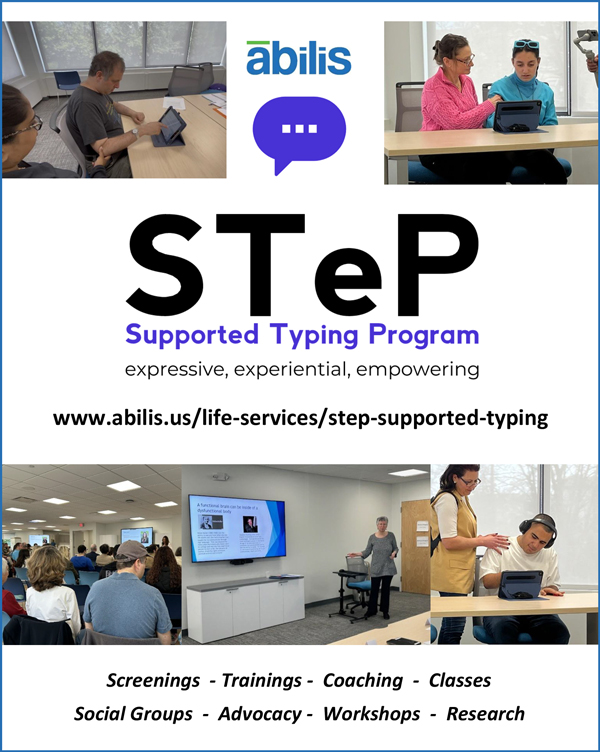
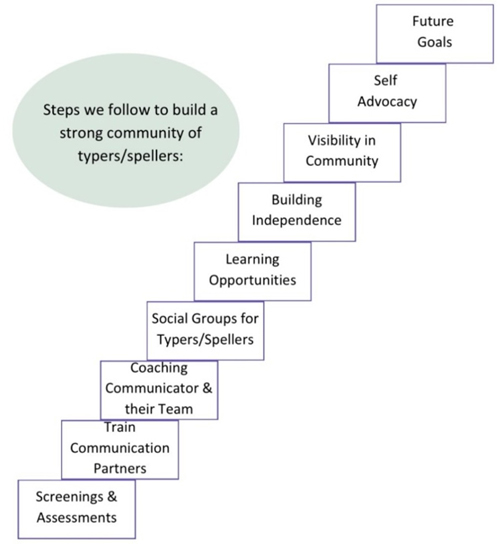
My own son, who has autism and is a minimal/unreliable speaker, learned to type to communicate eight years ago at the age of 32. On the outside he acted very childlike, but I realized I had to master presuming competence after he typed out one day, “The reality of my life is that I need help to be in the world but I don’t need help to think.” That was all the inspiration I needed to start a program called STeP where we could build a community of typers and competent facilitators so we could help non-speakers to be seen, heard, and respected. The STePs we follow include building communication, social skills, learning opportunities, independence, a connection to community, confidence and self-advocacy, and working towards achieving their future goals — whatever those might be.
What Does Presuming Competence Sound Like?
At our foundations training classes at STeP, it is valuable to teach participants what presuming competence is and what it sounds like. I know that I struggled with this myself, and many of the participants in our classes — whether they are parents, teachers, therapists, or staff — come in thinking that they are presuming competence and cannot hear that they are not communicating in an age-appropriate way to their person. I show people an image of Van Gogh’s Starry Night and I ask them how they would talk about this picture to a 2-year-old, to a 7-year-old, and to a 20-year-old. They hear the difference and many quickly realize they have been talking to their 20-year-old client/student/child as a 5-year-old. Even with good intentions, it is often hard for us to make the changes that reflect the presumption of competence, so ask another trusted person to give you honest feedback.
Non-speakers who type or spell to communicate tell us how important it is to them to be seen as competent and intelligent. (See Communication Alternatives in Autism, Edited by Edlyn Pena). Many of them thought they would never truly be seen for who they are. I run a social group called Trailblazers for young adult typers and spellers and I asked them what it feels like to them when people presume competence. Here are two of their responses:
Toni spelled: I think it is important to presume competence because it makes me feel normal and I like feeling normal. This is a subject that makes me emotional. I just try to fit in and it’s tiring. I just wish people would speak to us the way they speak to everyone else.
Maude typed: It’s important to presume competence in others because it gives us confidence and tells us we can do it. I feel great when people presume I am competent. I know I can do something then. I dearly love knowing I can do things because it gives me hope in my future. Typing freed me up to have a life I can create instead of one designed for me.
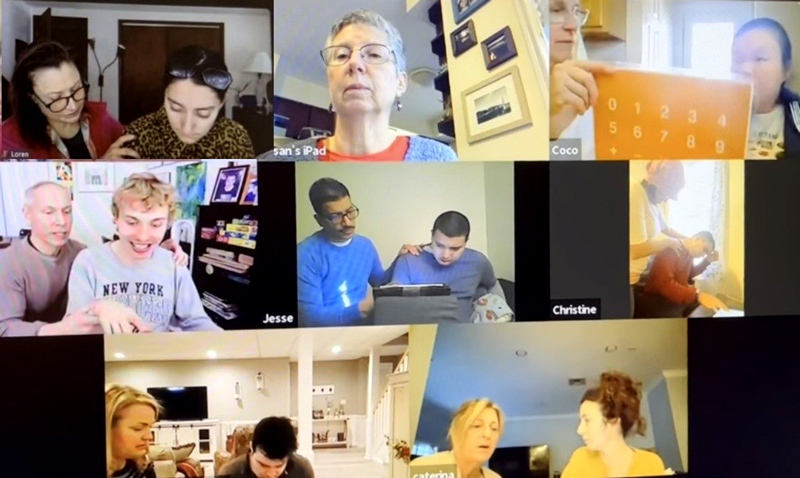
Trailblazers Group communicated about what presuming competence means to them
When asked how they can tell when someone does or does not presume competence, the collective group response from Maude, Coco, Alex, Adam, Jonathan, Chris, and Toni included: “I know by the way they talk and look at me. Everything matters and makes a difference. When someone knows I am smart, they treat me better.” The group identified these factors:
- Tone of voice (high pitch versus normal tone)
- Words they use (simplified versus age appropriate)
- Gestures and body language
- Facial expressions
- Talking about me (as if I’m there, or not there)
- Attitudes are different
These are changes we can all make today in our homes, schools, agencies, and communities! We can make those shifts to help these individuals feel seen, respected, and spoken to at an age-appropriate level. In addition to having us presume competence in them, we also can help them presume competence in themselves by modeling it for them, showing them videos of individuals like themselves where typing has made a difference in their lives, and creating opportunities for them to interact online or in-person with others who type or spell to communicate. Sharing books, videos, and articles with them that respect the intelligence of the typing/spelling community and give them role models is key. These awesome Trailblazers, along with the members of the other groups we also run at STeP, are role models for others. This group has presented two webinars where they shared their wisdom on presuming competence and on their experiences in and benefits of a social group (see wellspringguild.org/resources).
Coco spelled: “Now everyone knows I’m smart. Spelling gives me a voice but it didn’t fix my autism. Maybe I don’t need fixing, just support.”
Maude typed: “I feel hopeful that I will be seen and valued as an important person with special gifts who is capable of many things. What makes us autistic is also what makes us special. The special part is autistic!”
Before people presumed competence in these individuals, their wisdom and insight was trapped within and unable to be shared. How grateful they feel to be able to now express themselves, and how lucky we are to be able to learn from them!

Susan Nisinzweig, MSW, is Supported Typing Program Coordinator and Parent of a Typer at STeP, Abilis Life Services, Stamford, CT. She can be reached at [email protected] or (203) 645-6302, and more information is available at abilis.us/life-services/step-supported-typing.
For more information, videos, books, studies, and webinars that will teach you more about why it is so important to presume competence in these exceptional individuals, visit www.wellspringguild.org/resources.
Resources
Donnellan, A. M. “The Criterion of the Least Dangerous Assumption.” Behavioral Disorders, Vol. 9, No. 2 (February 1984), pp. 141–150. SAGE Publications, Inc. www.jstor.org/stable/43153291
Biklen, D., and Burke, J. “Presuming Competence.” Equity & Excellence in Education, 39: 166–175, 2006. University of Massachusetts Amherst School of Education. www.inclusiveschooling.com/wp-content/uploads/2017/03/presuming-competence-biklen-burke.pdf