I deeply feel time speeding by. The years speeding by.
And it viscerally terrifies me.
Because with each passing day, my fear over my future grows. It gets increasingly real.
At the heart of my fear is this one question: Will I have enough money to be able to live independently for as long as possible, and at no point ever be placed in a care home?
I must not ever enter a care home. I would rather, well….
I think a lot about my future. About the fact that I’m not at all young. And that I have no real income and no savings. I’ve never been able to work. Not traditional work anyway. I receive a government disability pension. I’m nearing the end of my PhD and praying that I find paid work afterwards. Work that I can manage and a supportive workplace that I love and one that will allow me to remain there as long as I’m able to meaningfully contribute.
I need to work. Because I need money. I need enough money to live independently at home, but with access to any external support I may one day require. I’ll need money to hire a personal care worker if needed. None of this is happening today, is today’s reality, but it’s a real future possibility and I’m very much thinking about it. Worrying about it.
For the last several years this fear has enveloped my life. The fear of poverty. The fear of losing control over my life. Being at other people’s mercy. My life in other people’s hands.
At this point, I don’t know if I’ll ever find work. Suitable work. I have no guarantees (no one has this guarantee, I know).
I don’t want money for vacations or nice clothes or even for healthy food. I want money for my independence, for my mental health.
I think a lot about how having money equates to independence, something that’s so important to me, and maybe to other autistic people as well. To the ability to control our lives. To do what we need to do — to live life according to our rules, to regulate our external environments, to move our bodies how we need to.
If I don’t have any money, I likely won’t have any of these things if/when I no longer can independently care for myself. I think a lot about the end, about how I want to go. And it’s not surrounded by strangers, by noise, by smells, by everything else that’s unavoidable when you live in a care home.
I was thinking that it would be nice to be able to design a caring community for people like me. For older autistic people who need some care support, but who want to live in a place that feels like home — where they can plan and control their environments, choose when (or not) to interact and who to interact with, and feel safe with who and what surrounds them. Autistic people who would thrive in a quiet, peaceful, accepting community. One that prioritizes mental health. Access to books, nature, recreation. Where money isn’t an issue for those who can’t afford to pay. Where the fear of poverty doesn’t weigh on their hearts.
I want to create a caring community that allows older autistic adults to be ourselves and offers us opportunities to lead fulfilling lives while living there. A community that looks out for each other but understands space and boundaries and the need for independence. A community that offers each person what she/he personally needs to thrive, regardless of ability to pay. I don’t want access to money to be what determines our quality of life towards the end of our lives. Especially not for people who have such specific requirements to live a good life.
I’m so worried about my financial future. I don’t want to have to think about the fact that if even I find work, that I’ll be starting so late. That time is speeding by, closing in. That I don’t have a seemingly limitless number of years ahead of me to earn money, to maybe make things okay for me. Safe for me.
It shouldn’t be this way. Not for me, and not for other autistic adults who are aging and finding themselves faced with a murky, uncertain end of life. For autistic adults who worry that lack of money will determine the quality of our futures, and that there’s nothing we can do to change this reality. This is a devastating place to be.
I worry for me, and I worry for us. And I worry for the parents of autistic teens and adults who are aging out of school and need a safe place for their kids to land one day. Especially for parents who can’t afford to pay for an endless, revolving stream of caregivers (who may or may not actually be caring).
I don’t want it to be this way. I want there to be another option. A good option. And I want money to have nothing to do with it.
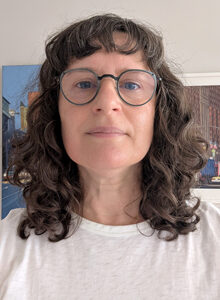
Rhonda Cheryl Solomon, MSc, PhD (cand.), at the University of Toronto can be reached at [email protected] or (416) 820-9654.